



Remote CCTV Surveillance Companies: Selecting Professional 24/7 Monitoring Partners
Business security demands constant vigilance. Break-ins, theft, vandalism, and unauthorised access don’t respect business hours—they frequently occur when premises are unattended. Traditional security approaches relying solely on cameras recording footage for later review miss the critical window when incidents can be prevented rather than merely documented.
Remote CCTV surveillance services address this gap by connecting your camera systems to professional monitoring centres staffed by trained operators who watch your premises continuously. When suspicious activity occurs, operators intervene immediately through audio warnings, contacting authorities, or alerting designated personnel. This proactive approach transforms passive recording equipment into active security systems that deter crime and protect assets in real-time.
Selecting the right remote CCTV surveillance provider requires understanding what separates professional services from basic offerings. The market includes multinational corporations, regional specialists, and technology-focused startups—each with different capabilities, coverage areas, and service models. Business decision-makers need clear criteria for evaluating providers and understanding which companies deliver genuine 24/7 monitoring versus simply storing recorded footage.
Understanding Remote CCTV Surveillance Services
Remote CCTV monitoring operates through integrated systems connecting your on-site cameras to off-site monitoring centres via internet or dedicated network connections. When your cameras detect movement, unusual activity, or alarm triggers, alerts transmit instantly to operators who assess the situation using live video feeds.
Professional operators distinguish between legitimate activity and genuine threats. A person walking through your car park during business hours receives different treatment than someone attempting to force entry at midnight. Operators follow established protocols—issuing audio challenges through two-way speakers, verifying authorised personnel, contacting keyholders, or requesting police response depending on threat assessment.
The technology supporting these services varies significantly between providers. Basic systems might rely on motion detection alone, generating frequent false alarms from animals, weather, or lighting changes. Advanced platforms incorporate video analytics, artificial intelligence-assisted threat detection, and integrated alarm systems that reduce false alerts while improving genuine incident detection rates.
24/7 asset protection extends beyond simple surveillance. Comprehensive services include alarm verification, access control monitoring, perimeter security, and emergency response coordination. Businesses benefit from documented incident reports, recorded interactions with trespassers, and evidence packages supporting insurance claims or legal proceedings.
Types of Companies Providing Remote CCTV Surveillance
Global Security Corporations
Multinational security companies operate extensive monitoring centre networks across multiple countries. These organisations typically serve large corporate clients, government facilities, and international businesses requiring consistent security standards across numerous locations. Their infrastructure includes redundant monitoring facilities, sophisticated technology platforms, and substantial operational resources.
Global providers offer advantages including established reputation, financial stability, and standardised service delivery. However, they often focus on high-value contracts and may provide limited flexibility for smaller businesses or specialised industry requirements. Pricing structures typically reflect enterprise-level service models.
Regional Security Specialists
Regional companies focus on specific geographic areas, offering localised expertise and personalised service. These providers understand regional crime patterns, maintain relationships with local law enforcement, and can deploy rapid response teams to client premises when necessary. Their operations often integrate monitoring services with mobile patrol units and alarm response capabilities.
Regional specialists frequently demonstrate greater flexibility in service customisation and pricing compared to global corporations. They adapt monitoring protocols to individual client needs and provide direct access to decision-makers. However, businesses operating across multiple regions may need to coordinate with different providers for comprehensive coverage.
Technology-First Monitoring Services
Newer entrants to the remote CCTV surveillance market emphasise advanced technology platforms, artificial intelligence capabilities, and user-friendly interfaces. These companies typically offer cloud-based monitoring solutions, mobile applications providing real-time access, and integration with smart building systems.
Technology-focused providers attract businesses prioritising innovation and digital integration. Their platforms often feature superior analytics, automated reporting, and seamless connection with existing security infrastructure. The trade-off may involve less mature operational procedures compared to established security companies with decades of monitoring experience.
Industry-Specific Monitoring Providers
Certain companies specialise in particular sectors such as retail, construction, healthcare, or industrial facilities. These specialists understand unique security challenges within their focus industries—loss prevention in retail environments, equipment protection on construction sites, regulatory compliance in healthcare facilities, or warehouse and industrial security requirements.
Industry specialists develop monitoring protocols tailored to specific operational contexts. Retail-focused providers recognise suspicious shopping behaviours indicating potential theft. Construction specialists understand site access patterns and equipment vulnerability periods. This focused expertise delivers more effective threat detection compared to generalist approaches.
Evaluating Remote CCTV Surveillance Providers
Certification and Accreditation Standards
Professional remote CCTV surveillance companies maintain industry certifications demonstrating operational competence and service quality. Businesses should verify providers hold relevant credentials from recognised bodies. International operations may reference ISO security standards and regional equivalents.
These certifications aren’t mere formalities—they require documented operational procedures, regular audits, operator training standards, and compliance with security frameworks and regulations. Accredited providers demonstrate commitment to service quality and professional standards that uncertified competitors may lack.
Businesses operating in regulated industries should confirm monitoring providers meet sector-specific requirements. Healthcare facilities need HIPAA-compliant services, financial institutions require adherence to banking security standards, and retail operations benefit from loss prevention certifications.
Monitoring Centre Operations
The physical infrastructure supporting remote CCTV surveillance significantly impacts service reliability. Professional monitoring centres feature redundant power supplies, backup internet connectivity, and disaster recovery systems ensuring continuous operation during technical failures or emergencies. Businesses should inquire about backup facility locations and failover procedures.
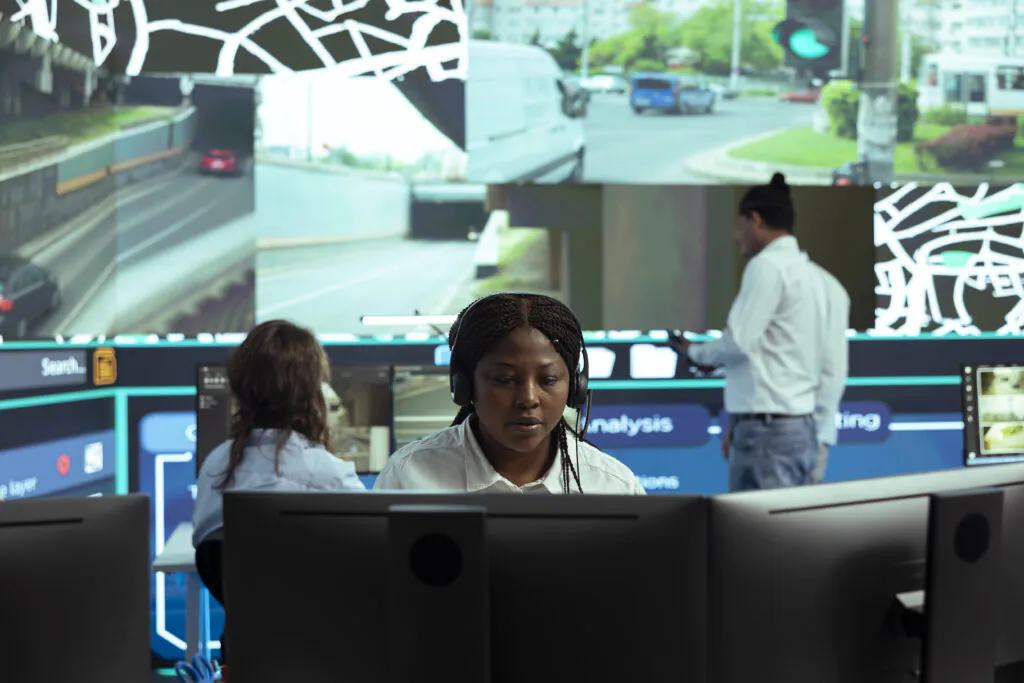
Staffing models determine how quickly operators respond to alerts. Premium services maintain dedicated operators assigned to specific client groups, while economy offerings may have individual operators managing dozens of simultaneous connections. Response time guarantees—typically ranging from 10 seconds to several minutes—directly correlate with staffing ratios and service pricing.
Operator training standards vary substantially between providers. Quality services employ operators with security industry qualifications, provide ongoing training in threat assessment, and conduct regular performance evaluations. Some companies utilise operators with law enforcement or military backgrounds bringing advanced threat recognition capabilities.
Technology Infrastructure and Compatibility
Remote CCTV surveillance services must integrate with your existing camera systems and security infrastructure. Businesses should verify provider compatibility with current equipment before committing to contracts. Professional providers support multiple camera brands and protocols—both analog and IP camera systems—avoiding expensive equipment replacement requirements.
Platform capabilities determine what monitoring options are available. Advanced services offer mobile applications for real-time viewing, cloud storage for footage retention, video analytics for automated threat detection, and integration with access control systems. Businesses requiring specific functionality should confirm capabilities during evaluation.
Two-way audio surveillance capabilities allow operators to communicate directly with individuals on premises through speaker systems. This feature provides powerful deterrence—verbal challenges from monitoring operators often cause trespassers to flee before causing damage. Not all providers offer this functionality or charge premium rates for audio-enabled monitoring.
Network security protections safeguard your video feeds and monitoring systems from cyber threats. Professional providers implement encryption for video transmission, secure authentication protocols, and regular security updates. Given that small business cybersecurity breaches frequently target surveillance systems, robust network security practices are essential criteria when selecting monitoring partners.
Service Level Agreements and Response Protocols
Clear service level agreements (SLAs) define what you’re purchasing and establish accountability. SLAs should specify guaranteed response times to alerts, uptime percentages for monitoring availability, escalation procedures for different threat levels, and reporting requirements.
Response protocols determine what actions operators take when detecting suspicious activity. Comprehensive services provide tiered responses—audio warnings for minor incidents, keyholder notification for moderate concerns, and immediate police contact for serious threats. Businesses should understand these protocols and confirm they align with security requirements and risk tolerance.
False alarm management significantly affects service value. Providers with poor discrimination between genuine threats and benign triggers create alert fatigue, wasting resources on unnecessary responses. Quality services implement multiple verification methods before escalating incidents, maintaining low false alarm rates while ensuring genuine threats receive appropriate attention.
Industry Experience and Client References
Provider experience in your specific industry indicates whether they understand your unique security challenges. Retail businesses benefit from providers familiar with shoplifting patterns and loss prevention strategies. Construction companies need specialists understanding equipment theft risks and site access management. Healthcare facilities require providers experienced with patient safety and regulatory compliance.
Client testimonials and case studies reveal provider performance beyond marketing claims. Businesses should request references from similar organisations and inquire about service reliability, communication quality, incident handling effectiveness, and contract satisfaction. Established providers readily supply verifiable references demonstrating track records.
Contract flexibility affects long-term relationships. Some providers require multi-year commitments with limited modification options, while others offer monthly contracts with adjustable service levels. Businesses should evaluate contract terms against operational needs and growth projections—expanding operations should accommodate adding new locations without penalty.
Geographic Coverage and Response Capabilities
Remote CCTV surveillance services must cover your operational locations. Global businesses require providers with international monitoring capabilities or coordinated partnerships across regions. Companies operating domestically need reliable coverage in their specific areas.
Response capabilities determine what happens after threat detection. Some providers offer monitoring only—they alert you to problems but provide no physical response. Comprehensive services integrate mobile patrol units that can dispatch to your premises within minutes. Virtual guard services combine remote monitoring with on-demand physical presence when situations require intervention beyond audio deterrence.
Weather resilience matters for continuous protection. Quality providers maintain operations during severe weather when crime rates often increase due to reduced police patrol activity and compromised security systems. Business security during adverse conditions tests monitoring service reliability—professional operations continue functioning when you need protection most.
Cost Structures and Value Assessment
Remote CCTV surveillance pricing varies dramatically based on service scope, monitoring hours, camera quantities, and feature requirements. Basic recording-only services cost substantially less than active 24/7 monitoring with guaranteed response times. Businesses must balance budget constraints against security needs and potential loss exposure.
Common pricing models include per-camera monthly fees, site-based pricing covering all cameras at a location, or tiered service packages offering different monitoring levels. Installation costs, equipment requirements, and contract terms affect total investment. Transparent providers supply detailed quotations itemising all costs without hidden fees.
Value assessment should consider potential losses prevented rather than focusing solely on service costs. A retail location losing £50,000 annually to theft finds professional monitoring costing £5,000 yearly represents excellent value if it reduces losses by even 20%. Cybersecurity breach statistics demonstrate that security investments typically cost far less than incident recovery expenses.
Selecting the Right Provider for Your Business
Define Your Security Requirements
Effective provider selection begins with understanding your specific needs. Assess your premises, identify vulnerable areas, determine monitoring hours required, and establish budget parameters. Different businesses need different solutions—a retail shop requires different monitoring than a construction site or healthcare facility.
Consider operational factors affecting security requirements. Businesses storing high-value inventory need more comprehensive monitoring than service-based operations. Locations in high-crime areas justify premium services while facilities in low-risk areas may function adequately with basic monitoring.
Request Detailed Proposals
Contact multiple providers to compare offerings. Quality providers conduct site surveys understanding your premises before proposing solutions. Detailed proposals should specify equipment requirements, monitoring protocols, response procedures, pricing breakdowns, and contract terms.
Evaluate proposals against your defined requirements rather than simply selecting the lowest price. Inadequate security services provide poor value regardless of cost. Conversely, excessive capabilities you won’t utilise waste budget that could address other business priorities.
Verify Credentials and References
Confirm providers hold relevant certifications and insurance coverage. Legitimate companies readily supply proof of accreditation, operator qualifications, and liability insurance. Request client references and follow up with conversations about service experiences.
Test Communication and Responsiveness
Provider communication during sales processes often indicates service quality after contract signing. Companies responding promptly to inquiries and answering questions thoroughly typically maintain similar attention post-sale. Difficult communication during evaluation stages frequently worsens once contracts are secured.
GCCTVMS: Comprehensive Remote CCTV Surveillance Solutions
GCCTVMS delivers professional 24/7 remote CCTV surveillance services designed for diverse business environments. The company operates certified monitoring centres staffed by trained security professionals who provide active surveillance protecting businesses worldwide.
GCCTVMS combines advanced monitoring technology with experienced operators who understand business security requirements across retail, industrial, commercial, construction, and institutional sectors. The service integrates with existing camera infrastructure, supports multiple monitoring protocols, and provides flexible coverage options matching specific operational needs.
Businesses benefit from documented incident response, recorded video evidence, and detailed reporting supporting insurance claims and security audits. The platform includes mobile access for business owners, customisable alert protocols, and integration capabilities with broader security systems.
Professional monitoring extends beyond simple observation. GCCTVMS operators intervene actively during security events through audio challenges, authority contact, and coordinated response with designated personnel. This proactive approach prevents losses rather than merely documenting incidents after they occur.
Take Action: Protect Your Business Now
Security incidents don’t wait for convenient timing. Every day without professional monitoring represents potential exposure to theft, vandalism, and unauthorised access. Business owners and security managers should evaluate current security arrangements against operational risks and consider whether existing measures provide adequate protection.
Professional remote CCTV surveillance services deliver measurable security improvements at costs substantially below potential loss exposure. The investment protects physical assets, reduces insurance premiums, and provides operational peace of mind allowing focus on business activities rather than security concerns.
Contact GCCTVMS for a comprehensive security assessment and detailed proposal customised to your business requirements. Professional consultants evaluate your premises, identify vulnerability points, and recommend monitoring solutions that deliver optimal protection within your budget parameters.
Don’t wait for security incidents to force reactive responses. Implement professional remote CCTV surveillance protecting your business, employees, and assets before losses occur.
FAQ’s
What is remote CCTV surveillance and how does it differ from regular security cameras?
Remote CCTV surveillance connects your security cameras to professional monitoring centres where trained operators watch your premises in real-time. Unlike standard security cameras that only record footage for later review, remote surveillance provides active monitoring with immediate response to suspicious activity.
How much does 24/7 remote CCTV surveillance cost for businesses?
Costs for 24/7 CCTV surveillance services typically range from £100 to £1,000+ monthly depending on factors including number of cameras monitored, site complexity, service level requirements, and additional features like audio capabilities or mobile response integration. Per-camera pricing generally ranges from £20 to £80 monthly.
What certifications should professional remote CCTV surveillance companies have?
Professional monitoring companies should hold industry-recognised certifications demonstrating operational competence and service quality. Relevant credentials include NSI Gold approval, BSIA membership, ISO security certifications, and regional equivalents depending on your location. Operators should possess security industry qualifications and training documentation.
Can remote CCTV surveillance services integrate with my existing security cameras?
Most professional remote CCTV surveillance providers support integration with existing camera systems including both analog and IP cameras from multiple manufacturers. Compatibility depends on camera specifications, recording equipment, and network infrastructure.
What response time should I expect from 24/7 CCTV surveillance services?
Professional 24/7 CCTV surveillance services typically guarantee response times between 10 and 60 seconds from alert generation to operator assessment. Premium services offering dedicated operators for specific client groups achieve faster response—often under 15 seconds—while economy services with higher operator-to-client ratios may take 45-60 seconds.
