




Complete Guide to 24/7 CCTV Monitoring Operations
A warehouse manager installed 16 security cameras across his facility. He spent $12,000 on equipment. Cameras recorded footage 24 hours daily. Three months later, thieves entered through a back loading dock at 2 AM. They spent 90 minutes loading copper wire and tools into a van. Surveillance footage captured everything clearly. Nobody watched. Nobody responded. Total loss exceeded $45,000.
His neighbor’s warehouse used professional monitoring services. Same neighborhood. Same crime risk. Different outcome. Live monitoring operators detected suspicious activity within 30 seconds. Two-way audio warning scared intruders away. Police arrived to find nothing stolen. The difference between recording crimes and preventing them comes down to understanding how CCTV monitoring actually works.
What Makes Professional Monitoring Different from Recording
Passive recording documents crimes after they happen. Active monitoring prevents crimes before completion. This distinction determines whether cameras protect property or simply capture footage for insurance claims.
Recording systems store video files. Owners review footage after discovering problems. By then, damage already occurred. Thieves already escaped. Evidence exists, but losses remain permanent.
Professional monitoring adds human oversight to camera systems. Trained operators watch live feeds continuously. They spot threats as events unfold. They intervene before criminals complete their objectives. Surveillance systems become security systems through this human element.
Core Components of Remote Monitoring Systems
Camera Hardware Requirements
Modern monitoring requires IP cameras capable of streaming video over internet connections. Resolution matters significantly. Minimum specifications start at 1080p HD for general monitoring. Properties requiring facial identification or license plate capture need 4K resolution cameras.
Night vision capabilities ensure continuous coverage regardless of lighting conditions. Most commercial properties experience highest risk during overnight hours when traditional video surveillance alone proves insufficient without professional oversight.
Wide-angle cameras cover large areas effectively. PTZ (pan-tilt-zoom) cameras allow operators to track movement across properties. Most facilities combine both types strategically.
Network Infrastructure
Internet connectivity forms the backbone of remote monitoring systems. Each camera requires 5-10 Mbps upload bandwidth for smooth video transmission. A 10-camera system needs minimum 50 Mbps dedicated upload speed.
Wired ethernet connections outperform wireless alternatives for reliability. Monitoring centers cannot protect properties when video feeds drop due to unstable connections. Backup internet through secondary providers or cellular failover prevents coverage gaps during outages.
Video Management Software Platforms
Central software platforms organize camera feeds from multiple locations into manageable interfaces. These systems handle recording, playback, live viewing, and alert configuration simultaneously.
Motion detection settings trigger operator attention when activity occurs in designated zones. Sensitivity calibration prevents false alerts from animals, shadows, or weather while catching genuine threats.
Monitoring Center Technology
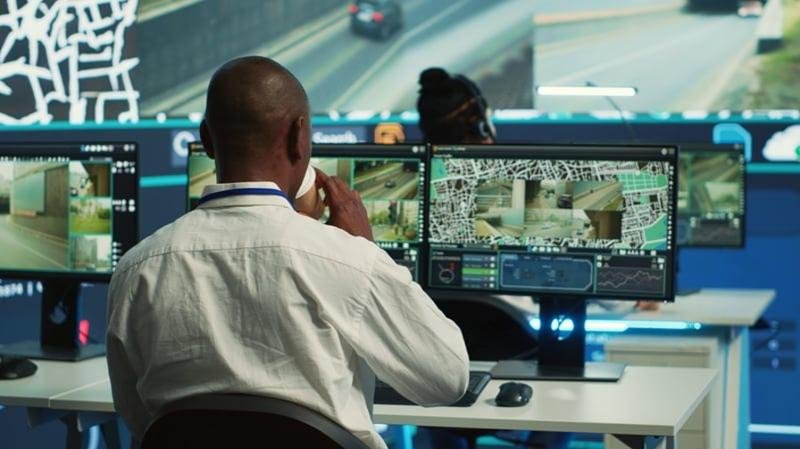
Professional monitoring centers operate video walls displaying dozens of camera feeds simultaneously. Operators scan screens systematically, watching for unusual activity patterns.
Two-way audio systems allow verbal intervention. Operators speak directly through camera speakers, warning intruders they face observation. This capability stops most crimes instantly without requiring police dispatch.
Direct communication lines connect monitoring centers to emergency services. Operators provide verified threat information, improving police response effectiveness compared to unverified alarm calls.
Step-by-Step Live Monitoring Workflow
Stage 1: Continuous Video Capture
Cameras stream footage to monitoring centers through encrypted internet connections. Video transmits in real-time while simultaneously recording locally as backup. Multiple feeds display on operator workstations organized by property and priority level.
Stage 2: Threat Detection Methods
Motion detection algorithms flag activity within camera view. Analytics identify unusual patterns like loitering, perimeter breaches, or after-hours movement. Monitoring operators receive visual and audio alerts directing attention to specific cameras.
During quiet periods, operators conduct systematic surveillance sweeps. They cycle through camera feeds, checking each property multiple times hourly. This proactive approach catches threats that automated detection might miss.
Stage 3: Visual Verification Process
When alerts trigger, operators immediately assess the source. They watch live footage to determine threat legitimacy. Most alerts result from animals, wind-blown debris, or lighting changes. Professional monitoring judgment filters these false alarms effectively.
Genuine threats receive immediate escalation. Operators document what they observe while initiating response protocols. This verification step prevents unnecessary police dispatches while ensuring real emergencies receive rapid attention.
Stage 4: Response Coordination
Confirmed threats trigger immediate action. Operators issue two-way audio warnings first. Direct verbal confrontation stops most criminals immediately. They flee knowing someone watches and police notification already began.
When audio warnings fail, operators contact emergency services with specific information. They describe suspect appearance, location, direction of movement, and observed activities. This verified intelligence helps police respond more effectively than standard alarm calls.
Property owners receive simultaneous notification through phone calls, text messages, or app alerts. They stay informed throughout incidents without needing to watch surveillance feeds themselves.
Professional Monitoring Service Delivery Model
Operator Staffing Structure
Trained security professionals staff monitoring centers around the clock. Initial training programs run 40+ hours covering threat recognition, response protocols, communication procedures, and technology operation.
Multiple operators work simultaneously during peak risk hours. Supervisors provide oversight, handling escalations and quality assurance. This layered structure ensures consistent service quality regardless of individual operator performance.
24/7 Coverage Mechanics
Continuous monitoring requires careful shift scheduling. Most centers operate three 8-hour shifts or two 12-hour shifts daily. Overlap periods between shifts prevent coverage gaps during transitions.
Holiday and weekend staffing maintains identical protection levels. Criminal activity often increases during periods when traditional security relaxes. Professional monitoring delivers consistent surveillance regardless of calendar dates.
Multi-Property Management
Single monitoring centers handle hundreds of client locations simultaneously. Sophisticated software organizes feeds by priority, property type, and alert status. Operators focus attention where activity occurs while maintaining awareness across all accounts.
Customized response protocols accommodate different client needs. Retail stores require different procedures than construction sites or residential properties. Professional services adapt to each situation appropriately.
Remote Monitoring Technology Integration
Existing System Compatibility
Most modern IP cameras integrate with professional monitoring services without replacement. Site assessments determine compatibility before service activation. Older analog systems sometimes require encoder upgrades to enable remote connectivity.
Minimal equipment changes typically satisfy requirements. Many properties activate monitoring within days using existing camera infrastructure. This approach maximizes return on previous surveillance investments.
Video Storage Options
Cloud storage enables remote access from anywhere with internet connectivity. Property owners view live feeds and recorded footage through web browsers or mobile apps. This accessibility proves valuable for multi-location businesses and traveling homeowners.
Local NVR recording provides backup protection. If internet connections fail, on-site recording continues. Dual storage approaches ensure footage preservation regardless of connectivity issues.
Standard retention periods range from 30 to 90 days. Incident clips receive extended preservation when needed for legal proceedings. Storage costs scale with camera count and retention duration.
Mobile Access Features
Smartphone apps deliver monitoring capabilities directly to property owners. Live viewing shows real-time footage from any camera. Push notifications alert owners to verified incidents requiring attention.
Remote arm/disarm capabilities allow schedule adjustments without contacting monitoring centers. Historical footage review helps owners investigate questions about property activity. These self-service features complement professional monitoring without replacing human oversight.
Monitoring Services Pricing Structure
Cost Factors
Camera count drives pricing most significantly. More cameras require more operator attention and bandwidth. System complexity, response protocol requirements, and additional features also influence monthly costs.
Affordable options exist across all property sizes. Small systems with 1-5 cameras typically cost $200-$500 monthly. Medium installations covering 6-15 cameras range from $500-$1,200 monthly. Large surveillance deployments exceeding 16 cameras start around $1,200 and scale upward based on requirements.
ROI Considerations
Compare monitoring costs against traditional security guard expenses. On-site guards cost $200,000-$400,000 annually per location including salary, benefits, insurance, and management overhead. Professional monitoring delivers superior coverage at 70-85% lower cost.
False alarm reduction saves additional money. Unverified alarm systems trigger frequent false dispatches, damaging police credibility and sometimes incurring municipal fines. Visual verification eliminates 80-90% of false alarms.
Crime prevention rates reach 60-80% with active monitoring versus passive recording. Prevented losses often exceed annual monitoring costs within single incidents. Insurance premium reductions of 10-25% provide additional financial benefits.
Implementation Process for Live Monitoring
Activation and Testing
Monitoring begins after successful configuration verification. Test alerts confirm system functionality and response procedures. Staff training ensures property personnel understand notification processes and their roles during incidents.
Selecting Quality Monitoring Services
Response time guarantees separate quality providers from basic services. Industry leaders like GCCTVMS maintain sub-20-second response standards. Ask providers for documented performance metrics, not vague promises.
Client references from similar industries reveal real-world service quality. Request 5-10 references and actually contact them. Questions about response times, operator professionalism, and problem resolution expose true capabilities.
Trial periods demonstrate service confidence. GCCTVMS offers 30-day free trials allowing complete evaluation before commitment. Providers refusing trials often hide service deficiencies.
Review top surveillance providers to understand market options and pricing benchmarks before making final decisions.
Industries Using 24/7 Live Monitoring Services
Retail stores prevent shoplifting and employee theft through continuous oversight. Warehouses protect inventory and secure loading dock operations. Construction sites guard high-value equipment against overnight theft and vandalism.
Healthcare facilities ensure patient safety while protecting pharmaceutical storage areas. Office buildings maintain after-hours security and access control. Manufacturing plants monitor production areas and prevent workplace safety incidents.
Residential properties benefit from family security, package theft prevention, and vacation monitoring peace of mind.
Conclusion
Understanding how professional monitoring works transforms camera investments from passive recording devices into active security systems. Trained operators watching live feeds detect threats within seconds. Two-way audio intervention stops crimes before completion. Coordinated emergency response brings help faster than any self-monitored system.
The technology exists. The operational model works. Cost savings versus traditional security guards reach 70-85%. GCCTVMS provides 24/7 live CCTV monitoring services with sub-20-second response times across retail, warehouse, construction, healthcare, and residential properties globally.
Request a 30-day free trial to experience professional monitoring firsthand. Contact GCCTVMS today.
