




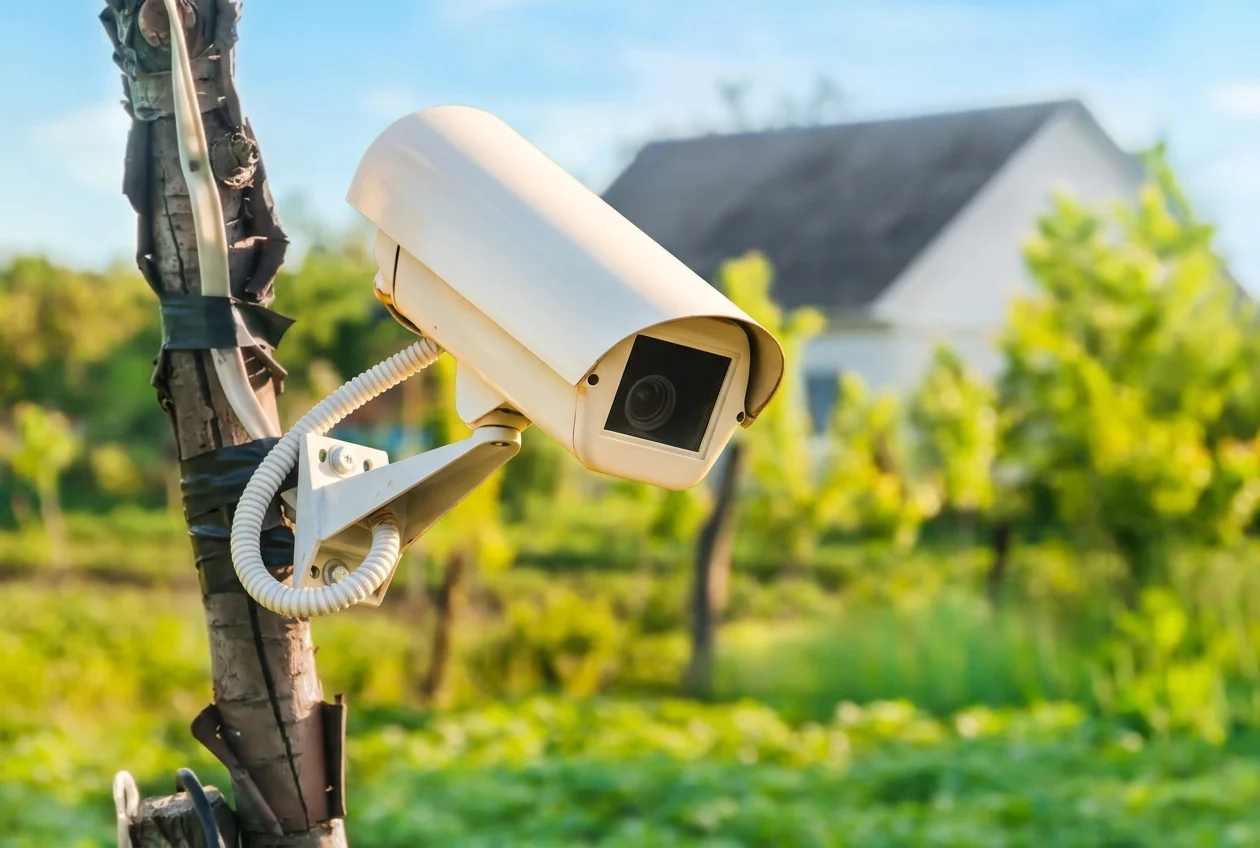
CCTV Monitoring for Farms: When Police Are 60 Minutes Away, Live Operators Aren’t
Table of Contents
ToggleYour farm sits across hundreds or thousands of acres. Your barn is half a mile from your house. Your equipment yard is on the back forty. Your fuel tanks sit by the equipment shed. When a thief shows up at 2 AM with a truck and a trailer, the nearest sheriff’s deputy might be 45 to 90 minutes away. The thief knows that.
Rural crime cost UK farms an estimated £44.1 million in 2024 according to the NFU Mutual Rural Crime Report. In the US, agricultural theft losses run into the hundreds of millions annually. Fresno County alone reported $30 million in farm crime losses from 2022 through 2024, with $13.5 million in agricultural vehicle thefts. Cattle prices climbed to record highs in 2025, and rustling cases surged across Texas, Colorado, Kansas, Nebraska, and South Dakota. One Colorado ranch lost nearly $400,000 in cattle in a single year.
Most farms have no cameras at all. The ones that do have cameras nobody watches. CCTV monitoring for farms changes that math completely. When trained operators watch your camera feeds in real time and dispatch authorities the moment a trespasser enters your property, the response starts at minute zero, not minute forty-five.
GCCTVMS provides 24/7 live CCTV monitoring and camera monitoring services for farm and ranch properties across the USA, UK, Singapore, and Pakistan.
What CCTV Monitoring for Farms Actually Includes
A camera mounted on your barn wall recording to a hard drive isn’t security. It’s documentation. When a tractor goes missing, you scroll through hours of footage looking for the moment it disappeared. By then, the equipment is gone, the trail is cold, and the insurance claim is the only thing left to file.
A proper CCTV monitoring service for farms includes trained operators watching live camera feeds from a remote centre, threat detection that flags unusual movement at gates, fences, and equipment yards, real-time alerts pushed to the farm owner’s phone, verified police dispatch when intruders are confirmed on camera, live audio warnings issued through speakers, and timestamped incident reports for insurance documentation.
Avigilon’s agriculture industry guide explains how surveillance technology adapts to large rural properties. GCCTVMS provides professional monitoring services and commercial surveillance built specifically for the layout, distance, and risk profile of a working farm.
The Real Threats Facing Modern Farms
Farm crime isn’t theoretical. It’s daily. And it’s organised. Here’s what farmers actually face.
Equipment Theft
Tractors, ATVs, quad bikes, GPS guidance units, trailers, and combine attachments are the most stolen items on farms. NFU Mutual reported that quad bikes and ATVs remained top targets for thieves in 2024 at an estimated £2.7 million in claims. Tractor theft costs rose 17% to £1.5 million the same year. A John Deere GPS guidance unit alone is worth $10,000-$20,000 and takes seconds to remove from the cab. A loaded equipment trailer can carry over $200,000 in machinery.
These thefts are organised. UK police now stop and check vehicles on rural roads carrying or towing farm equipment. In one campaign, just over 100 vehicle checks turned up multiple illegal hauls. CCTV monitoring for farms catches the trailer pulling into the yard, not the empty space where the tractor used to be.
Fuel Theft
Diesel fuel sitting in farm tanks is a target for thieves who siphon hundreds of gallons in a single night. With diesel prices high, a single fuel theft costs a farmer $2,000-$5,000 per incident. Repeat fuel theft from the same farm is common because the property layout doesn’t change. Once thieves know your tank location and access route, they come back.
Live security camera monitoring with audio warnings stops fuel thieves before the first jerry can fills. The operator sees the truck pull up to the tank, issues a voice warning through two-way audio surveillance speakers, and the thief leaves before the pump activates.
Livestock Rustling
Cattle rustling is back. With beef prices at record highs in 2025, organised thieves are targeting young, unbranded cattle that are harder to trace. Reports from August 2025 showed surges in Texas, Colorado, Kansas, Nebraska, and South Dakota. Some thieves lure cattle to fence lines with feed during the day, then return at night to load animals onto trailers. A single stolen cow is worth $1,500-$3,000. A loaded cattle trailer can carry $30,000+ in livestock. UK livestock theft reached an estimated £3.4 million in 2024 according to NFU Mutual, with single raids often involving 50 or more sheep.
Vandalism, Trespassing, and Copper Theft
Trespassers driving ATVs through fields, vandalising equipment, cutting fences, or stealing copper wiring from irrigation pumps cost farms thousands per incident. Fresno County reported $3.1 million in copper theft losses in 2023. Kings County in California reported over $400,000 in copper wire theft from agricultural well pumps in 2025 alone. Battery-powered reciprocating saws make copper wire theft fast and easy. CCTV surveillance with live monitoring catches trespassers at the perimeter before they reach the pumps or fields.
Why Rural Police Response Time Changes Everything
Urban police respond to alarms in 5 to 10 minutes. Rural sheriff’s deputies cover hundreds of square miles with limited staffing. Average rural response times run 30 to 90 minutes depending on the county. Some remote farms wait even longer.
That response gap is the entire reason farm theft works as a business. Thieves know they have an hour or more to load equipment, cut fences, drain fuel, or loose livestock before any deputy arrives. By the time the patrol car pulls into the driveway, the truck is gone and the trail is cold.
CCTV monitoring for farms with live operators changes the timeline. The operator sees the trespasser at minute zero. They issue an audio warning at minute one. They dispatch police at minute two. The thief flees because the warning told them they’re on camera and police are coming. The deputy still takes 45 minutes to arrive, but by then there’s nothing to steal because the thief left when the speaker started talking. Paessler explains how CCTV monitoring works and why active response changes outcomes that recorded footage alone can’t.
Where to Place Cameras on a Farm Property
Camera placement on a farm is different from any other property type. The acreage is huge. The high-value targets are spread across the land. Getting placement right matters more than camera count.
Entry Gates and Driveways
Every farm has 1-3 main vehicle access points. These are the highest priority cameras. License plate capture cameras at the main gate identify every vehicle entering the property. Wide-angle cameras at the gate cover the approach. Clearway’s agriculture and farm CCTV guide walks through gate camera placement specific to UK farm properties.
Barns, Equipment Yards, and Fuel Tanks
These are where the high-value targets sit. Barn entry cameras cover livestock access points. Equipment yard cameras cover the entire perimeter where machinery is parked. Fuel tank cameras cover the dispenser, the access road, and the surrounding area. Wikipedia’s CCTV overview explains the camera technology fundamentals that apply across all rural property layouts.
Perimeter and Fence Lines
Long fence lines need camera coverage at known weak points: gates, gaps in tree cover, areas with road access, and corners that hide approach routes. PTZ cameras on tall poles or building corners cover wide arcs of fence line. SPX’s CCTV solutions guide covers placement strategy for properties with extensive perimeters. GCCTVMS pairs placement advice with video surveillance and threat detection monitoring covering every critical zone on your farm.
How CCTV Monitoring for Farms Stops Crime in Real Time
Here’s how CCTV monitoring for farms actually works when trained operators watch the feeds.
Scenario 1: Trespasser at the Gate. An operator sees a vehicle stopped at the main gate at 1 AM. The driver is cutting the chain. The operator activates the gate speaker: “You are on camera. Police have been notified. Leave the property now.” The vehicle reverses and drives away. No equipment lost. No incident report needed.
Scenario 2: Fuel Theft Attempt. A camera catches a pickup truck pulling up to the diesel tank with empty containers in the bed. The operator verifies the threat in 10 seconds, issues an audio warning through the equipment yard speaker, and dispatches police simultaneously. The truck leaves before any fuel is drawn.
Scenario 3: Livestock Barn Entry. An operator monitoring a cattle barn sees movement after midnight. Two figures are walking through the aisle. The operator alerts the farmer’s phone, dispatches authorities, and activates audio warnings. The intruders run before any cattle are loaded.
GCCTVMS provides real-time security monitoring and live video monitoring trained for these exact scenarios. Our operators recognise the early signs of farm crime because they watch farm feeds every night.
Protecting Specific Farm Operations
Different farm types face different threats. CCTV monitoring for farms adapts to each.
Cattle ranchers and livestock farms need camera coverage on barns, feedlots, gates, and known rustling zones near road access. Dairy farms need monitoring of milking parlours, bulk tank rooms, feed storage, and equipment sheds, with additional value for food safety documentation. Crop and grain farmers benefit most from coverage of fuel tanks, equipment yards, and grain silo access points. Vineyards and wineries need surveillance of tasting rooms, barrel storage, and processing equipment, plus harvest-season perimeter coverage. Poultry operators need entry cameras at every barn for biosecurity documentation that satisfies disease prevention protocols. Equestrian farms and horse boarding facilities need stable aisle cameras (not in stalls), tack room monitoring, and trailer parking coverage.
GCCTVMS adapts CCTV monitoring service to each operation type without forcing one template across every farm.
CCTV Monitoring for Farms vs. Hiring Night Security
Hiring a night security guard for a farm costs $3,000 to $5,000 per month per guard. That guard watches one area at a time. They patrol the equipment yard, then the barn, then the fuel tanks. While they’re at the back of the property, the front gate is unwatched. While they’re checking the fuel tanks, the cattle barn is unmonitored.
CCTV monitoring for farms costs $200 to $500 per month and covers every camera simultaneously. A trained operator at the monitoring centre watches the gate, the barn, the fuel tanks, the equipment yard, and the perimeter all at the same time. No coverage gaps. No bathroom breaks. No falling asleep at 3 AM. The math favours monitoring for nearly every farm operation.
Some large commercial farms benefit from a hybrid model: one guard at the main entrance during high-risk hours, plus CCTV monitoring covering everything else. GCCTVMS provides remote monitoring and control that pairs with existing security staff or replaces them entirely.
Insurance Benefits and Documentation
Farm insurance providers offer 5% to 15% premium reductions for properties with documented commercial video surveillance and a verified CCTV monitoring service. For a farm paying $8,000/year in property and equipment insurance, a 10% discount saves $800/year. That alone covers most of the monitoring cost.
Beyond premiums, CCTV monitoring for farms produces timestamped incident reports that support insurance claims. When equipment goes missing or livestock disappears, video evidence speeds up claim processing and increases recovery odds. Without footage, claim disputes drag on for months. With it, insurers settle faster.
GCCTVMS provides incident reports compatible with farm insurance documentation requirements. Pair these reports with access control logs to create a full record of who was on the property and when.
How GCCTVMS Monitors Farms
GCCTVMS connects to your existing camera system or helps spec a new one for your farm layout. Any brand. Any property size. We work with starlink and rural cellular connections for properties without fixed internet.
Our operators are trained for rural environments. They know the difference between a deer crossing the gate camera and a person cutting the chain. They recognise the patterns of equipment theft, fuel theft, and livestock rustling. When they see a threat, they verify it in seconds, issue audio warnings, dispatch authorities, and log every detail.
GCCTVMS provides CCTV monitoring for farms across single properties and multi-site operations. USA, UK, Singapore, and Pakistan coverage from one monitoring centre. Sub-60-second response. Incident reports for every alert.
Stop Farm Crime Before Deputies Are Even Dispatched
CCTV monitoring for farms costs less than one stolen tractor, one fuel theft incident, or one rustling event. Trained operators on your feeds turn passive cameras into active protection across every acre.
Contact our team with questions about your farm or ranch, or Get a 30-min Free Call to discuss coverage for your property.
Stop Farm Crime Before Deputies Are Even Dispatched
CCTV monitoring for farms costs less than one stolen tractor, one fuel theft incident, or one rustling event. Trained operators on your feeds turn passive cameras into active protection across every acre.
Get a 30-min Free CallFAQ’s
What is CCTV monitoring for farms?
CCTV monitoring for farms means trained operators watch live camera feeds from a remote centre. They detect trespassers, equipment theft, fuel theft, and livestock rustling in real time, issue audio warnings, and dispatch authorities while the crime is still being attempted.
How much does CCTV monitoring for farms cost per month?
CCTV monitoring for farms costs $200 to $500 per month depending on property size, camera count, and coverage hours. Compare that to $3,000-$5,000/month for a single security guard who can only watch one area at a time.
Where should cameras be placed on a farm property?
Cameras belong at every entry gate, every barn entrance, fuel tank locations, equipment yards, livestock barns, perimeter fence weak points, and grain silo access. License plate capture cameras at main gates identify every vehicle entering the property.
Does CCTV monitoring prevent equipment theft on farms?
Yes. Live security camera monitoring catches the trespasser at the perimeter before equipment is loaded. Operators issue audio warnings and dispatch police while the thief is still approaching. Most thieves leave before they touch the equipment.
Can CCTV monitoring stop livestock rustling?
Yes. CCTV monitoring for farms with operators watching cattle barns, feedlots, and gates near road access catches rustling attempts as they begin. Audio warnings drive thieves away before any animals are loaded onto trailers.
Is CCTV monitoring better than hiring a farm security guard?
For most farms, yes. CCTV monitoring service costs $200-$500/month and covers every camera simultaneously. A guard costs $3,000-$5,000/month and watches one area at a time. Large commercial farms sometimes use both.
How fast do CCTV monitoring operators respond to farm incidents?
GCCTVMS operators respond within 60 seconds from detection to action. Action means audio warning, owner alert, or police dispatch depending on the threat.
Does farm CCTV monitoring help with insurance claims?
Yes. CCTV surveillance with documented monitoring produces timestamped incident reports that speed up claim processing. Many farm insurers also offer 5-15% premium discounts for properties with monitored surveillance.
What CCTV monitoring companies serve agricultural properties?
CCTV monitoring companies serving farms should understand rural connectivity, large property layouts, and the specific threats farmers face. GCCTVMS provides camera monitoring service built for agricultural operations from hobby farms to commercial ranches.
Can one CCTV monitoring service cover multiple farm properties?
Yes. GCCTVMS provides CCTV monitoring for farms across multi-site operations from one monitoring centre. Every property gets the same response time, the same operator training, and the same incident reporting format.
