




What a CCTV Monitoring Operator Does: 7 Daily Tasks Revealed
Table of Contents
ToggleAt 2:47 AM, a CCTV monitoring operator at GCCTVMS noticed movement in a warehouse loading dock. The authorized access log showed no scheduled deliveries. Within 8 seconds, the operator activated the audio deterrent. Within 15 seconds, police dispatch received the alert with live video feed access.
The intruders fled before breaching the building. The warehouse owner slept through the entire incident, receiving a full incident report by morning.
This is what professional CCTV monitoring operators do—not passive screen watching, but active threat detection and response. Every CCTV monitoring service depends on trained operators making split-second decisions that protect properties and lives.
Yet most people misunderstand the CCTV monitoring operator role. Business owners assume security camera monitoring service means someone glances at screens occasionally. Career seekers imagine boring overnight shifts staring at empty parking lots.
The reality differs dramatically. CCTV monitoring operators handle complex responsibilities requiring technical skills, situational awareness, and rapid decision-making. Understanding these daily responsibilities helps businesses evaluate CCTV monitoring service quality and helps career seekers determine if this security service role fits their abilities.
What Does a CCTV Monitoring Operator Do?
Defining the CCTV Monitoring Operator Role
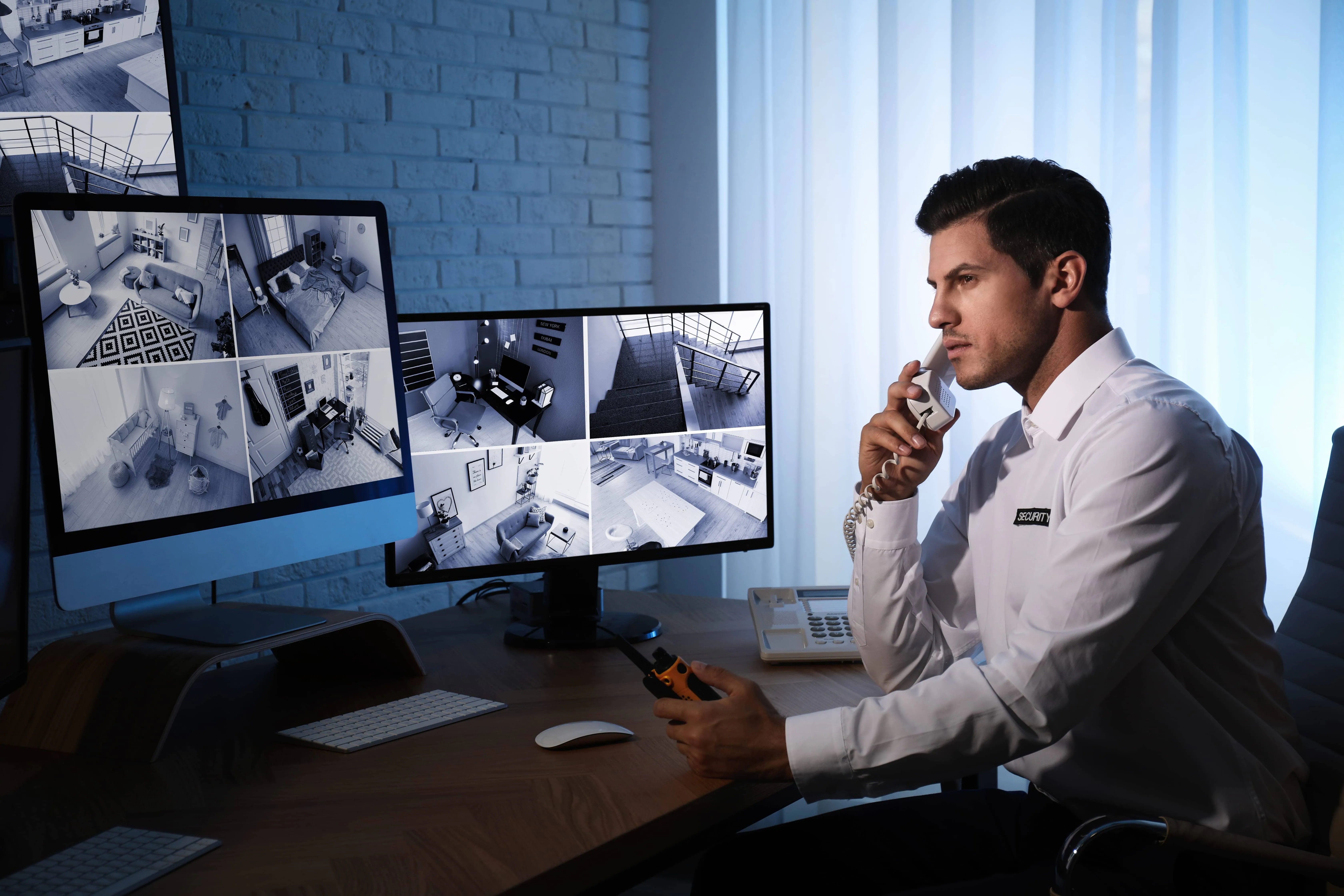
A CCTV monitoring operator is a trained professional responsible for watching live camera feeds, detecting security threats, and taking immediate action. According to industry standards, operators do far more than observe—they assess situations, activate responses, and coordinate with emergency services.
Professional CCTV monitoring differs significantly from passive recording systems. Recorded footage only helps after incidents occur. A trained CCTV monitoring operator intervenes during incidents, often preventing crimes before completion.
For those new to CCTV monitoring, our complete beginner’s guide explains how professional monitoring works.
Where CCTV Monitoring Operators Work
CCTV monitoring operators work in dedicated control rooms equipped with multiple displays, communication systems, and alarm integration. Professional CCTV monitoring service providers like GCCTVMS operate centralized monitoring centres serving clients across industries.
Some large facilities employ in-house operators, though most businesses outsource to professional security camera monitoring service providers for cost efficiency and expertise.
7 Daily Responsibilities of a CCTV Monitoring Operator
Responsibility #1 — Active Feed Surveillance
The primary responsibility of every CCTV monitoring operator involves continuous surveillance of live camera feeds. According to security industry analysis, operators typically monitor 20-50 cameras simultaneously, using systematic scanning patterns to maintain coverage.
Active surveillance requires sustained concentration. CCTV monitoring operators develop pattern recognition skills, identifying normal activity versus suspicious behaviour across multiple feeds. This differs from casual observation—professional CCTV monitoring follows structured protocols ensuring nothing goes unnoticed.
Responsibility #2 — Threat Detection and Assessment
Detecting threats requires more than watching screens. A skilled CCTV monitoring operator recognizes subtle indicators—unusual timing, unfamiliar vehicles, suspicious behaviour patterns, and access attempts at unexpected locations.
Threat assessment determines an appropriate response. Not every motion alert requires police dispatch. CCTV monitoring operators use judgment to distinguish genuine threats from false alarms, ensuring security service resources are deployed appropriately.
Learn more about threat response in our guide to CCTV monitoring for business security.
Responsibility #3 — Incident Response and Escalation
When threats materialize, CCTV monitoring operators execute response protocols immediately. According to monitoring service analysis, professional operators can activate audio warnings, contact emergency services, and notify property owners within seconds.
Response escalation follows defined procedures:
- Audio warnings through two-way communication deter intruders
- Emergency service dispatch for active threats
- Property owner notification per client preferences
- On-site security service coordination when available
Professional CCTV monitoring service providers train operators on client-specific escalation procedures, ensuring appropriate responses for different situations.
Responsibility #4 — Documentation and Reporting
Every incident requires documentation. CCTV monitoring operators record timestamps, descriptions, actions taken, and outcomes. This documentation serves multiple purposes—client reporting, legal evidence, and security service improvement.
Quality security camera monitoring service includes detailed incident reports. Operators capture video clips, complete written reports, and maintain activity logs throughout shifts. This documentation helps businesses understand security events and evaluate CCTV monitoring service effectiveness.
Responsibility #5 — System Health Monitoring
A CCTV monitoring operator cannot protect properties with malfunctioning equipment. According to service analysis, operators continuously verify camera functionality, identify offline equipment, and report technical issues.
System monitoring responsibilities include:
- Checking all camera feeds for proper operation
- Identifying image quality problems
- Verifying recording systems function correctly
- Reporting equipment failures to technical teams
- Ensuring security camera monitoring service coverage continuity
Proactive system monitoring prevents coverage gaps that could compromise security service effectiveness.
Responsibility #6 — Access Control Management
Many CCTV monitoring operators handle access control alongside surveillance. This includes verifying visitor identities through camera feeds, granting or denying entry based on authorization, and tracking movements throughout properties.
Access control integration allows CCTV monitoring service operators to verify delivery personnel, screen after-hours visitors, and support building management. This responsibility overlaps with virtual doorman and reception services.
Explore GCCTVMS services covering access control and CCTV monitoring.
Responsibility #7 — Shift Handover and Communication
According to camera monitoring analysis, effective shift handovers ensure continuous protection. Outgoing CCTV monitoring operators brief incoming colleagues on active situations, ongoing concerns, and client-specific notes.
Handover communication includes:
- Active alerts and ongoing incidents
- Equipment issues await resolution
- Client-specific instructions or schedule changes
- Suspicious activity patterns requiring continued observation
Professional CCTV monitoring service maintains continuity through structured handover procedures.
Skills Required for CCTV Monitoring Operators
Technical Skills
CCTV monitoring operators must operate video management systems, control PTZ cameras, and navigate security camera monitoring service platforms. Basic troubleshooting abilities help operators maintain coverage when minor issues occur.
Technical competency develops through training and experience. Quality CCTV monitoring service providers invest in operator training on their specific systems.
Cognitive Skills
Sustained attention across long shifts challenges many people. CCTV monitoring operators maintain focus while scanning multiple feeds, often during overnight hours with minimal activity.
Quick decision-making under pressure separates effective operators from average performers. When incidents occur, CCTV monitoring operators must assess threats and execute responses within seconds.
Communication Skills
Clear communication with emergency services, clients, and security service personnel directly impacts response effectiveness. CCTV monitoring operators provide accurate information quickly during high-stress situations.
Written documentation requires precision. Incident reports must capture events accurately for legal and operational purposes.
Technology CCTV Monitoring Operators Use Daily
Professional CCTV monitoring operators work with sophisticated technology:
Video Management Systems (VMS) provide centralized control over camera feeds, recording, and playback. Operators navigate these platforms throughout shifts.
Analytics and Alert Systems flag unusual activity automatically. Motion detection, perimeter alerts, and license plate recognition support CCTV monitoring operator awareness.
Communication Tools enable direct intervention. Two-way audio systems, emergency dispatch connections, and client notification platforms allow immediate response.
Understanding why 24/7 CCTV monitoring matters helps businesses appreciate the technology infrastructure supporting professional operators.
What Separates Quality CCTV Monitoring Service from Basic Security
Operator Training Standards
Quality CCTV monitoring service providers invest in comprehensive operator training. Professional CCTV monitoring operators receive certification, ongoing education, and scenario-based practice.
Basic security service often employs undertrained personnel watching too many cameras without proper protocols. The difference shows in response times and incident outcomes.
Response Time Commitments
Professional security camera monitoring service guarantees response standards—typically sub-10-second alert acknowledgment with defined escalation timelines. Basic services offer no such commitments.
Staffing and Coverage
Quality CCTV monitoring service maintains appropriate operator-to-camera ratios. Overloaded operators miss incidents. Professional providers staff adequately for reliable security camera monitoring service.
GCCTVMS offers custom CCTV monitoring plans, ensuring appropriate coverage for different property types and industries.
Why GCCTVMS CCTV Monitoring Operators Deliver Superior Security Service
Professional Training Programs
All GCCTVMS CCTV monitoring operators complete comprehensive training covering technical skills, threat assessment, response protocols, and client-specific procedures. Continuous development keeps operators current with security service best practices.
Interested in joining our team? View GCCTVMS job openings for CCTV monitoring operator positions.
Advanced Technology Infrastructure
GCCTVMS operates dedicated control rooms with redundant systems ensuring security camera monitoring service reliability. Analytics-assisted detection supports operators in identifying threats across multiple properties.
Proven Response Standards
GCCTVMS guarantees response times for all CCTV monitoring alerts. Documented escalation procedures cover every scenario. Direct coordination with emergency services enables rapid intervention.
30-Day Free Trial
Experience GCCTVMS CCTV monitoring operator quality firsthand. Evaluate professional security camera monitoring service before commitment. See trained operators protecting your property.
Conclusion
CCTV monitoring operators handle seven primary responsibilities daily: active surveillance, threat detection, incident response, documentation, system monitoring, access control, and shift communication. These responsibilities require technical skills, cognitive abilities, and professional training.
Quality CCTV monitoring service depends on trained operators making split-second decisions. Understanding what CCTV monitoring operators do helps businesses evaluate security camera monitoring service providers and helps career seekers assess their fit for this security service role.
GCCTVMS CCTV monitoring operators receive professional training, use advanced technology, and deliver guaranteed response standards. Experience superior security camera monitoring service through our 30-day free trial.
Contact GCCTVMS for professional CCTV monitoring service protecting your property.
FAQ’s
What does a CCTV monitoring operator do?
A CCTV monitoring operator watches live camera feeds, detects security threats, activates audio warnings, contacts emergency services, and documents incidents. Professional operators in CCTV monitoring service handle 20-50 cameras simultaneously using systematic surveillance protocols
What skills do CCTV monitoring operators need?
CCTV monitoring operators need technical skills for operating video management systems, cognitive skills for sustained attention and quick decision-making, and communication skills for coordinating with emergency services and security service personnel during incidents
How does a professional CCTV monitoring service differ from basic security?
Professional CCTV monitoring service employs trained operators with certification, guarantees sub-10-second response times, and maintains appropriate staffing levels. Basic security services often use undertrained personnel watching excessive cameras without defined protocols
What technology do security camera monitoring service operators use?
Security camera monitoring service operators use video management systems (VMS), analytics platforms with motion detection and perimeter alerts, two-way audio communication systems, and emergency dispatch connections for immediate incident response
How do CCTV monitoring operators handle incidents?
CCTV monitoring operators follow defined escalation procedures—activating audio warnings to deter intruders, dispatching emergency services for active threats, notifying property owners per client preferences, and documenting all actions for CCTV monitoring service records
