




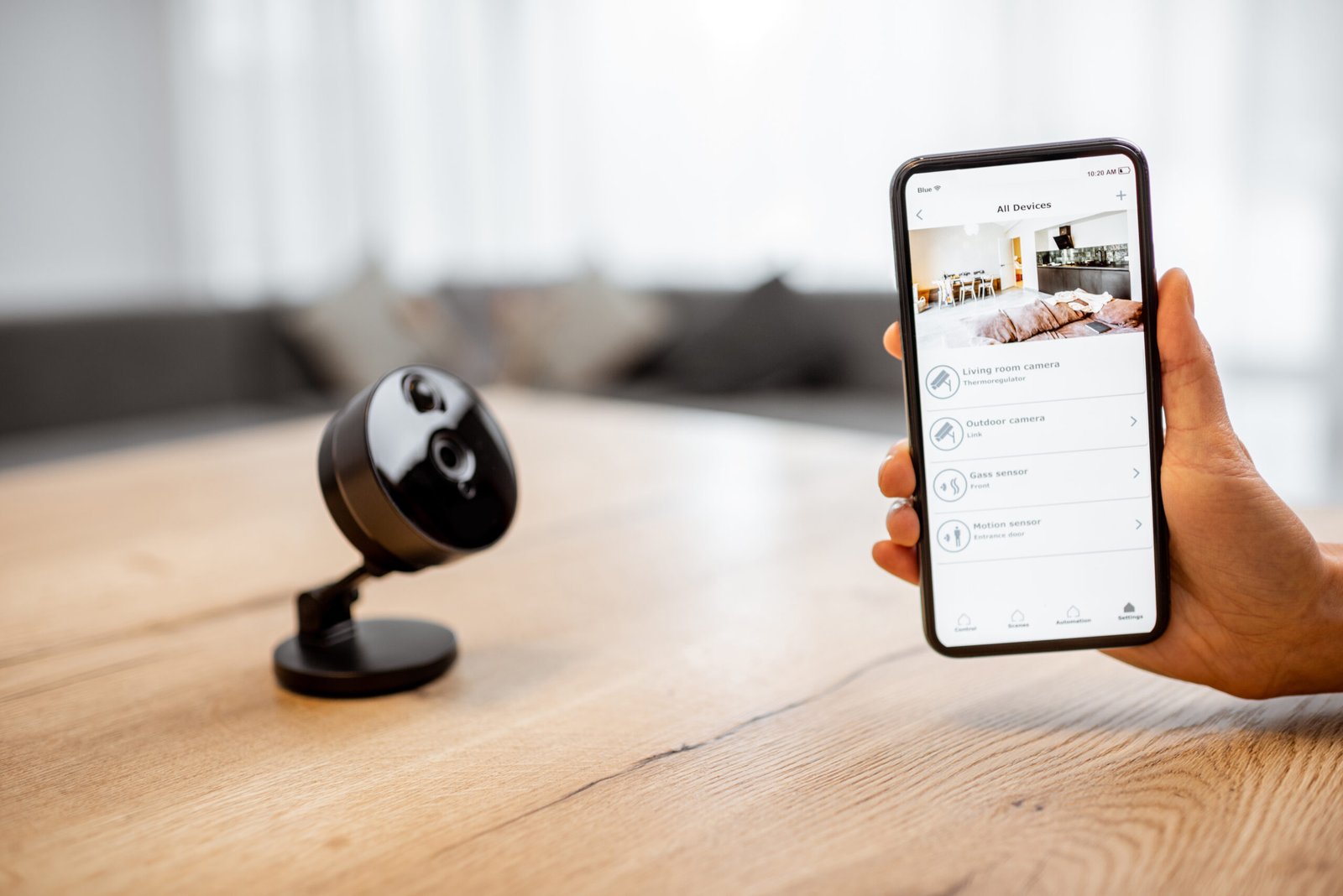
What Security Monitoring Company Do You Use at Home? Real Homeowner Experiences and Recommendations
A new homeowner spent two weeks researching security monitoring companies across the United States. She read hundreds of online reviews but couldn’t distinguish genuine customer experiences from sponsored content and fake testimonials. Every company claimed “best customer service” and “fastest response times” in identical marketing language. Frustrated, she finally asked neighbors a simple question: “What security monitoring do you actually use?” Within 10 minutes, she received honest answers worth more than weeks of internet research. This represents the struggle most American homeowners face when choosing home protection.
Security monitoring marketing makes every company sound identical across the US market. Online reviews often appear sponsored, fake, or outdated. Vendor sales pitches promise perfection while reality differs significantly. Homeowners need authentic peer experiences rather than advertising manipulation. Distinguishing quality providers from poor ones through marketing proves nearly impossible. Contract commitments lasting 36-60 months make wrong choices expensive. Family safety depends on selecting reliable companies delivering promised protection.
Understanding which professional security monitoring companies homeowners actually use and trust requires examining real customer experiences, regional provider performance across US states, pricing transparency, and critical factors separating marketing promises from service delivery reality.
The Problem with Security Monitoring Company Marketing
Vendor claims create identical-sounding promises across the industry. Every company advertises “best customer service” regardless of actual support quality. All promise “fastest response times” without documented proof. Marketing budgets don’t correlate with service quality or customer satisfaction. Aggressive sales tactics, particularly door-to-door campaigns, often hide mediocre performance. Sponsored content disguises advertising as independent reviews. Paid influencer recommendations mislead homeowners seeking honest guidance. Fake review manipulation remains common across platforms. Award claims frequently prove meaningless without verification.
Real homeowner experiences reveal contract surprises hidden in marketing. Long-term users report service consistency over months and years rather than promotional periods. Honest reporting includes both positives and negatives from actual daily use. Real costs surface including hidden fees never mentioned during sales pitches. Customer service quality becomes apparent through repeated interactions over time. Installation experience details emerge from those who lived through setup. Equipment reliability reports come from years of operation. Response time reality contrasts sharply with advertised promises.
Comparing top remote CCTV monitoring services for home security demonstrates how professional evaluation differs from vendor marketing, focusing on measurable performance rather than promotional claims.
Regional performance variations affect national companies significantly across US markets. Local technician quality varies dramatically between states and cities. Regional monitoring centers impact response speeds and service quality. State-specific contract regulations create different consumer protections. Climate and geography influence equipment performance and longevity. Local law enforcement integration differs by jurisdiction and department. Service availability spans unevenly across urban, suburban, and rural America.
Community recommendations reveal patterns vendor marketing obscures. Consistency across multiple independent reports validates quality claims. Pattern recognition identifies common issues affecting many customers. Local reputation indicates actual performance homeowners experience daily. Neighbor experiences predict your likely experience accurately. Warning signs emerge clearly from multiple similar complaints. Success patterns demonstrate reliable providers worth considering.
Popular Security Monitoring Companies Homeowners Actually Use
ADT Security Monitoring dominates US market share with recognized branding. Most common homeowner experience involves established name recognition but mixed service quality varying significantly by region. Pricing reality settles at $45-60 monthly after promotional periods end and regular rates apply. Contract terms standardize at 36-month minimums with early termination fees ranging $200-500. Customer service reports vary dramatically by region, with offshore call centers handling many inquiries. Installation feedback indicates professional technicians but sometimes aggressive upselling during appointments. Equipment quality proves reliable but proprietary, locking homeowners to ADT systems. Best suited for homeowners wanting established brand recognition and insurance company familiarity. Common complaints center on long contracts, annual price increases, and difficult cancellation processes. Success stories highlight reliable monitoring performance and substantial insurance discounts offsetting monthly costs.
SimpliSafe with professional monitoring attracts DIY-friendly homeowners seeking flexibility. Most common experience involves easy self-installation with optional professional monitoring adding protection. Pricing reality runs $18-28 monthly for monitoring with equipment costing $200-400 upfront purchase. Contract terms require no long-term commitments, offering month-to-month flexibility valued by many. Customer service reports generally positive with US-based support representatives. Installation feedback emphasizes easy self-installation requiring no professional technician visits. Equipment quality rates good for price point with battery-powered convenience. Best suited for budget-conscious, tech-comfortable homeowners wanting portability. Common complaints involve cellular connection issues in some geographic areas. Success stories emphasize contract flexibility, system portability when moving, and affordable protection.
Resources explaining how much home security systems cost provide independent analysis of total ownership expenses beyond promotional pricing, helping homeowners budget accurately for long-term commitments.
Ring Alarm with professional monitoring integrates Amazon ecosystem connectivity. Most common experience centers on Amazon integration and familiar interface. Pricing reality offers $10-20 monthly monitoring with equipment packages costing $200-300. Contract terms require no long-term commitments for flexible arrangements. Customer service reports adequate quality integrated with broader Amazon support systems. Installation feedback indicates simple DIY setup manageable for most homeowners. Equipment quality represents consumer-grade with frequent software updates. Best suited for Amazon ecosystem users seeking budget monitoring solutions. Common complaints reference WiFi dependency requirements and privacy concerns. Success stories highlight extremely affordable monitoring and seamless Alexa integration.
Frontpoint Security Monitoring emphasizes customer service quality differentiating from competitors. Most common experience involves consistently praised support interactions. Pricing reality runs $45-50 monthly with equipment costing $300-500 upfront. Contract terms typically require 36 months but offer somewhat flexible arrangements. Customer service reports consistently praised with US-based representatives. Installation feedback emphasizes DIY approach with excellent technical support available. Equipment quality uses reliable GE components. Best suited for homeowners prioritizing responsive customer service. Common complaints note higher monthly costs than pure DIY alternatives. Success stories emphasize exceptionally responsive support and reliable monitoring performance.
Understanding best home security systems with monitoring from independent evaluators helps homeowners compare options without vendor bias influencing recommendations.
What Homeowners Actually Pay for Security Monitoring
Standard monthly monitoring fees vary across service tiers and providers. Basic monitoring covering sensors only costs $30-45 monthly typical across major providers. Video monitoring add-ons increase costs by $10-20 monthly for camera integration. Smart home integration features add $5-15 monthly for automation capabilities. Cellular backup often includes in base price or adds $5-10 monthly. Total typical range spans $35-80 monthly for most homeowners. Premium services offering advanced features run $80-150 monthly for comprehensive protection.
Equipment costs reality varies dramatically between purchase and lease models. Free equipment promotions require long contracts limiting flexibility significantly. Financed equipment adds $20-50 monthly for 36-60 months increasing total costs. Upfront purchase ranges $200-1,500 depending on system comprehensiveness and features. Ownership versus lease implications affect long-term flexibility and switching ability. Equipment locked to specific companies prevents reuse with competitors. Upgrade costs and technology obsolescence create ongoing expenses over years.
Exploring affordable CCTV monitoring providers demonstrates budget-friendly options delivering professional protection without premium pricing typical of major national brands.
Installation fees affect total initial investment significantly. Professional installation ranges $0-200 with promotional waivers common during sales periods. DIY installation costs $0 beyond equipment purchase eliminating technician fees. Complex installations requiring extensive wiring or camera mounting cost $200-500 for labor. Service call fees run $50-150 typical for repairs or modifications. Relocation costs when moving homes vary by provider and system complexity. Re-installation fees after equipment failures add unexpected expenses.
Hidden fees homeowners discover after signing contracts create budget surprises. Activation fees charge $50-100 commonly for initial system setup. Monthly regulatory fees add sneaky $2-5 charges buried in billing. False alarm fines from municipalities cost $50-200 per incident in many cities. Service change fees charge $25-75 for contract modifications or equipment additions. Early termination penalties ranging $200-500+ trap homeowners in unsatisfactory arrangements. Equipment non-return fees charge $200-400 if hardware not returned properly. Annual price increases of 3-5% typical compound costs over contract terms.
According to ADT’s cost breakdown, equipment and installation represent significant initial investments, though promotional periods often reduce upfront expenses for homeowners committing to monitoring contracts.
Total cost of ownership varies dramatically between providers and contract structures. ADT 36-month contract scenario totals approximately $1,950 over three years including $50 monthly fees, promotional installation, included equipment lease, and $150 hidden fees. SimpliSafe no-contract scenario totals approximately $1,250 over three years with $25 monthly monitoring, DIY installation, $350 owned equipment, and minimal hidden fees. Vivint 60-month financed scenario reaches approximately $5,000 over five years combining $45 monthly monitoring, $35 monthly equipment financing, promotional installation, and $200 hidden fees.
Value assessment from real users weighs costs against benefits received. Insurance discounts ranging 5-20% save $50-200 annually offsetting monitoring expenses. Peace of mind value remains subjective but significant for many families. Prevented break-ins justify entire investment when single incident avoided. Family safety priority outweighs monthly fees for parents protecting children. Comparison to potential losses from theft or property damage validates expense. Contract flexibility proves worth premium pricing to some homeowners.
Customer Service Quality: What Homeowners Report
Response time during actual incidents determines monitoring effectiveness practically. Alarm trigger to phone call ranges 30 seconds to 5+ minutes reported across providers. Phone response quality varies from scripted robotic interactions to genuinely helpful conversations. Police dispatch speed spans immediate action to 10+ minute delays affecting outcomes. False alarm handling ranges from patient understanding to irritated responses. Emergency procedure clarity varies significantly impacting homeowner confidence during crises. Follow-up after incidents distinguishes superior providers from mediocre competitors.
Technical support accessibility affects daily system usability and satisfaction. Phone wait times range 2 minutes to 45+ minutes reported across different companies. Live chat availability and quality vary dramatically between providers and times. Email response times span same-day replies to never receiving responses. After-hours support quality often degrades compared to business hours. Technician dispatch speed for equipment repairs determines downtime duration. Problem resolution timeframes separate efficient providers from frustrating experiences.
Account changes and billing issues test customer service capabilities practically. Ease of modifying services reveals flexibility and responsiveness. Billing error correction experiences demonstrate accountability and efficiency. Contract negotiation flexibility shows willingness to retain satisfied customers. Moving home assistance quality varies dramatically between national and local providers. Equipment upgrade processes reveal upselling pressure versus genuine service. Cancellation difficulty reports expose contract enforcement aggressiveness.
US-based versus offshore support creates significant experience differences for homeowners. Communication clarity improves dramatically with native English speakers understanding American contexts. Empowerment to solve problems varies with domestic representatives having more authority. Cultural understanding of US homes and expectations prevents misunderstandings. Homeowner preferences strongly favor US-based support based on satisfaction surveys. Cost savings motivating offshore support trade quality for corporate profits. Companies maintaining US support gain competitive advantage through superior service.
Consistently praised providers include Frontpoint, SimpliSafe, and Cove for responsive support. Mixed reviews characterize ADT with region-dependent quality and Brinks varying significantly. Frequently criticized companies include Vivint where sales promises disconnect from service delivery. Local providers generally rate high for direct owner accessibility and accountability. Small companies provide personal attention impossible at corporate scale. Large companies struggle maintaining consistency across thousands of technicians and representatives nationwide.
Installation Experiences and Equipment Quality
Professional installation experiences vary significantly impacting initial impressions and long-term satisfaction. Technician professionalism and courtesy create positive or negative first encounters. On-time arrival reliability demonstrates respect for homeowner schedules and commitments. Work quality and attention to detail determine system performance and longevity. Upselling pressure during installation frustrates homeowners expecting straightforward service. Cleanup and property respect separate professional companies from careless contractors. Training provided on system use affects family adoption and proper utilization. Timeline from sale to installation reveals operational efficiency and customer prioritization.
Understanding benefits of two-way audio in security camera systems helps homeowners evaluate advanced features enhancing monitoring capabilities beyond basic sensor detection.
DIY installation feedback emphasizes accessibility for non-technical homeowners seeking cost savings. Ease of setup determines whether average homeowners succeed independently. Instruction quality and clarity prevent frustration during installation process. Time required for installation ranges 1-4 hours for typical systems. Technical support availability during setup provides critical assistance when needed. Common installation challenges include WiFi connectivity and sensor placement optimization. Tools and skills required remain minimal for most modern wireless systems. Apartment and rental installation limitations prevent permanent modifications in some situations.
Equipment reliability reports emerge from months and years of actual use. Sensor failure rates and longevity determine replacement frequency and costs. Camera quality and night vision performance affect practical security value delivered. Control panel reliability ensures consistent system availability when needed. Battery life for wireless components impacts maintenance requirements and false alarms. Weather resistance for outdoor equipment determines durability in harsh climates. False alarm frequency from equipment malfunctions frustrates homeowners and strains police resources. Warranty coverage and claim experiences reveal manufacturer accountability and support quality.
Mobile app and user interface quality affects daily interaction and system value. App reliability and uptime determines remote access dependability families expect. Ease of use for family members including children and elderly affects adoption. Notification customization prevents alert fatigue while maintaining security awareness. Video quality and streaming speed impact remote monitoring practical utility. Remote control functionality enables arming, disarming, and system management remotely. Integration with smart home devices creates seamless automation valuable to many. Software update frequency and improvements demonstrate ongoing development investment.
Making the Decision: Framework from Experienced Homeowners
Assessing actual needs prevents over-buying features rarely used in practice. Property type and size determine equipment quantity and monitoring requirements. Neighborhood crime statistics inform realistic threat assessment and protection needs. Household composition including elderly, children, and pets affects system design choices. Travel frequency and duration justify professional monitoring investment decisions. Valuable contents and protection priorities guide equipment selection and placement. Smart home integration desires influence technology compatibility requirements. Budget constraints require realistic assessment of affordable monthly commitments. Contract flexibility requirements depend on life stability and moving likelihood.
Exploring 24-7 live CCTV monitoring services provides options for homeowners wanting continuous professional oversight beyond basic alarm monitoring typical of entry-level packages.
Prioritizing features that matter avoids paying for unused capabilities reducing value. Must-have features for most homeowners include reliable 24/7 professional monitoring, quick response time under 2 minutes, US-based customer service accessibility, transparent pricing without hidden fees, contract flexibility allowing life changes, and mobile app access for remote management. Nice-to-have features benefiting some include video verification reducing false alarms, smart home integration creating automation, medical alert capability for elderly residents, home automation controlling lights and locks, and energy management optimizing utility usage.
Vetting companies before committing prevents expensive mistakes and contract traps. Check Better Business Bureau ratings and complaint patterns revealing systematic issues. Read uncensored reviews on Reddit and consumer forums avoiding sponsored content. Ask neighbors what they actually use gaining local reputation insights. Request and read entire contracts before installation appointments preventing surprises. Verify state licensing confirming legal operation and regulatory compliance. Test customer service responsiveness during research phase predicting future experiences. Compare at least three companies thoroughly evaluating total costs and features. Attend demonstrations but resist same-day signing pressure allowing proper evaluation.
Trial period utilization validates marketing claims through actual testing experience. Most companies offer 30-90 day satisfaction guarantees or trial periods. Test every feature thoroughly ensuring proper operation before commitment. Conduct alarm tests multiple times verifying monitoring center responsiveness. Evaluate customer service responsiveness through intentional interactions and questions. Verify billing matches quoted prices catching discrepancies early. Check contract terms one final time ensuring understanding before trial ends. Document any issues immediately creating paper trails for resolution. Cancel within trial period if dissatisfied avoiding long-term commitment regrets.
Comprehensive guides like SafeHome.org’s best security systems with monitoring provide independent evaluations helping homeowners compare providers objectively without vendor influence affecting recommendations.
Long-term relationship management maintains value throughout contract duration and beyond. Calendar annual price negotiation opportunities leveraging competitive offers. Review contract terms 6 months before renewal considering switching options. Keep all documentation organized including contracts, bills, and correspondence. Test system regularly ensuring continued proper operation and monitoring. Update contact information promptly preventing missed emergency communications. Maintain equipment properly extending longevity and preventing failures. Report issues immediately in writing creating documentation trails. Consider switching at contract end if dissatisfied rather than accepting poor service.
What Homeowners Recommend After Using Security Monitoring
Real users consistently emphasize peer recommendations providing more value than marketing materials. Contract flexibility proves worth paying premium for according to experienced homeowners. Customer service quality varies dramatically between companies affecting long-term satisfaction significantly. Local providers often outperform national chains through personalized attention and accountability. Professional monitoring provides genuine peace of mind justifying monthly investment for families. Hidden fees remain common across industry requiring total cost transparency demands. Testing thoroughly during trial periods prevents long-term commitment regrets. Reading entire contracts before signing prevents surprise terms and conditions.
Top-rated providers by user consensus include Frontpoint, SimpliSafe, and Cove for best customer service. SimpliSafe and Ring Alarm deliver best value combining affordability with professional monitoring. Vivint leads smart home integration despite contract concerns frustrating some customers. ADT maintains traditional monitoring leadership though quality varies regionally across US. Local providers vary by region but consistently receive praise for personalized service. SimpliSafe, Ring, and Cove offer best no-contract flexibility valued by many homeowners.
Most common advice from experienced homeowners emphasizes careful evaluation before commitment. Never sign contracts same day as sales pitches allowing proper evaluation time. Read entire contracts including fine print revealing hidden terms and conditions. Get all promises in writing rather than relying on verbal assurances. Test systems thoroughly during trial periods before committing long-term. Ask neighbors what they use and why gaining local insights. Calculate total 3-year costs before comparing providers accurately. Prioritize customer service quality over fancy features rarely used. Consider month-to-month options even if slightly more expensive for flexibility. Document everything including emails, calls, and issues creating accountability. Don’t fear switching if dissatisfied rather than accepting poor service indefinitely.
For homeowners with specific needs like childcare monitoring, exploring best nanny cam monitoring providers and understanding simple ways to monitor your home with nanny cams provides specialized guidance beyond general security monitoring recommendations.
The security monitoring company you choose matters less than understanding contractual commitments completely. Real homeowners consistently report reading contracts thoroughly, testing during trials, and choosing companies with strong customer service outweighs brand recognition or fancy features promised. The best security monitoring service delivers quick response when needed, treats customers fairly throughout relationships, and provides protection promised at prices agreed upon without surprise charges or service degradation.
Talk to your neighbors about what security monitoring companies they actually use and trust in your specific area. Read entire contracts before signing anything preventing surprise terms. Test systems thoroughly during any trial periods offered before committing. Demand complete transparency on total costs including all fees and potential increases. Choose providers based on real customer experiences rather than marketing claims and advertising promises. Your family’s safety deserves companies delivering on promises rather than merely making them. Contact trusted security monitoring providers requesting honest consultations, transparent pricing, and flexible terms respecting homeowner needs rather than maximizing corporate profits through aggressive sales tactics and inflexible contracts.
