




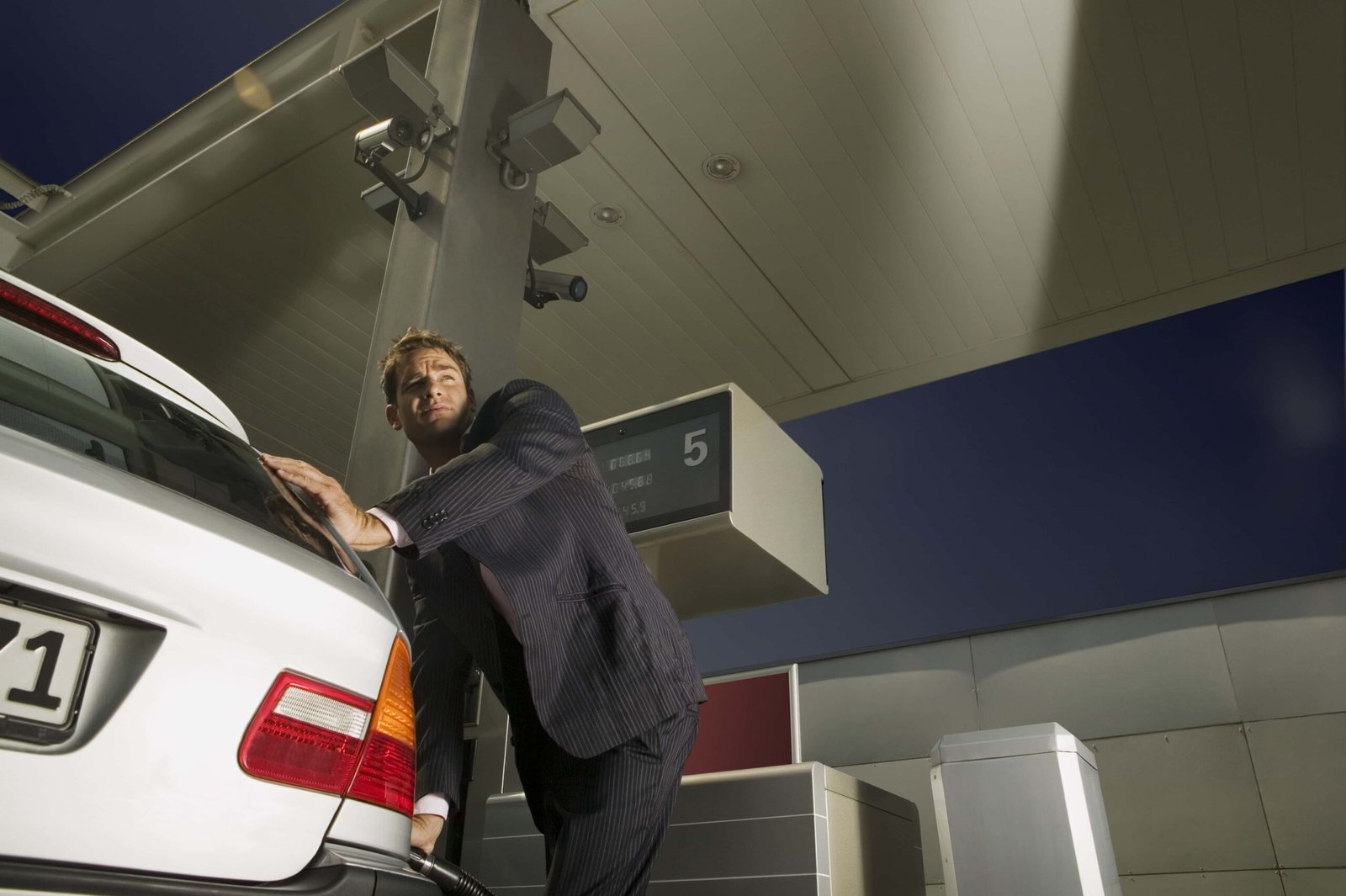
CCTV Monitoring for Gas Stations: Protect Pumps, Forecourt, and C-Store Cash from Real-Time Threats
It’s 2:47 AM. The overnight clerk is stocking the cooler. A pickup truck pulls up to Pump 4 but doesn’t swipe a card. Two people exit the vehicle. One walks toward the c-store entrance. The other stays near the pump with a toolbox.
Three minutes later, $180 in fuel is pumped into a hidden tank in the truck bed. The clerk is being held at gunpoint inside. The cash drawer is empty. The back door swings open. The truck drives off with $400 in fuel and $900 in cash.
This happens at gas stations and convenience stores across the US, UK, Singapore, and Pakistan every single night. The FBI classifies c-stores as the 4th most common location for violent crime. Gas stations rank 7th. Combined, they accounted for 13.8% of all reported robberies in 2022.
CCTV Monitoring for Gas Stations exists because cameras alone never solved this. Recording the crime is not preventing the crime. GCCTVMS provides 24/7 live CCTV monitoring and camera monitoring services built specifically for fuel retailers across every market we serve.
What CCTV Monitoring for Gas Stations Actually Covers
A camera pointed at a pump is not CCTV Monitoring for Gas Stations. It’s a recording device. The difference matters because gas stations face threats that happen in seconds. Fuel theft takes under 3 minutes. A counter robbery takes 45 seconds. A skimmer installation on a pump card reader takes 60 seconds.
Real CCTV monitoring for gas stations means trained operators watch live feeds across the forecourt, c-store counter, parking zones, and back office simultaneously. Operators spot threats as they form. They verify drive-offs in real time. They identify skimmer installations before the first customer gets their card cloned. They dispatch police while the robbery is still in progress.
Hikvision’s gas station solution page breaks down the surveillance hardware gas stations typically deploy. GCCTVMS professional monitoring services add the trained operators that turn hardware into prevention.
The Threats Every Gas Station Owner Should Know About
Gas stations face a threat profile most businesses never see. The combination of cash, fuel, alcohol, tobacco, late hours, and public access creates constant exposure.
Armed Robbery at the Counter
Gas stations and c-stores combined were the location for 13.8% of US robberies in 2022. The average commercial robbery loss is around $1,589 per incident. The real cost is higher once you count insurance premiums, employee turnover after a traumatic event, lost customer trust, and potential wrongful injury or death claims.
Most robberies happen between 11 PM and 5 AM when the clerk is alone and foot traffic is minimal. Visual Monitoring Solutions’ guide on gas station, fuel station, and petrol pump CCTV monitoring explains how remote operators watching the counter feed can spot the approach seconds before the robbery starts. That window is enough to trigger police dispatch and audio warnings.
Drive-Off Fuel Theft
A customer pumps $50 to $100 in fuel and drives away without paying. Nothing dramatic happens. No weapons. No threats. Just a car rolling off the lot. Multiply this across 365 days and fuel theft quietly costs the US convenience store industry tens of millions annually. Gasoline theft cost the US convenience store industry $89 million in 2009, down from a record $300 million in 2005.
License plate capture cameras at every forecourt lane paired with two-way audio surveillance give operators the ability to call out drive-offs in real time and record plates for police reports.
Card Skimmers on Pumps
Skimmers are thin electronic devices installed inside pump card readers to capture customer card data. A skilled installer fits a skimmer in under a minute using a universal pump key or pry tool. The skimmer stays in place for days or weeks, harvesting data from hundreds of cards before anyone notices.
Live monitoring of the forecourt catches skimmer installations in progress. An unauthorized person opening a pump panel at 3 AM is an immediate red flag to a trained operator. DTIQ’s gas station security guide covers how skimmer prevention fits into broader forecourt monitoring.
Beer Runs and Tobacco Theft
A group walks into the c-store, grabs cases of beer or cartons of cigarettes, and runs out the door before the clerk can react. Inventory theft from c-stores runs into the billions industry-wide. Individual gas stations lose thousands per year to beer runs alone.
CCTV monitoring for gas stations with live operators watching the entrance and coolers catches the setup phase before the grab. Audio warnings through store speakers stop most beer runs before they complete.
Forecourt Loitering and Drug Activity
Gas station forecourts are public-facing 24 hours a day. Loiterers, dealers, and unauthorized vehicles using the lot as a meeting point create liability, reduce legitimate customer traffic, and increase the likelihood of secondary crimes. Videoloft’s guide on gas station cloud video surveillance shows how continuous monitoring supports cloud footage retention for these incidents.
GCCTVMS threat detection operators can issue audio warnings through forecourt speakers to move loiterers along without requiring the clerk to confront anyone.
Employee Theft at the Register
C-stores and gas stations see some of the highest employee theft rates in retail. Cash register shorts, inventory walk-outs via the back door, fraudulent refunds, and cigarette carton theft are daily concerns. DTIQ’s gas station security guide explains how counter-level monitoring deters internal theft just by being present.
Where Cameras Belong at a Gas Station
Placement matters more than camera count. A 20-camera system pointed at the wrong zones performs worse than an 8-camera system covering the right ones.
The Forecourt and Every Pump
Every pump needs a camera covering the pump handle, card reader, and the vehicle license plate. Wide-angle cameras at the corners of the canopy cover the full forecourt. Exit lanes need dedicated license plate capture cameras for drive-off documentation. GCCTVMS provides outdoor surveillance and parking lot coverage for forecourt and vehicle movement zones.
The C-Store Counter and Register
The counter is the highest-value target. Cameras should cover the clerk, the register, the customer side of the counter, and the area behind the counter where cigarettes, lottery tickets, and the safe are kept. Multiple angles matter. A single camera behind the clerk misses the customer’s face. A single camera facing the clerk misses what the robber is doing with their hands.
The Entrance and Exit
Every entrance needs a camera high enough to capture face and height of everyone entering. Exit cameras document the direction of departure. These cameras are the primary evidence source for beer runs, counter robberies, and shoplifting incidents.
Coolers, Tobacco Wall, and Hot Spots
Beer coolers, cigarette displays, and high-theft inventory shelves need dedicated cameras. Dome cameras in ceiling corners cover wide aisles. Mid-aisle cameras cover specific product zones. GCCTVMS video surveillance and business surveillance monitoring covers these high-loss zones.
Back Office, Safe, and Back Door
The back office camera covers the safe, the cash counting area, and the back door used for deliveries and trash. Back-door theft is one of the most common loss vectors in c-stores. A camera on the back door documents every entry and exit.
Parking Lot and Air Pumps
Parking lot cameras cover vehicle movement, air pump areas, and any adjacent detailing or car wash zones. These cameras catch vandalism, assault attempts, and unauthorized vehicle use.
How CCTV Monitoring for Gas Stations Stops Crime in Real Time
Here’s how CCTV monitoring for gas stations actually works when trained operators watch the feeds.
Scenario 1: Counter Robbery in Progress. At 2:18 AM, an operator sees a person enter the c-store with their hand in their jacket pocket and their face partially covered. The operator is already watching before the person reaches the counter. Police get dispatched within 15 seconds. Audio warnings activate through the store speaker. The suspect flees before demanding cash.
Scenario 2: Card Skimmer Installation. At 3:40 AM, an operator sees an unfamiliar vehicle pull up to Pump 6. Two people exit and approach the pump with a universal key. Before they can open the panel, the operator activates the forecourt speaker: “You are on camera. Police have been notified. Step away from the pump.” They return to their vehicle and drive off. No skimmer installed. No customer cards compromised.
Scenario 3: Drive-Off Prevention. A vehicle at Pump 2 has been pumping for 4 minutes without the pump authorization clearing. The operator flags the transaction, checks the license plate camera capture, and alerts the clerk inside. The clerk steps out with a polite verification request. The customer pays. If they had driven off, the plate was already captured for police documentation.
GCCTVMS provides live video monitoring and real-time security monitoring trained for these exact scenarios. Videoloft’s cloud video surveillance guide for gas stations explains how cloud retention supports both prevention and post-incident investigation.
CCTV Monitoring for Gas Stations vs. On-Site Guards
A night security guard for a single gas station costs $2,500 to $4,000 per month. That guard stands at one location. They cannot watch Pump 8 while standing at the counter. They cannot check the back door while watching the forecourt.
CCTV monitoring for gas stations costs $200 to $500 per month and covers every camera simultaneously. The operator watches the forecourt, the counter, the cooler, the back door, and the parking lot on one screen. No bathroom breaks. No 4 AM fatigue. No coverage gaps.
Most gas station chains combine both for high-risk locations: one unarmed attendant at the counter for customer interaction, and CCTV monitoring covering every other zone remotely. For single-location owners, monitoring alone provides broader coverage than a guard at a lower cost.
Multi-Site Coverage for Gas Station Chains
Gas station chains and franchise groups running 5 to 500+ sites need consistent security standards at every location. Separate systems at each site create reporting gaps. One stolen camera box at one location breaks the whole chain’s evidence trail.
GCCTVMS provides remote monitoring and control and outsource CCTV monitoring services for multi-site gas station groups from one monitoring centre. Every location gets the same operator training, response time, and incident reporting format. Claims adjusters love it. Franchise compliance teams love it. Risk managers love it.
Insurance Benefits and Compliance Documentation
Commercial property insurers often offer 5% to 15% premium reductions for gas stations with documented live video surveillance monitoring. A gas station paying $18,000/year in commercial property and liability insurance saves $900 to $2,700/year with monitored cameras.
Several fuel brand franchises also require CCTV monitoring as part of franchise compliance audits. Branded stations from major oil companies face periodic security reviews. Documented incident reports from video monitoring services satisfy these audits and protect franchise status.
How GCCTVMS Monitors Gas Stations
GCCTVMS connects to your existing camera system. Any brand. Any gas station size. Independent single-pump station or national chain with 500 sites. We work with existing infrastructure and add the trained operators who watch the feeds in real time.
Our operators understand fuel retail. They know what normal looks like at 3 AM on a Tuesday. They know what a drive-off setup looks like before the fuel starts flowing. They recognise skimmer installation patterns. They spot beer runs in the cooler before the customer reaches the door. They alert your staff, dispatch authorities, and document every incident with the timestamps insurance and law enforcement need.
GCCTVMS provides CCTV Monitoring for Gas Stations across single locations and multi-site portfolios. USA, UK, Singapore, and Pakistan coverage from one monitoring centre. Sub-60-second response time. Insurance-compatible incident reports. Franchise-audit-ready documentation.
Protect What Matters Before the Next Incident
CCTV monitoring with trained operators costs far less than one break-in, one liability claim, or one lost customer. Turn your passive cameras into active protection around the clock.
FAQ’s
What is CCTV Monitoring for Gas Stations?
CCTV Monitoring for Gas Stations means trained operators watch live camera feeds covering pumps, forecourt, c-store counter, coolers, back office, and parking from a remote centre. Operators detect threats in real time, alert staff, dispatch police, and document every incident with timestamps for insurance and franchise compliance.
How much does CCTV Monitoring for Gas Stations cost?
CCTV monitoring services for gas stations cost $200 to $500 per month depending on site size, camera count, and coverage hours. Compare that to $2,500-$4,000/month for one overnight security guard who can only watch one zone at a time.
Where should cameras be placed at a gas station?
Cameras belong at every pump, the canopy corners, exit lanes (for license plate capture), the c-store counter, the register, the entrance and exit, beer coolers, tobacco displays, back office, safe, back door, parking lot, and air pump zones.
Does CCTV monitoring prevent gas station robberies?
Yes. Live security camera monitoring with operators watching the counter in real time catches the robbery setup before it completes. Audio warnings through store speakers and immediate police dispatch stop many robberies before cash is demanded.
Can CCTV monitoring catch fuel drive-offs?
Yes. Forecourt cameras with license plate capture document every vehicle at every pump. Trained operators flag unauthorized pumping in real time and capture plate data for police reports. Audio warnings through forecourt speakers prevent many drive-offs before they happen.
How does CCTV monitoring stop card skimmers?
Live monitoring catches skimmer installations in progress. Unauthorized people opening pump panels at odd hours trigger immediate audio warnings and police dispatch. Without live monitoring, skimmers sit undetected for days or weeks.
Is CCTV monitoring cheaper than hiring a security guard?
For most gas stations, yes. A CCTV monitoring service costs $200-$500/month and covers every camera simultaneously. One overnight guard costs $2,500-$4,000/month and watches one zone at a time. Many chains use both at high-risk locations.
Does CCTV monitoring help with gas station insurance premiums?
Yes. Commercial property and liability insurers often offer 5-15% premium reductions for gas stations with documented live video surveillance monitoring. The discount often covers a significant portion of monitoring costs.
Can one CCTV monitoring service cover multiple gas station locations?
Yes. GCCTVMS provides remote CCTV monitoring services for multi-site gas station groups from one monitoring centre. Every location gets the same response time, operator training, and reporting format.
What about franchise-branded gas stations?
Branded stations from major fuel brands face periodic security audits. Documented CCTV monitoring for gas stations with incident reports satisfies these compliance requirements and protects franchise status.
