




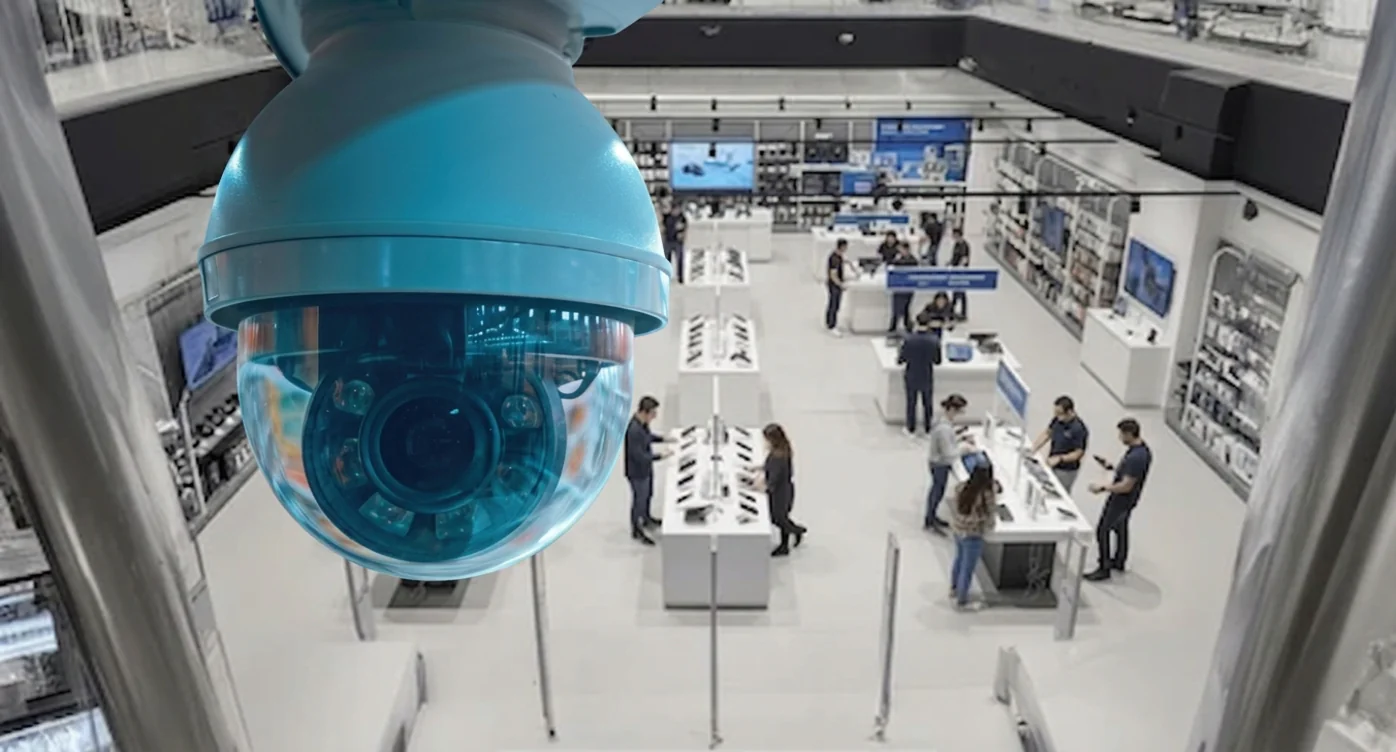
CCTV Monitoring for Retail Stores: Stop Losing Inventory to Theft You Could Prevent
Table of Contents
ToggleU.S. retailers lost $45 billion to shoplifting in 2024. 85% of small retail stores deal with theft at least once a year. The average monthly loss runs between $500 and $2,500. Most of these stores have cameras. Most of those cameras just record footage nobody watches until after the merchandise is gone.
CCTV monitoring for retail stores changes that situation. When trained operators watch your camera feeds and respond in seconds, cameras go from passive recorders to active theft prevention. Here’s what works and what it costs.
What CCTV Monitoring for Retail Stores Actually Includes
CCTV Monitoring for Retail Stores means professional operators watch your retail store cameras live, not just recording footage you review later. This service includes:
- Live operator surveillance watching your cameras during business hours, after-hours, or 24/7
- Real-time threat detection identifying shoplifters, suspicious behavior, and employee theft as it happens
- Two-way audio warnings letting operators speak directly to suspects through camera speakers
- Instant alerts notifying you and your staff via mobile app when threats are detected
- Police coordination contacting law enforcement with verified threats and precise details
- Incident documentation providing timestamped video evidence for investigations and insurance claims
Unlike unmonitored cameras that document crimes after completion, professional monitoring services intervene during incidents. When an operator sees someone concealing merchandise, they issue an audio warning: “Security is monitoring you. Return the items to the shelf.” Most shoplifters flee rather than continue.
This immediate response distinguishes security camera monitoring service from DIY recording systems. Cameras become active prevention tools instead of expensive hard drives storing footage nobody watches.
The Real Cost of Retail Theft in 2026
Retail theft damages your business in ways that extend beyond missing inventory. Understanding total impact helps you evaluate whether CCTV monitoring services justify their cost.
Direct Financial Losses: National Retail Federation data shows shoplifting cost U.S. retailers $45 billion in 2024, with organized retail crime incidents rising 19% from 2023. Small independent shops lose $500 to $2,500 monthly without realizing it. A single theft incident at specialty stores (jewelry, electronics, phones) can cost thousands in one visit.
Employee Theft Impact: Internal theft accounts for 29% of retail shrinkage according to FBI statistics. Employee theft costs businesses $50 billion annually—often exceeding shoplifting losses at small retailers. Cash register fraud, stockroom theft, and fraudulent returns by staff members create ongoing losses most owners don’t detect until annual inventory counts reveal discrepancies.
Insurance Complications: Repeated theft incidents trigger insurance claims that increase premiums for years. One $5,000 claim can raise your annual premiums by $1,200-$2,000 over three years—costing more than the original loss. Many insurers require professional video surveillance services for coverage renewal after multiple claims.
Operational Disruption: After break-ins, stores face hours or days of interrupted operations during police investigations, insurance assessments, and repairs. Lost sales during closure often exceed stolen merchandise value. Customer confidence suffers when they witness theft or learn about repeated incidents.
Organized Crime Targeting: Professional theft rings target multiple locations systematically. They observe store patterns, identify camera blind spots, and coordinate teams to overwhelm staff. Without real-time security monitoring, these groups strike repeatedly before you recognize the pattern.
Where to Place Cameras in a Retail Store
Camera placement determines whether your CCTV monitoring for retail stores system prevents theft or just records it. Professional operators need clear views of specific areas to identify and respond to threats effectively.
Cash Registers (Priority 1): Mount cameras directly above registers with overhead angles capturing cash handling, transaction screens, and customer interactions. This placement catches register fraud, short-changing scams, and refund fraud. Operators watching live video monitoring feeds can verify suspicious transactions before staff completes them.
Store Entrances and Exits (Priority 1): Position cameras at every entry point showing clear face shots of everyone entering or leaving. These cameras help operators track suspects from entry through attempted theft to exit, providing complete incident documentation. Exit cameras catch shoplifters trying to leave with concealed merchandise.
Stockroom and Back Office (Priority 2): Employee theft often occurs in areas customers can’t see. Stockroom cameras monitor inventory access, prevent merchandise theft during unloading, and document who handled items. Back office cameras protect safes, cash counting areas, and sensitive records.
Fitting Room Entry Points (Priority 2): Camera coverage at fitting room entrances (never inside) tracks how many items customers take in versus carry out. This simple count catches the most common shoplifting method: entering with multiple items and leaving with concealed merchandise under clothing.
Loading Docks and Delivery Areas (Priority 2): Delivery bay cameras prevent theft during receiving, catch delivery personnel taking merchandise, and document shipment conditions for dispute resolution. Organized theft groups target loading areas during deliveries when attention is divided.
High-Value Merchandise Displays (Priority 3): Electronics, jewelry, cosmetics, and other expensive items need dedicated camera coverage. Position cameras to show customer hands clearly—operators need to see when someone conceals items in bags, pockets, or clothing.
Parking Lots (Priority 3): Exterior cameras deter after-hours break-ins, catch vehicle-based theft (smash-and-grab), and provide evidence for customer vehicle incidents. Well-lit parking areas with visible cameras reduce crime in your immediate area.
Aisle Coverage (Priority 3): For larger stores, aisle cameras fill coverage gaps between priority areas. Pan-tilt-zoom cameras let operators follow suspects through the store, maintaining visual contact from entry to exit.
Professional camera monitoring service providers assess your layout during installation, identifying blind spots and recommending placement adjustments. GCCTVMS offers free security assessments showing where cameras deliver maximum protection.
CCTV Monitoring Stops Shoplifting in Real Time
Understanding the intervention process shows why remote CCTV monitoring services prevent theft while unmonitored cameras don’t.
Detection Phase: Trained operators recognize suspicious behavior patterns: loitering near expensive items, glancing at cameras repeatedly, concealing merchandise in bags or clothing, removing security tags, or coordinating with accomplices. They distinguish shoplifters from legitimate customers through experience monitoring thousands of retail incidents.
Verification Phase: Before responding, operators verify the threat. They zoom cameras for clear views, track suspects across multiple camera angles, and confirm suspicious items were concealed rather than legitimately carried. This verification prevents false accusations that damage customer relationships.
Intervention Phase: Once theft is confirmed, operators trigger immediate responses through two-way audio surveillance systems:
“Security is monitoring you at the cosmetics display. We see the items you concealed in your bag. Return them to the shelf and leave the store immediately.”
This direct confrontation works because suspects didn’t expect anyone watching live. Most shoplifters abandon merchandise and flee. The audio warning often stops theft without staff confrontation or police involvement.
Escalation Phase: If suspects ignore warnings, operators alert your on-site staff via mobile app with suspect location, description, and actions. Simultaneously, they contact local police with verified theft-in-progress details. Response times drop dramatically when police receive confirmed crimes versus alarm activations.
Documentation Phase: Operators record complete incident timelines with timestamped video clips showing entry, suspicious behavior, concealment, warnings issued, and final outcome. This documentation supports police investigations, insurance claims, and prosecution if suspects are apprehended.
This five-phase process happens in minutes. Compare that to unmonitored systems where you discover theft hours or days later while reviewing footage—long after suspects are gone and merchandise is sold.
Employee Theft: The Bigger Problem Nobody Talks About
Most retail owners focus cameras on shoplifters while ignoring the larger threat: employee theft. Internal shrinkage costs retailers more than external theft at many small businesses.
Common Employee Theft Methods:
Cash Register Fraud: Employees void legitimate sales and pocket cash, process fake returns to steal money, give unauthorized discounts to friends, or simply fail to ring up sales. Register cameras with CCTV monitoring catch these patterns through behavior analysis—operators notice when cashiers repeatedly access void functions or complete transactions without scanning items.
Inventory Theft: Stockroom access without supervision enables employees to steal merchandise during shifts. They conceal items in personal bags, arrange after-hours pickups, or collaborate with delivery drivers to “lose” inventory during receiving. Stockroom cameras monitored by surveillance camera monitoring service providers catch unusual access patterns and suspicious behavior.
Sweethearting: Employees give free merchandise or deep discounts to friends and family members posing as regular customers. This sophisticated theft is hard to catch without transaction monitoring alongside video review. Operators watching register cameras in real-time notice when cashiers interact unusually with specific customers.
After-Hours Theft: Employees with keys return after closing to steal merchandise, cash, or equipment. 24/7 live CCTV monitoring catches these incidents immediately—operators see unauthorized entry, issue warnings, and contact police while perpetrators are still on-premises.
Impact on Your Business: Employee theft damages morale when honest staff members suspect colleagues. It erodes profit margins in low-margin retail operations where every item counts. And it’s harder to prosecute than shoplifting because employees understand your systems and know how to avoid detection.
Prevention Through Monitoring: Visible cameras with known monitoring reduce employee theft by up to 50%. When staff members know operators watch registers and stockrooms live, opportunity disappears. The psychological deterrent works even better than catching thieves—most employee theft stops when workers realize someone’s paying attention.
GCCTVMS video surveillance services include employee theft monitoring protocols developed specifically for retail environments. Operators understand register fraud patterns, stockroom access irregularities, and suspicious after-hours activity that indicates internal theft.
CCTV Monitoring for Retail Stores vs. Hiring a Guard
Budget-conscious retail owners often compare security camera monitoring service costs against hiring security guards. Understanding both options helps you choose the right protection for your store.
Security Guard Costs: One security guard costs $2,500 to $4,000 monthly for daytime coverage (8-hour shifts, 5-6 days weekly). 24/7 coverage requires three guards rotating shifts—total monthly cost reaches $7,500 to $12,000. Guards provide visible deterrence and can physically intervene, but they:
- Watch limited areas at once (one guard can’t see stockrooms, registers, aisles, and parking lots simultaneously)
- Take breaks, get distracted, or miss incidents during monotonous shifts
- Create liability if physical confrontations occur
- Require payroll administration, benefits, and management oversight
- May call in sick or quit without notice
CCTV Monitoring Costs: Professional CCTV monitoring services cost $50 to $300 monthly depending on camera count, coverage hours, and features. Most retail stores pay $100-$200 monthly for comprehensive monitoring. This service provides:
- Simultaneous monitoring of every camera angle
- Consistent attention without fatigue or distraction
- Immediate police contact without physical confrontation risk
- No payroll, benefits, or HR administration
- Guaranteed coverage without sick days or turnover
- Recorded evidence of every incident
The Hybrid Approach: Some high-value retailers combine approaches: guards during peak hours for visible deterrence plus remote CCTV monitoring during nights, weekends, and guard breaks. This hybrid model costs less than full-time guards while maintaining continuous protection.
Cost-Effectiveness Analysis: A small retail store losing $1,500 monthly to theft spends $18,000 annually. Professional monitoring at $150 monthly ($1,800 annually) that reduces theft by 60% saves $10,800 in prevented losses—net benefit of $9,000 yearly.
Compare that to a $30,000 annual guard salary. Even if the guard prevents 80% of theft, you spend more on security than you lost to theft originally. For most small retailers, business video surveillance monitoring delivers better financial returns than guards.
Insurance Savings With Monitored Retail Cameras
Many commercial insurers offer premium discounts for retail stores with professional video surveillance services—savings most owners don’t know about or request.
Typical Discount Ranges: Insurance companies reduce premiums by 5-20% for documented monitoring systems. The exact discount depends on:
- Coverage scope (24/7 monitoring earns larger discounts than business-hours-only)
- Camera placement (coverage of registers, exits, and stockrooms maximizes discounts)
- Recording retention (30-90 day footage storage requirements)
- Professional monitoring verification (insurers want proof of live operator service, not just recording)
Qualification Requirements: To qualify for discounts, insurers typically require:
- Professional installation by licensed security companies
- Cameras covering high-risk areas (registers, exits, safes, stockrooms)
- Off-site footage storage (cloud backup prevents loss if on-site equipment is stolen)
- Regular system maintenance and testing documentation
- Professional monitoring service contract (DIY systems rarely qualify for maximum discounts)
Financial Impact: A retail store paying $3,000 annually for commercial insurance receives $450 yearly savings with a 15% discount. Over five years, that’s $2,250 in premium reductions. If your monitoring costs $150 monthly ($1,800 annually), insurance savings cover 25% of monitoring expenses while you gain theft prevention worth thousands more.
Claim Processing Benefits: Beyond discounts, monitored systems accelerate claim processing. When theft occurs despite monitoring, timestamped video evidence from professional monitoring services provides undisputable documentation. Claims that might take weeks to process settle in days with clear video proof of incidents.
How to Request Discounts: Contact your commercial insurance agent and ask about security system discounts. Provide documentation of your CCTV monitoring for retail stores service including:
- Service provider name and contact information
- Coverage hours (24/7 vs. business hours)
- Camera locations and counts
- Recording retention policies
- Monitoring contract terms
Most agents don’t proactively mention these discounts—you must ask specifically about security monitoring premium reductions.
GCCTVMS Covers Retail Stores Across All Formats
GCCTVMS provides CCTV monitoring services designed specifically for retail environments, from single independent shops to multi-location chains across four countries.
Comprehensive Service Features:
Live Operator Monitoring: Trained security professionals watch your retail store cameras during scheduled hours or 24/7. Operators undergo specific training in retail theft patterns, employee fraud detection, and organized crime recognition. They understand the difference between browsers and shoplifters, catching threats other monitoring services miss.
Sub-60-Second Response Times: When operators detect threats, response happens immediately. Audio warnings issue within seconds of confirmed theft. Staff alerts reach your mobile device before suspects reach the exit. Police contact occurs with verified crime details that prioritize response. Fast intervention stops theft instead of documenting it.
Two-Way Audio Deterrence: Two-way audio surveillance lets operators speak directly through camera speakers. This direct confrontation works because suspects expect recording, not live interaction. Audio warnings stop 70% of shoplifting attempts without staff involvement or police calls.
Multi-Location Management: Franchise owners and chain operators managing 3-20 stores access all locations through one unified dashboard. Remote viewing, incident tracking, and performance analytics cover every location simultaneously. One camera monitoring service contract replaces multiple vendors and complicated coordination.
Flexible Coverage Schedules: Choose monitoring during business hours, after-hours only, or complete 24/7 coverage based on your risk profile and budget. Seasonal retailers increase coverage during peak months and reduce during slow periods without contract penalties. Convenience stores operating overnight get dedicated monitoring when no managers are on-site.
Mobile Access and Alerts: View live camera feeds from your smartphone anywhere, anytime. Receive instant push notifications when operators detect threats, complete with suspect descriptions, locations, and actions. Review incident clips immediately without waiting for email reports.
Integration With Existing Cameras: GCCTVMS works with most modern camera systems—you don’t need expensive equipment replacement. Professional installation teams assess your current setup, identify coverage gaps, and recommend cost-effective improvements. Many retailers start monitoring with existing cameras and add coverage incrementally.
Industry-Specific Expertise: GCCTVMS monitors retail stores across multiple formats: independent shops, supermarkets, convenience stores, department stores, discount retailers, specialty boutiques, wholesale marts, and shopping centers. This experience means operators recognize industry-specific theft patterns and respond appropriately.
Transparent Pricing: Monthly costs range from $50-$300 based on camera count and coverage hours. No hidden fees, long-term contracts, or equipment purchase requirements. Most retailers pay $100-$200 monthly for comprehensive coverage of 4-8 cameras with 24/7 monitoring.
Service Coverage Areas: GCCTVMS provides commercial surveillance across the USA, UK, Singapore, and Pakistan. Multi-country retail chains receive consistent service standards across all locations regardless of geography.
Stop Losing Money to Preventable Theft
Retail theft won’t stop on its own. Without intervention, losses compound monthly until they threaten your business viability. Professional CCTV monitoring for retail stores prevents theft rather than documenting it after merchandise is gone.
The financial case is straightforward: if you’re losing $500-$2,500 monthly to theft, $100-$200 monthly monitoring that prevents 60-80% of incidents saves you thousands annually while providing insurance discounts, police coordination, and complete incident documentation.
Your cameras already exist. The question is whether anyone’s watching them in real-time or just reviewing footage after thieves are long gone.
📞 Get Your Free Retail Security Assessment
Stop watching theft happen. Start preventing it.
GCCTVMS offers free security assessments for retail stores showing:
- Current coverage gaps in your camera placement
- Cost analysis comparing monitoring to continued theft losses
- Insurance discount opportunities you’re missing
- Response time demonstrations showing live intervention
- Custom monitoring plans matching your specific store layout and risk profile
Contact GCCTVMS for immediate consultation with retail security specialists who understand your industry’s specific challenges.
No obligation. No high-pressure sales. Just professional analysis showing whether monitoring makes financial sense for your store.
Your inventory is walking out the door right now. Every day you wait costs you merchandise you could have protected. Get the assessment today and stop losing money to theft you can prevent.
Talk to a Security Specialist
GCCTVMS covers every security camera business benefit with 24/7 trained operators on your feeds.
Book Your SessionFAQ’s
What is CCTV monitoring for retail stores?
CCTV monitoring for retail stores means trained operators watch your security cameras live 24/7 to spot shoplifters, employee theft, and suspicious activity. When threats are detected, operators trigger audio warnings, alert staff, and contact police—stopping theft before merchandise leaves your store. This differs from unmonitored cameras that only record incidents after they happen.
Where should cameras be placed in retail stores?
Place cameras at cash registers (overhead angle), store entrances/exits, fitting room entry points (not inside), stockroom doors, loading docks, high-value displays, aisles with expensive merchandise, and parking lots. Avoid blind spots behind shelving units. Professional CCTV monitoring for retail stores assess your layout and recommend optimal placement for complete coverage.
Does CCTV monitoring stop employee theft in retail?
Yes. CCTV monitoring for retail stores reduces employee theft by up to 50%. Cameras at registers catch cash handling fraud, stockroom cameras prevent inventory theft, and two-way audio warnings deter suspicious behavior. Internal theft costs retailers $50 billion annually—monitored cameras with trained operators catch patterns unmonitored systems miss entirely.
What’s the difference between monitored and unmonitored retail cameras?
Unmonitored cameras record footage you review after theft occurs. CCTV monitoring services provide live operators watching feeds in real-time, detecting shoplifters as they steal, issuing audio warnings, and contacting police immediately. Monitored systems prevent theft; unmonitored systems document it. Response time determines whether merchandise stays in your store or leaves with thieves.
Can CCTV monitoring reduce shoplifting in small retail stores?
Absolutely. Remote CCTV monitoring services work for single-location shops, reducing shoplifting by 25–40%. Operators watch your cameras remotely, spot suspicious behavior (concealing merchandise, avoiding staff), issue warnings via two-way audio, and alert you instantly. Small retailers lose $500-$2,500 monthly to theft—professional monitoring prevents most incidents at $50-$300/month.
What does security camera monitoring service cost for retail?
Professional CCTV monitoring services for retail stores range from $50-$300 monthly depending on camera count, coverage hours, and features. This costs 60-80% less than hiring security guards ($2,500-$4,000/month). Most providers offer 24/7 coverage, two-way audio, instant alerts, and multi-location management. Insurance discounts (5-20% premium reduction) often offset monitoring costs.
Does video surveillance prevent organised retail crime?
Yes. Remote CCTV monitoring services with real-time response combat organised theft groups targeting multiple locations. Operators recognise coordinated theft patterns, track suspects across camera zones, issue warnings, and coordinate police response. Organised retail crime rose 19% in 2024—monitored surveillance systems provide the immediate intervention needed to stop professional theft rings.
Can one provider monitor multiple retail locations?
Professional CCTV monitoring services offer multi-location coverage from one dashboard. Franchisees and chain operators manage 3–20 stores through unified platforms with remote access. Operators monitor all locations simultaneously, applying consistent response protocols. This centralized approach costs less than separate systems per store while maintaining protection standards across your entire retail operation.
Do retail stores get insurance discounts with monitored cameras?
Yes. Many commercial insurers offer 5-20% premium reductions for retail stores with professional video surveillance services. Monitored systems qualify for larger discounts than unmonitored cameras because they prevent incidents rather than just documenting them. Contact your insurer about CCTV monitoring certification requirements—savings often cover 30-50% of monthly monitoring costs.
What makes business video surveillance effective for retail?
Effective business video surveillance combines camera placement, live monitoring, and immediate response. Place cameras at theft hotspots (registers, exits, and stockrooms); use operators trained in retail theft patterns; enable two-way audio for warnings; and maintain 24/7 coverage during vulnerable hours. Unmonitored cameras miss 70% of theft in progress—professional surveillance camera monitoring services catch incidents as they happen.
