




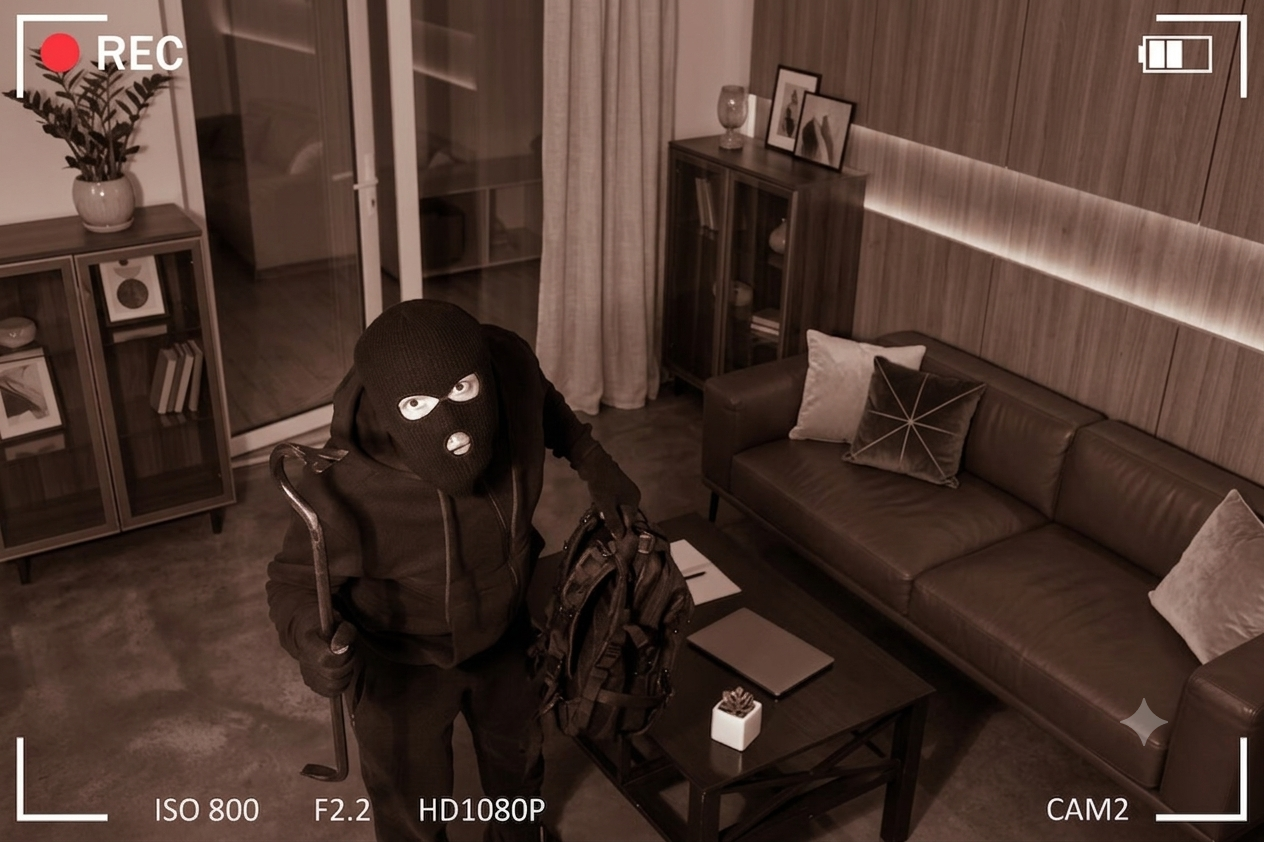
How CCTV Monitoring Stopped Robbery Before Damage Was Done
TLDR: CCTV monitoring stopped robbery in progress — the loss was prevented, not just discovered afterward on a recording. This is the difference live monitoring makes over standalone cameras. This article walks through a real case, breaks down how real-time threat detection actually intervenes during an armed robbery attempt, and explains what businesses need in place to get the same outcome.
How CCTV Monitoring Stopped Robbery: A Real Case Study in Crime Prevention
In a growing number of cases, CCTV monitoring stopped robbery attempts before they could escalate into serious crimes. Live surveillance systems, when paired with trained monitoring staff, allow security teams to spot suspicious behavior in real time — someone loitering near an entrance, tampering with a lock, or casing a property — and respond immediately, often by triggering audio warnings, alerting on-site guards, or contacting law enforcement. This proactive approach is very different from traditional CCTV setups that only record footage for after-the-fact investigation. Because the threat is identified and interrupted while it’s still unfolding, businesses and property owners using active CCTV monitoring have seen a measurable drop in successful break-ins, making it one of the most effective tools in modern crime prevention.
Without CCTV Monitoring, Robbery Isn’t Stopped — It’s Just Documented
When live monitoring isn’t part of a security setup, the outcome shifts entirely — instead of CCTV monitoring stopped robbery before losses occurred, businesses are left reviewing footage of a crime that already happened. The financial impact goes beyond stolen merchandise; insurance claims take longer to process without verified, timestamped incident data, and repeat break-ins become more likely once offenders identify a property as unmonitored. This is exactly why properties where CCTV monitoring stopped robbery attempts see fewer repeat incidents — a live response doesn’t just stop one event, it signals to offenders that the property isn’t an easy target going forward.
A Robbery That Was Stopped, Not Just Recorded
In January 2026, a jewelry store robbery was captured on camera and circulated widely after CNN covered the footage. Two suspects moved fast, smashed display cases, and grabbed merchandise in under a minute — the kind of smash-and-grab incident that has become common across retail and jewelry businesses. What made the footage notable wasn’t just the crime itself, but how clearly it showed the gap between recording an event and doing something about it while it is happening. You can view the original clip here: CNN jewelry store robbery footage.
Compare that outcome to a business protected by live security monitoring. In cases where a monitoring center is watching feeds in real time, a similar break-in attempt gets flagged the moment motion analytics detect a person forcing entry or approaching a display case out of pattern. An operator reviews the flagged clip within seconds, confirms it’s a real threat, and triggers a live audio warning through on-site speakers before the suspects finish forcing their way in. Police get called with a description and location while the incident is still active, not after the suspects have already left.
That’s the gap this article is about — the difference between a camera system that records a robbery and a monitored system that interrupts one.
Why Standalone Cameras Don’t Stop Anything
A camera system without a live operator behind it is a documentation tool — it answers “what happened” after the fact, not “how do we stop it.” Without live monitoring, CCTV monitoring stopped robbery simply isn’t possible, because a camera alone does nothing to change the outcome while the event is still unfolding.
This is the same gap covered in why CCTV cameras alone did not stop retail loss — a system can capture perfect footage of an offender’s face, entry point, and getaway route, and none of it prevents the loss itself. The footage becomes evidence for police and insurance claims, but the merchandise, cash, or damage is already gone.
Standalone systems fail during a robbery for three specific reasons:
- Nobody is watching in real time. Footage sits on a DVR until someone reviews it, usually the next business day.
- Alarms without verification get deprioritized. A traditional alarm signal without visual confirmation is often treated as a possible false trigger, which slows police response.
- There’s no one to intervene. A camera cannot speak, warn, or call anyone. It only records.
How Live CCTV Monitoring Changes the Outcome
A remote guard services setup adds the missing layer: a trained operator watching flagged activity as it happens, verifying the threat, and acting on it immediately. Here’s the sequence that separates a stopped robbery from a recorded one.
1. AI video analytics flag the anomaly. Motion and object recognition detect a person forcing entry, loitering near a point-of-sale area after hours, or moving toward a display case in a pattern that doesn’t match normal customer behavior. This is the same AI video analytics layer used across retail and commercial threat detection setups.
2. An operator verifies within seconds. Rather than an automated alert going unread, a live person looks at the flagged clip immediately and confirms whether it’s a genuine break-in, an armed robbery attempt, or a false trigger like a staff member working late.
3. A live audio warning is issued. If the activity is confirmed as a threat, the operator can speak directly through on-site speakers — “You are being recorded, police have been notified” — which is often enough to disrupt an in-progress attempt before it escalates.
4. Police are dispatched with real-time details. Because the incident is video-verified, dispatchers can prioritize the response. The operator provides a description of the suspects, their location within the property, and whether weapons are visible, which speeds up how quickly officers arrive.
5. Every second is logged. The full sequence — trigger, verification, warning, dispatch — is timestamped and stored for insurance documentation and any police follow-up.
Why Video Verified Alarms Matter During a Robbery
A regular alarm system tells a monitoring center that something triggered a sensor. It does not tell them what triggered it. Video verified alarms close that gap by pairing the alarm signal with a live camera feed the moment it fires.
During an active robbery, this distinction has a direct effect on response time. A dispatcher receiving an unverified alarm typically has to treat it as one of many possible false triggers reported that hour. A dispatcher receiving a video-verified alarm knows a real person is actively inside or forcing entry, which is treated with higher urgency. This is one of the reasons video verified alarms get faster police response than a standard signal-only alarm.
Retail Theft and Organized Retail Crime Need Real-Time Response
Smash-and-grab incidents and organized retail crime rarely last more than a few minutes. Suspects move fast because they know that speed reduces the chance of confrontation. A monitoring system built around after-the-fact footage review cannot do anything within that window — by the time anyone watches the recording, the incident is already over.
Real-time threat detection changes that math. When retail store locations are monitored live, the flagged-to-response window is measured in seconds, not hours. A live audio warning alone often causes offenders to abandon the attempt mid-act, because the presence of a monitoring operator removes the anonymity that organized retail crime groups typically rely on.
5 Things Required Before CCTV Monitoring Can Stop a Robbery
For CCTV monitoring stopped robbery to actually happen — an incident interrupted rather than just recorded — a few specific pieces need to be in place. A business cannot achieve this outcome with cameras alone, no matter how high the resolution.
- A monitoring center staffed 24 hours a day, since robbery attempts are not limited to business hours.
- AI analytics tuned to the property, so genuine threats get flagged without operators being buried in false alerts.
- A documented response protocol, covering audio warning, owner notification, and police dispatch in a defined order.
- Two-way audio hardware on-site, so an operator can actually speak into the space, not just watch it.
- A fast verification standard, ideally under 60 seconds from trigger to operator review, which is the benchmark covered in CCTV monitoring response time.
When these elements work together, CCTV monitoring stopped robbery stops being a rare success story and becomes a repeatable outcome for properly equipped properties.
Remote CCTV Access Supports the Same Response Model
Beyond live monitoring centers, business owners increasingly expect to check in on their own footage from a phone or laptop, particularly after an incident. This kind of remote access doesn’t replace a monitoring center’s live response, but it does support the same verification model — confirming what happened, when, and how the response unfolded. A breakdown of how this works is covered in can you access CCTV footage remotely.
CCTV itself has evolved considerably from the earliest closed-circuit setups designed purely for local recording. For background on how the underlying technology developed into today’s networked and analytics-driven systems, see the Wikipedia entry on closed-circuit television.
Virtual Security Guard Coverage Extends the Same Model
The same real-time verification and response model used for robbery prevention applies across a business’s full footprint, not just a single entry point. A virtual security guard setup extends live monitoring across parking areas, loading docks, perimeters, and after-hours zones — anywhere an offender might attempt entry outside of a storefront.
This matters because robbery attempts don’t only happen at a front counter. Rear entrances, delivery doors, and stockrooms are common access points for smash-and-grab and organized retail crime attempts specifically because they’re less visible to customers and staff. Extending live monitoring coverage to those areas closes the same gap a front-of-store camera alone would miss.
Why GCCTVMS Is the Reason CCTV Monitoring Stopped Robbery for Businesses Like Yours
GCCTVMS operates a monitoring center where trained operators watch live feeds, verify flagged incidents within seconds, and respond according to a defined protocol — audio warning, owner notification, or police dispatch, in that order. This is exactly how CCTV monitoring stopped robbery for our clients, turning passive footage into active intervention. Our AI video analytics filter routine movement so operators focus only on genuine threats, and our two-way audio integration means a live warning can be issued the moment a break-in or robbery attempt is confirmed. Every flagged event, response, and dispatch call is timestamped and documented for insurance and law enforcement use.
We serve businesses in the USA, UK, Singapore, and Pakistan, and our monitoring integrates with your existing camera and alarm hardware — no full system replacement required. If you want to see how CCTV monitoring stopped robbery attempts for properties like yours, book a free 30-minute call and we’ll review your current camera setup, response protocol, and coverage gaps to show you what real-time robbery prevention looks like for your property.
Conclusion
The gap between a camera that records a crime and a system that stops one comes down to a single factor: whether anyone is watching and able to act while it’s happening. As the case in this article shows, CCTV monitoring stopped robbery because the pieces were in place before the incident occurred — AI-driven detection, a live operator, two-way audio, and a documented response protocol working together within seconds, not hours. Standalone cameras will always be limited to documentation after the loss has already occurred, while active monitoring shifts the outcome entirely.
For businesses evaluating their current security setup, the question isn’t whether footage is being captured — it’s whether that footage is being watched in real time by someone who can respond. If your current system only records, you’re relying on chance rather than a system built to intervene. The businesses that can say CCTV monitoring stopped robbery on their property are the ones that closed that gap before they needed to. Book a free consultation with GCCTVMS to find out where your coverage stands today.
Key Takeaways
- A robbery stopped in progress requires live monitoring, not just recorded footage reviewed afterward.
- AI video analytics and live operator verification are what allow a flagged event to become an active police dispatch within seconds.
- Video verified alarms get faster police prioritization than standard signal-only alarms.
- Smash-and-grab and organized retail crime rely on speed and anonymity, both of which a live audio warning disrupts.
- Remote CCTV access supports after-the-fact verification, but does not replace a monitoring center’s real-time response role.
- Documented cases where CCTV monitoring stopped robbery consistently show the same pattern: verification, warning, and dispatch happening within seconds, not minutes.
FAQs
Can CCTV monitoring actually stop a robbery while it’s happening?
Yes — CCTV monitoring stopped robbery attempts are possible specifically when the system includes a live operator. AI analytics flag suspicious activity, an operator verifies it within seconds, and can issue a live audio warning or dispatch police while the incident is still in progress, rather than only recording it for later review.
What’s the difference between a monitored alarm and a video verified alarm?
A standard alarm only signals that a sensor was triggered. A video verified alarm pairs that signal with live footage, letting an operator confirm a real threat is occurring, which typically results in faster police response.
Do businesses need new cameras for real-time monitoring?
Not usually. Most monitoring services integrate with existing camera and alarm hardware, adding the live verification and response layer rather than replacing the system.
How fast does a live operator respond to a flagged robbery attempt?
A reliable monitoring provider should verify a flagged event within seconds and escalate to a warning or police dispatch immediately after, rather than requiring manual review.
Does live monitoring help with organized retail crime specifically?
Yes — this is one of the clearest examples of how CCTV monitoring stopped robbery patterns tied to organized retail crime, which relies heavily on speed and low visibility. A live audio warning removes the anonymity offenders count on, and video-verified alarms give police the confirmed details needed to prioritize dispatch.
Can CCTV monitoring actually stop a robbery, or does it just record evidence for later?
Yes — with live monitoring, CCTV monitoring stopped robbery attempts in real time is possible because trained operators watch flagged incidents as they happen. Unlike standard CCTV that only records footage for after-the-fact review, active monitoring combines AI analytics, two-way audio, and a defined response protocol to interrupt a crime while it’s still in progress, rather than simply documenting it after the fact.
