




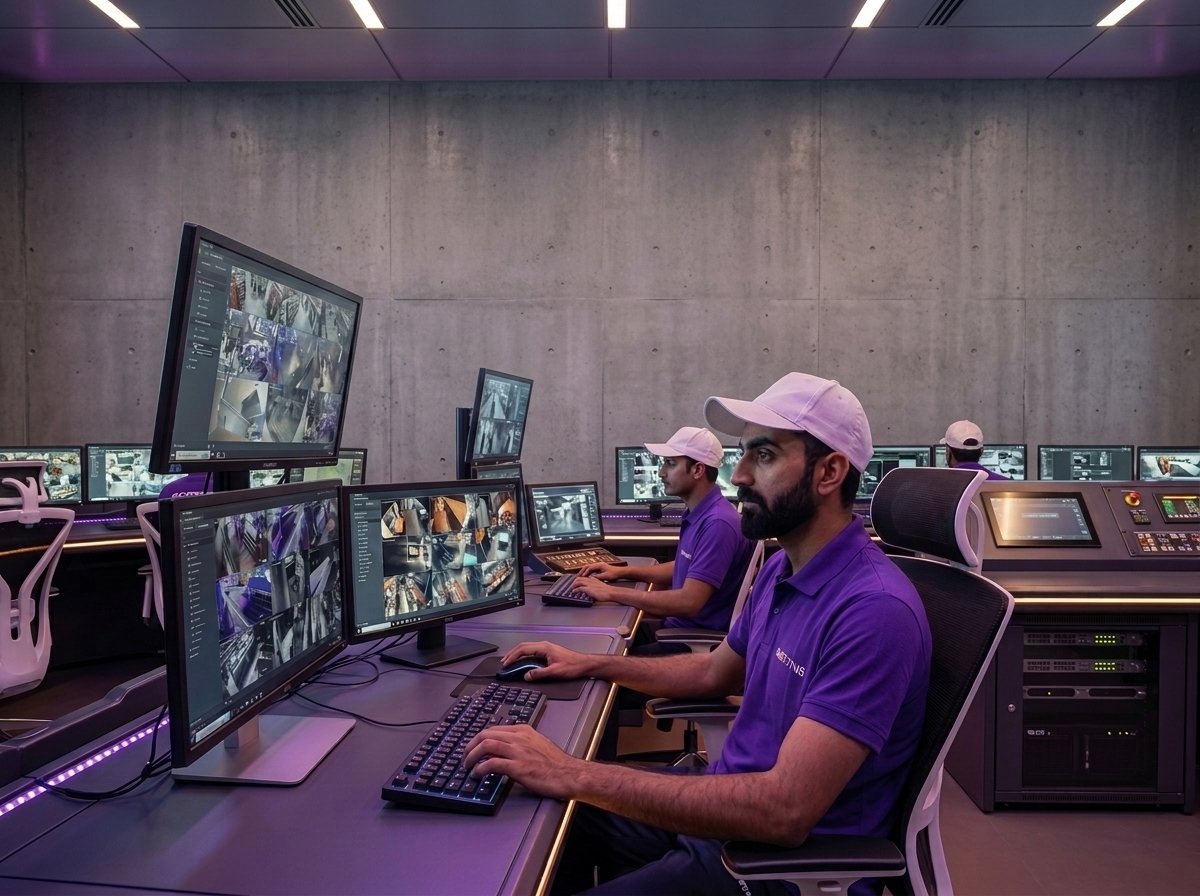
Remote CCTV Monitoring Service: Trusted 24/7 Protection Solution
TLDR A remote CCTV monitoring service connects your on-site cameras to a live monitoring center where trained operators watch, verify, and respond to threats in real time. Standard CCTV records an event after it happens. A remote monitoring service stops the event while it is happening through live video verification, two-way audio warnings, and direct police dispatch. This guide covers how the service works, what a monitoring center actually does, the technology behind it, and how to choose a provider that responds instead of just records.
| Setup | What Happens During an Incident | Response Time | Annual Cost Range |
| Cameras only, no monitoring | Incident recorded, discovered later | None | $0 (footage review only) |
| DIY app alerts | Owner gets a push notification, may not see it | Minutes to hours | $0–$200 |
| On-site security guard | Guard responds if awake and present | 1–10 minutes, single location | $50,000–$90,000 |
| Remote CCTV monitoring service | Live operator sees, verifies, and responds | Under 60 seconds | $1,200–$10,000 |
The Gap Between Recording and Responding
A logistics yard in Manchester had 22 cameras and a DVR that recorded everything in high definition. One night, two men cut through a perimeter fence and loaded a forklift with pallets of electronics over 40 minutes. Every second of it was captured on camera. Nobody watched it happen. The theft was discovered the next morning when a manager reviewed footage after noticing the missing stock.
That yard had video surveillance. It did not have a remote CCTV monitoring service. The distinction matters more than most businesses realize until the footage they are reviewing is evidence of a loss instead of a warning that could have prevented one.
What a Remote CCTV Monitoring Service Actually Is
A remote CCTV monitoring service connects a building’s existing cameras to a monitoring center staffed by trained operators, 24 hours a day. The operators do not review footage after an incident. They watch live feeds as they happen, using motion-triggered alerts and AI video analytics to flag movement that needs human attention.
When a flagged event occurs, an operator verifies it visually within seconds. If the activity is a threat, the operator can trigger a live audio warning through on-site speakers, contact the business owner, or dispatch police directly. This is fundamentally different from remote video surveillance that only stores footage for later review — the monitoring layer is what turns a camera system into an active deterrent.
According to industry coverage of the sector’s growth, the remote monitoring market has expanded significantly as businesses shift from passive recording toward live, verified response models.
How Remote CCTV Monitoring Works, Step by Step
Camera feeds connect to the monitoring center. Existing on-site cameras stream live video to the monitoring platform over a secure internet connection. No new camera hardware is typically required.
AI video analytics filter the noise. Motion detection and object recognition flag people, vehicles, or behavior patterns that fall outside normal activity, filtering out irrelevant movement like trees, animals, or passing traffic.
An operator reviews the flagged event. A live agent looks at the flagged clip within seconds of the trigger, confirming whether it is a genuine threat or a false alert.
The operator responds according to protocol. Depending on what they see, the operator issues a live voice warning, contacts the property owner, or calls police with a description of the person and their location on the property.
Every action is logged and timestamped. The full sequence, from trigger to response, is recorded for later review, insurance documentation, or law enforcement use. Businesses can also access CCTV footage remotely from any device, which supports both real-time oversight and after-the-fact verification.
Five Core Functions of a Remote Monitoring Center
Live Video Monitoring
Operators watch multiple properties simultaneously through a centralized dashboard, scanning live feeds for activity that requires attention rather than waiting for a report to be filed.
Video Verified Alarms
Unlike a traditional alarm that only makes noise, a video verified alarm gives the monitoring center visual confirmation of what triggered it. Police response priority is generally higher for video-verified incidents because dispatchers know a real event is in progress rather than a false trigger.
Virtual Guard Patrols
Operators can conduct scheduled virtual patrols across a property’s camera network at set intervals throughout the night, checking perimeters, entrances, and parking areas the same way a physical guard would walk a route.
Remote Alarm Response
When an alarm fires, the monitoring center does not just relay a signal. An operator visually confirms the cause, communicates directly through on-site speakers if needed, and escalates to police with real-time information about what is happening.
Cloud CCTV Monitoring and Storage
Footage is stored off-site in the cloud in addition to (or instead of) a local DVR, protecting the recorded evidence even if on-site hardware is damaged, stolen, or tampered with during an incident.
Remote CCTV Monitoring vs. Traditional Security Guards
A physical guard covers one location, one entrance, and one set of eyes at a time. A remote CCTV monitoring service scales differently: one operator can watch multiple cameras across multiple properties from a single monitoring station, with AI analytics doing the initial filtering so human attention goes to genuine flags.
The cost structure follows the same pattern seen across the security industry. A single on-site guard costs tens of thousands of dollars annually and covers one shift. A remote monitoring service extends coverage across every hour without multiplying staffing costs, since the same trained operators and monitoring infrastructure serve many client sites in parallel.
Why AI Video Analytics Matter in Modern Monitoring
Motion detection alone triggers on anything that moves: shadows, weather, animals, headlights. AI video analytics narrow that down by classifying what moved — a person, a vehicle, a package — and applying rules specific to the property, such as flagging a person near a loading dock after business hours but ignoring the same person walking on a public sidewalk.
This filtering is what makes 24/7 CCTV monitoring practical at scale. Without it, operators would be overwhelmed by false alerts and would eventually start ignoring the exact notifications that matter. With it, the monitoring center focuses only on activity that fits a genuine risk pattern.
Choosing a Remote CCTV Monitoring Provider
Verify real operator response, not automation only. Ask whether a live person watches and responds to flagged events, or whether the service only forwards automated notifications to an app.
Ask for documented response time. A reliable provider should be able to state their average time from event trigger to operator verification, and from verification to police dispatch.
Confirm integration with existing hardware. A provider that can connect to your current cameras, NVR, and network setup avoids a costly full-system replacement. Guides to remote video surveillance monitoring outline the typical hardware and network requirements for this kind of integration.
Check cloud backup and retention policy. Cloud CCTV monitoring should include a defined retention window so footage survives beyond the default loop-recording cycle typical of standalone DVR setups, a limitation that traces back to the earliest analog closed-circuit television systems this industry evolved from.
Ask what happens during network outages. A provider should have a documented fallback, since a monitoring center is only useful if the connection between cameras and the center stays live.
Why GCCTVMS Delivers Remote CCTV Monitoring That Responds
GCCTVMS provides a remote CCTV monitoring service with trained operators watching live feeds 24 hours a day, verifying every flagged event, and responding according to a defined protocol — audio warning, owner notification, or police dispatch, in that order of escalation.
Our live video monitoring and remote video surveillance services integrate with your existing cameras and network. We do not require a hardware replacement to begin monitoring. Our remote monitoring solutions scale from single-site businesses to multi-location operations, and our 24/7 live CCTV monitoring service covers every hour without gaps in coverage.
Every flagged event is verified, timestamped, and documented. Learn how our 24/7 CCTV monitoring works and why our response time standard is built around seconds, not hours.
Book a free 30-minute call and we will review your current camera setup, network capacity, and coverage gaps to show you what a remote CCTV monitoring service looks like for your property.
Key Takeaways
- A remote CCTV monitoring service adds live human verification and response to existing cameras, turning passive recording into active protection.
- AI video analytics filter false triggers so operators respond only to genuine threats.
- Video verified alarms typically receive faster police response than unverified alarm signals.
- The service generally integrates with existing camera and network hardware rather than requiring full replacement.
- Cloud CCTV monitoring protects footage even if on-site storage hardware is damaged or stolen.
FAQs
What is a remote CCTV monitoring service?
A remote CCTV monitoring service connects a property’s cameras to a live monitoring center where trained operators watch feeds in real time, verify flagged activity, and respond through audio warnings, owner notification, or police dispatch.
How is remote monitoring different from just having cameras?
Cameras alone record footage for later review. A remote monitoring service adds a live operator who watches for threats as they happen and can intervene during the incident rather than after it.
Can I access my CCTV footage remotely?
Yes. Most modern systems allow footage to be viewed remotely from a phone, tablet, or computer, in addition to the live monitoring center’s access, provided the system is configured with remote viewing enabled.
Does remote monitoring require new cameras?
In most cases, no. A remote CCTV monitoring service typically integrates with existing camera and network infrastructure, adding the monitoring and response layer rather than replacing hardware.
How fast does a remote monitoring center respond to an incident?
Response time varies by provider, but a reliable remote CCTV monitoring service should verify a flagged event within seconds and escalate to a warning or police dispatch shortly after, rather than waiting for a manual review.
