




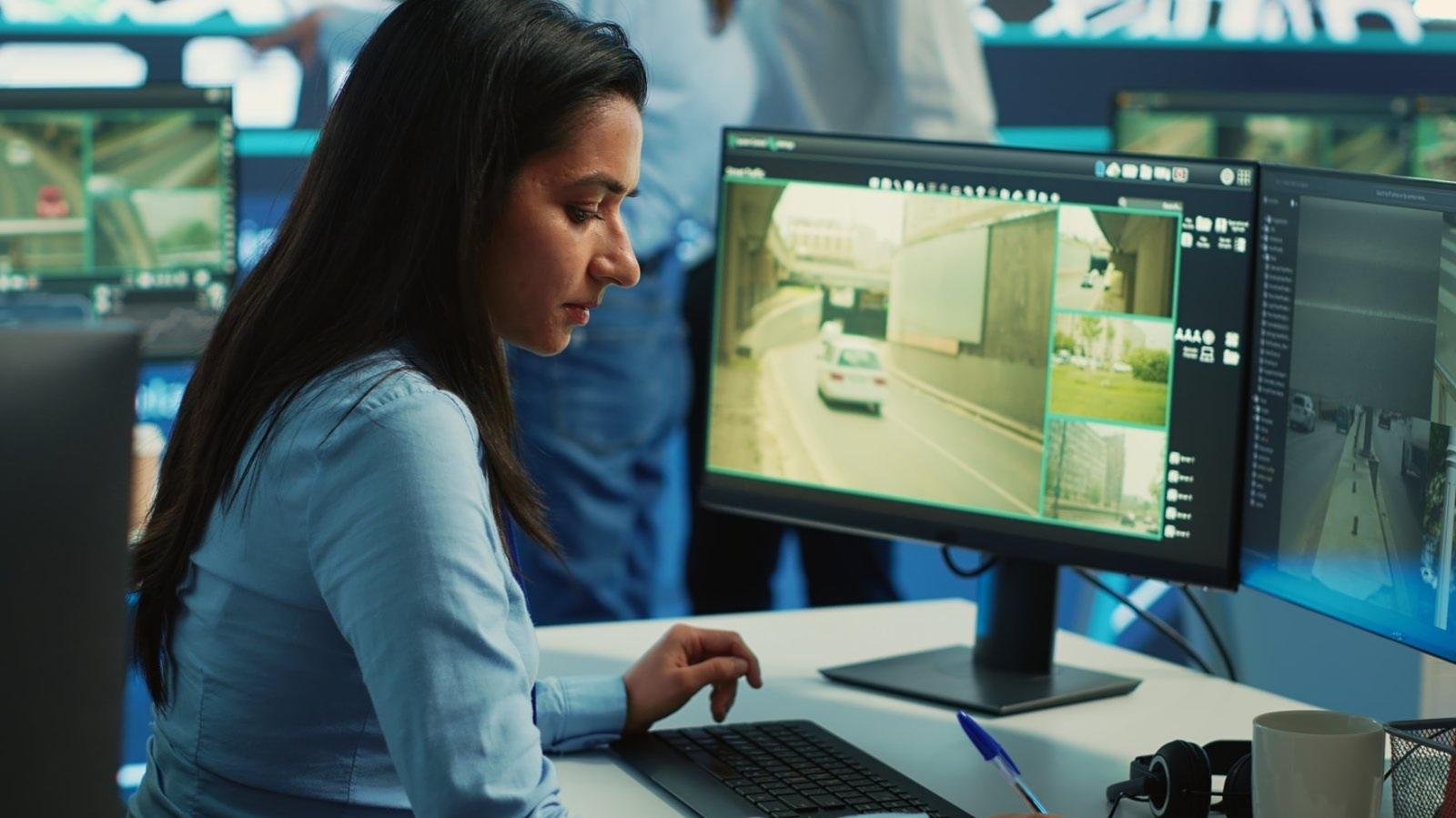
7 CCTV Monitoring Mistakes Costing You
Most businesses with cameras installed think they’re protected. They’re not. Cameras alone don’t stop crime. CCTV monitoring mistakes leave thousands of businesses exposed to break-ins, theft, and liability claims every year.
The problem isn’t the hardware. It’s how businesses use it. Cameras pointed at the wrong angles. Footage nobody reviews. Storage that fills up after 7 days. Remote access nobody set up properly. These are the CCTV monitoring mistakes that turn security systems into expensive props.
This article walks through the seven most common CCTV monitoring mistakes that leave businesses exposed and shows how to fix each one. GCCTVMS provides 24/7 live CCTV monitoring and camera monitoring services across the USA, UK, Singapore, and Pakistan.
Why CCTV Monitoring Mistakes Cost Businesses Millions
Most businesses install cameras and assume the job is done. The cameras record. Staff glance at monitors occasionally. When something happens, someone scrolls through footage looking for the moment.
That’s not CCTV monitoring. That’s recording.
The gap between recording and monitoring is where CCTV monitoring mistakes happen. A break-in gets captured on tape but nobody saw it live. A staff theft incident is on the footage but nobody reviewed it. An after-hours intruder triggered a motion alert at 2 AM but the owner was asleep. The cameras did their job. The system failed.
Aldridge Security explains the most common CCTV mistakes and how to avoid them. The pattern is the same across every business type: installation gets attention, monitoring gets ignored.
Mistake 1: Installing Cameras Without Live Monitoring
The biggest CCTV monitoring mistakes is treating installation as the finish line. A camera that records to a server but has no live operator watching the feed is a recording device, not a security system.
Recorded footage helps after the fact. It shows you what happened. It might help police identify the suspect. It might support an insurance claim. But it does nothing to stop the crime as it happens.
GM Group Services explains how CCTV monitoring security requires live oversight, not just recording. Live security camera monitoring puts trained operators on your feeds in real time. They see threats as they develop, issue audio warnings, and dispatch police while the incident is still preventable.
GCCTVMS provides live video monitoring and professional monitoring services that turn passive recordings into active protection.
Mistake 2: Poor Camera Placement and Coverage Gaps
Cameras pointed at the wrong angles are one of the most common CCTV monitoring mistakes. Cameras facing the ceiling. Cameras blocked by shelves. Cameras covering empty hallways instead of cash registers and exits.
Poor placement creates blind spots. Thieves study the angles before they act. They know where the camera can’t see. They walk through the gap and out the door with merchandise in hand.
The fix is a placement audit. Every camera should cover a high-value zone: entrances, exits, cash handling areas, stockrooms, loading docks, and parking lots. Wide-angle lenses cover broader areas. PTZ cameras follow moving subjects. Coverage maps show exactly which zones are watched and which aren’t.
GCCTVMS provides video surveillance audits and placement guidance during onboarding to fix these gaps before they cause losses.
Mistake 3: Ignoring After-Hours Coverage
Most businesses focus security planning on operating hours. The CCTV monitoring service watches the floor while the store is open. After hours, nobody watches anything.
This is one of the costliest CCTV monitoring mistakes. Most break-ins happen between midnight and 6 AM when staff are gone, motion alerts go to sleeping owners, and police response times stretch longest. The cameras record everything. Nobody is watching.
Remote CCTV monitoring services solve this by providing live operators during the exact hours your staff aren’t there. Operators watch perimeter cameras, entry points, and parking areas through the night. When motion triggers a camera at 3 AM, an operator verifies the threat in seconds and dispatches authorities while the intruder is still on the property.
GCCTVMS provides remote monitoring and control with full overnight coverage at the same response time as daytime hours.
Mistake 4: Cheap CCTV Monitoring Services with No Real Operators
Some CCTV monitoring services charge $30 to $50 per month and call themselves “professional monitoring.” What they actually provide is automated motion alerts pushed to your phone. No human watches the feed. No operator verifies threats. No one dispatches police.
This is one of the most misleading CCTV monitoring mistakes because buyers think they’re getting real coverage. They’re not. They’re paying for an app.
ExpertCallers walks through the key mistakes that derail CCTV monitoring services and explains why service tier matters more than monthly cost. Real CCTV monitoring services include trained human operators watching live feeds, not automation pushing alerts to a sleeping owner.
GCCTVMS security camera monitoring service tiers include live operators at every price level. No bait-and-switch. No automated-only options sold as professional monitoring.
Mistake 5: Skipping Two-Way Audio Capability
A camera that only watches creates evidence. A camera with two-way audio prevents incidents. Failing to install audio-capable systems is one of the most preventable CCTV monitoring mistakes.
When an operator sees a trespasser at 2 AM and can speak through a parking lot speaker — “You are on camera. Police have been notified. Leave the property now” — most intruders run before they touch anything. Without audio, the operator can only watch the crime happen and dispatch police afterward.
Two-way audio turns surveillance into intervention. The cost difference between audio-capable and standard cameras is small. The outcome difference is enormous.
GCCTVMS includes two-way audio surveillance on every monitored property where speakers can be installed. Operators issue live warnings the moment a threat appears.
Mistake 6: Forgetting About Storage and Footage Retention
Cameras record. The footage has to go somewhere. Many businesses set up their CCTV system, run it for a year, and discover too late that the storage filled up and old footage was overwritten before they needed it.
Other businesses store footage on a single hard drive in a back office. When a thief breaks in and takes the recorder along with the laptops, the evidence walks out with the property.
Both are common CCTV monitoring mistakes. The fix is twofold: extend retention periods to at least 30 days for most businesses (90+ days for high-risk operations), and use cloud-based storage that survives even if on-site equipment is stolen or damaged.
Insights from CCTV monitoring services in the UK note that proper incident reporting and footage preservation are core to a real CCTV monitoring service. Professional providers handle both retention and backup automatically.
GCCTVMS commercial video surveillance monitoring includes incident reports stored independently from on-site equipment.
Mistake 7: Treating CCTV Monitoring as a Standalone System
The seventh mistake is the most expensive: treating CCTV monitoring as a separate system instead of integrating it with everything else. Cameras that don’t connect to access control. Monitoring that doesn’t link with alarms. Surveillance that doesn’t sync with intercom or visitor management.
A complete security setup integrates CCTV with access control,virtual doorman services, alarm systems, and where applicable, PBX systems for communication routing during incidents. When all these systems work together, an operator who spots a threat can verify identity, lock doors, dispatch authorities, and alert on-site staff in one coordinated response.
When systems are siloed, each one runs independently. The camera sees the threat. The alarm rings somewhere else. The doors don’t lock. The staff don’t get alerted. The thief walks out. CCTV monitoring mistakes like this turn $50,000 security investments into $5,000 worth of actual protection.
GCCTVMS integrates CCTV monitoring with access control, two-way audio, virtual doorman services, and existing security infrastructure during setup.
Hidden Cost: What These CCTV Monitoring Mistakes Add Up To
Each mistake on its own seems small. Together they add up to real money.
A retail store with poor camera placement loses $5,000-$25,000 per year in shrinkage that monitored cameras would catch. A warehouse with no after-hours coverage loses $200,000+ in a single cargo theft. A hotel with cheap “automated alert” CCTV monitoring services pays $40,000 to settle a slip-and-fall lawsuit because nobody watching the feed could document what actually happened.
These losses dwarf the cost of professional CCTV monitoring services. Real monitoring at $200-$500/month covers the same incidents that automated systems miss entirely. The math always favours fixing the mistakes.
GCCTVMS residential surveillance and commercial monitoring services include the audits, integration, and live operator coverage that fix every mistake in this article.
How to Audit Your Current CCTV Monitoring Setup
Before you replace anything, audit what you have. Walk every camera. Check the angles. Ask who watches the feeds and when. Test the after-hours response. Verify the storage retention period. Review the integration between cameras, alarms, and access control.
Most businesses find at least three of the seven mistakes in this article during their first audit. Some find all seven. The fix is rarely full replacement. It’s usually adding live monitoring to existing cameras, improving placement, extending retention, and integrating systems that should already be connected.
GCCTVMS performs free CCTV monitoring audits for businesses considering an upgrade. We connect to your existing camera system and add the trained operators, integration, and reporting that fix the mistakes without requiring new hardware.
Stop Making CCTV Monitoring Mistakes That Leave You Exposed
CCTV monitoring mistakes cost more than fixing them. Real monitoring with live operators, proper placement, after-hours coverage, audio capability, and full system integration prevents the incidents that simple recording can’t. Contact our team for a free CCTV monitoring audit, or Get a 30-min Free Call to discuss coverage for your property.
Protect What Matters Before the Next Incident
CCTV monitoring with trained operators costs far less than one break-in, one liability claim, or one lost customer. Turn your passive cameras into active protection around the clock.
FAQ’s
What are the most common CCTV monitoring mistakes?
The most common CCTV monitoring mistakes include installing cameras without live monitoring, poor camera placement, no after-hours coverage, choosing cheap CCTV monitoring services with no real operators, skipping two-way audio, ignoring storage retention, and treating CCTV as a standalone system instead of integrating it with access control and alarms.
Why is recording without live monitoring a mistake?
Recorded footage shows what happened after the fact. Live security camera monitoring catches incidents as they develop and lets operators respond in real time. Recording documents losses. Live monitoring prevents them.
How do CCTV monitoring mistakes lead to break-ins?
Most break-ins exploit gaps in coverage, after-hours blind spots, or systems that record but never trigger a response. CCTV monitoring mistakes leave these gaps unfilled. Thieves study camera angles and timing before they act.
What is the biggest CCTV monitoring mistake businesses make?
The biggest mistake is treating installation as the end of the security project. Cameras alone don’t stop crime. CCTV monitoring services with trained operators, proper integration, and 24/7 coverage are what actually prevent losses.
Are cheap CCTV monitoring services a mistake?
Often, yes. Many cheap CCTV monitoring services only send automated motion alerts to your phone. No human watches the feed. No operator dispatches police. Buyers think they’re getting professional coverage but they’re paying for an app.
Why is two-way audio important in CCTV monitoring?
Two-way audio lets operators issue live voice warnings to intruders through speakers on the property. Most threats leave when they hear “You are on camera. Police have been notified.” Without audio, operators can only watch and dispatch — not intervene directly.
How long should CCTV footage be stored?
Most businesses should retain CCTV footage for at least 30 days. High-risk operations like warehouses, banks, and hospitals should retain 90+ days. Cloud-based storage protects footage even if on-site equipment is stolen.
Should CCTV monitoring be integrated with other systems?
Yes. Standalone CCTV is one of the most expensive CCTV monitoring mistakes. Full integration with access control, alarms, virtual doorman services, and PBX systems lets operators coordinate response across every layer of security.
Can remote CCTV monitoring services fix coverage gaps?
Yes. Remote CCTV monitoring services place trained operators on your camera feeds from a remote centre, covering gaps in on-site staff coverage, overnight hours, and multi-site portfolios at consistent response times.
Does GCCTVMS offer CCTV monitoring audits?
Yes. GCCTVMS provides free CCTV monitoring audits to identify mistakes in existing setups. We then connect to your existing cameras and add the operators, integration, and reporting needed to fix the gaps.
