




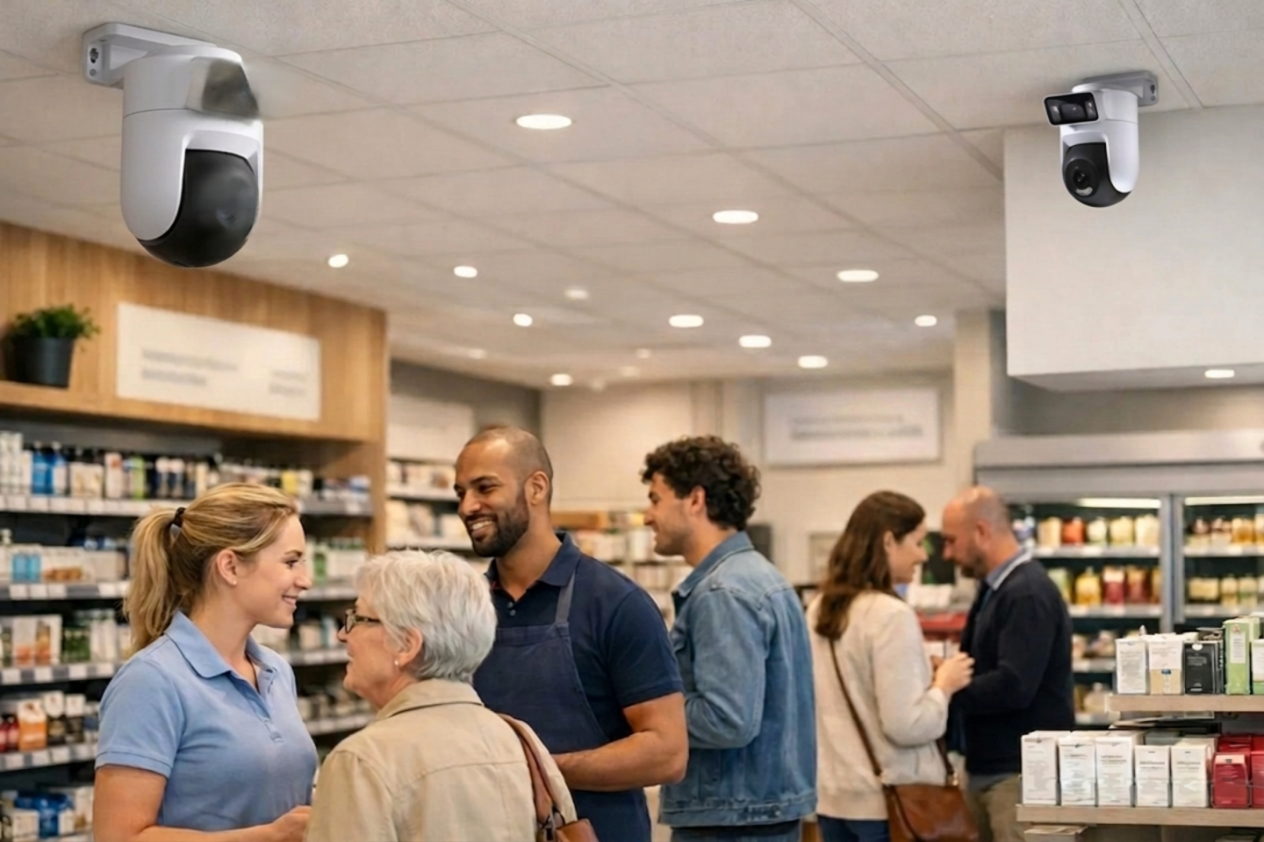
CCTV Monitoring for Pharmacies: Protect Controlled Substances, Staff, and Compliance from Robbery, Diversion, and After-Hours Break-Ins
In August 2024, the DEA announced the takedown of a Houston-based drug trafficking organisation responsible for nearly 200 pharmacy burglaries across 31 states. 42 individuals were arrested. The ring targeted rural pharmacies specifically, stealing oxycodone, hydrocodone, alprazolam, and promethazine with codeine. The criminals crawled on floors to avoid cameras. They hit pharmacy after pharmacy because most had cameras but nobody watching them.
That operation was not an outlier. Nearly 900 burglaries involving the theft of controlled substances were reported to the DEA in 2023 alone. From January 2022 to December 2023, stolen inventory in community pharmacies totalled $26 million in wholesale value. At street prices, that same inventory was worth nearly $300 million. A single pharmacy burglary involving oxycodone can net $30,000 in street profit for the thief.
From 2010 to 2019, there were over 7,500 prescription drug-related armed robbery incidents in the United States. Independent pharmacies have seen a sharp rise in burglaries over the past 3 years, many involving organised drug rings that target multiple pharmacies in a given area.
CCTV monitoring for pharmacies is not optional. It is the difference between recording the burglary and stopping it. GCCTVMS provides 24/7 live CCTV monitoring and camera monitoring services for pharmacies across the USA, UK, Singapore, and Pakistan.
What CCTV Monitoring for Pharmacies Actually Covers
Most pharmacies have a camera behind the counter and one at the front entrance. The footage records to a box in the back. Nobody watches it until the DEA asks for it during a diversion investigation or the police need it after an armed robbery. By then the drugs are gone, the staff is traumatised, and the footage is evidence of a crime, not prevention of one.
Real CCTV monitoring for pharmacies means trained operators at a remote centre watch live feeds covering the dispensing counter, controlled substance storage, back entrance, parking lot, and customer floor simultaneously. They see the person who walks in at closing time, conceals their face, and approaches the counter with their hand in their pocket. They spot the after-hours vehicle parked beside the back wall at 2 AM. They catch the employee who accesses the narcotics safe outside of scheduled counts.
Coram AI’s pharmacy security guide explains the full scope of pharmacy surveillance requirements. GCCTVMS professional monitoring services and pharmacy CCTV monitoring add the trained operators who turn these cameras into active deterrence.
The Threats Every Pharmacy Owner Must Address
Armed Robbery During Business Hours
Pharmacy robbery is one of the most violent forms of retail crime. Offenders know exactly what they want: oxycodone, hydrocodone, alprazolam, and promethazine with codeine. They come armed. They demand specific drug names and quantities. They are often addicted themselves, which makes them unpredictable and dangerous.
A San Antonio man was sentenced to 28 years in federal prison in December 2024 for armed pharmacy robberies. The leader of a multi-state pharmacy burglary ring received 209 months (over 17 years) in January 2025 for conspiracy to distribute controlled substances worth more than $12 million in street value.
CCTV monitoring for pharmacies with live operators catches the pre-robbery behaviour before the weapon comes out. A person lingering near the counter with their face partially covered, checking sight lines, and watching the staff count. An operator who sees this can alert the pharmacist through a discreet earpiece and dispatch police while the suspect is still assessing the target. GCCTVMS threat detection and real-time security monitoring provide exactly this layer of pre-incident awareness.
After-Hours Break-Ins and Burglary Rings
The DEA’s 2024 operation revealed the scale of organised pharmacy burglary. The Houston ring operated across 31 states. Members used specific tactics: targeting pharmacies with weak rear access, cutting through walls or roofs, bypassing alarm systems, and crawling on floors below camera angles. They focused on independent and rural pharmacies where security infrastructure is typically weaker.
Of the top 10 controlled substances reported stolen to the DEA, oxycodone and hydrocodone top the list. After-hours break-ins are the primary method because the store is empty, alarm response times in rural areas stretch to 20+ minutes, and unmonitored cameras only record the crime.
CCTV monitoring for pharmacies with live operators watching exterior cameras and rear access points around the clock catches these break-in attempts at the perimeter. The operator sees the vehicle parked behind the building at 3 AM and the person approaching the rear wall with tools. Audio warning activates. Police are dispatched with a verified live incident. The break-in stops before entry is made.
GCCTVMS remote monitoring and control and night vision monitoring cover these exact after-hours windows.
Employee Diversion and Internal Theft
Employee pilferage accounted for 22.2% of all drug theft and loss incidents reported to the DEA. Pharmacy technicians and staff who handle controlled substances daily have the access and knowledge to divert small quantities over extended periods without triggering inventory discrepancies until the cumulative loss reaches thousands of dollars.
HPSO’s guide on the role of video surveillance in pharmacies explains how cameras covering the dispensing area, narcotics safe, and counting stations create the documentation trail that deters and detects internal diversion. CCTV monitoring for pharmacies with operators watching controlled substance access zones flags unauthorized safe access, unusual counting patterns, and after-hours narcotics handling.
GCCTVMS commercial surveillance and access control integration pairs camera footage with electronic access logs at narcotics storage points.
Shoplifting and OTC Theft
Beyond controlled substances, pharmacies face high rates of over-the-counter product theft. Razors, vitamins, allergy medications, and baby formula are among the most frequently stolen retail pharmacy items. While less dramatic than armed robbery, daily shoplifting erodes margins that independent pharmacies cannot afford to lose.
Veesion’s guide on using CCTV in pharmacies covers how sales floor cameras detect shoplifting patterns. GCCTVMS live security camera monitoring watches sales floor and checkout zones in real time.
Where Cameras Belong in a Pharmacy
ConfigRx’s guide on pharmacy security cameras covers camera placement requirements for pharmacy environments. Here are the zones that matter most for CCTV monitoring for pharmacies.
Dispensing Counter and Prescription Pickup
Cameras covering the dispensing counter need to capture both the pharmacist side and the patient side. These cameras document prescription handoffs, verify that the correct medication reaches the correct patient, and create the footage the DEA requires during diversion investigations.
Controlled Substance Storage: Safes and Vaults
The narcotics safe or vault needs a dedicated camera covering the door, the combination area, and the floor in front of it. Every access event should be documented. GCCTVMS healthcare surveillance monitoring covers controlled substance zones with the same protocols used in hospital pharmacy monitoring.
Drive-Through Window
Pharmacy drive-through windows create a unique vulnerability. Cash transactions happen through a window. Prescription handoffs occur without full face-to-face visibility. A robbery can happen through the drive-through opening with minimal store entry. Camera coverage at the drive-through must capture the customer’s face, vehicle, and license plate.
Back Entrance, Loading Dock, and Delivery Access
The back entrance is the primary entry point for after-hours break-ins. Delivery access during business hours also creates an opening for unauthorised entry. Cameras covering the rear of the building, the delivery door, and any adjacent parking or alley space are where break-in prevention begins.
GCCTVMS outdoor surveillance and parking lot monitoring cover rear access and parking zones around the clock.
Sales Floor and Aisles
Dome cameras covering the sales floor, high-theft product aisles, and checkout area document shoplifting and create deterrence for casual theft. These cameras work in coordination with entrance and exit cameras to track the full path of anyone who takes product without paying.
GCCTVMS video surveillance and commercial video surveillance monitoring cover the full retail floor.
How CCTV Monitoring for Pharmacies Works in Real Time
Scenario 1: Armed Robbery Approach. At 8:15 PM, 45 minutes before closing, an operator watching the entrance camera sees a person enter wearing a hoodie pulled low, sunglasses, and gloves. The person walks directly to the pharmacy counter and stands behind two customers. The operator alerts the pharmacist through the store intercom with a discreet code phrase. Police are dispatched. Officers arrive before the suspect reaches the counter. No robbery occurs. No weapon is drawn.
Scenario 2: After-Hours Roof Entry. At 2:40 AM, the operator watching the exterior camera sees a vehicle park behind the pharmacy. Two people exit carrying a ladder and power tools. They approach the rear wall. The operator activates two-way audio surveillance through the building exterior speaker: “This property is under live monitoring. Your vehicle and plates are recorded. Police are on the way.” The two people return to their vehicle and leave. No entry is made.
Scenario 3: Employee Diversion Flag. At 6:30 PM on a Tuesday, the operator watching the narcotics safe camera sees a pharmacy technician access the safe for the third time in two hours without corresponding prescription fills logged in the system. The operator flags the access pattern and alerts the pharmacy manager the following morning with timestamped footage. An internal investigation identifies $4,800 in diverted oxycodone over four months.
GCCTVMS provides live video monitoring and video monitoring services trained for pharmacy-specific threat patterns.
DEA Compliance and Documentation
The DEA requires pharmacies to report all thefts and losses of controlled substances under 21 CFR §1301.74 and §1301.76. An average of 16% of US pharmacies report controlled substance thefts annually. Pharmacies with documented live CCTV monitoring demonstrate active security compliance that supports DEA audit readiness.
Timestamped footage from camera monitoring services creates the documentation trail the DEA expects during any diversion investigation. Without it, the pharmacy has a report and no evidence. With it, the pharmacy has proof of when the safe was accessed, by whom, and what was taken.
GCCTVMS workplace incident report documentation and surveillance monitoring produce DEA-compatible incident records.
CCTV Monitoring for Pharmacies vs. Hiring Security Guards
An armed security guard at a pharmacy costs $4,000 to $7,000 per month. That guard stands at one location. When they check the stockroom, the front counter is unmonitored. When they escort a customer, the narcotics safe is unwatched. A single guard cannot cover all pharmacy zones simultaneously.
CCTV monitoring for pharmacies costs $200 to $500 per month and covers every camera at once. Operators watch the counter, the safe, the back door, the parking lot, and the sales floor at the same time. For pharmacies open 16 to 24 hours, the monitoring covers every shift without additional staffing cost.
Many pharmacies combine both: a guard for physical presence during peak hours and CCTV monitoring for full-coverage awareness at all hours.
GCCTVMS remote guarding services and business surveillance provide broader coverage than a single guard at a fraction of the cost.
Insurance and Liability Protection
Pharmacy insurance premiums have risen significantly following the opioid crisis. Documented live CCTV monitoring with verified dispatch records directly supports insurer negotiations. Most commercial pharmacy insurers offer 5% to 15% premium reductions for locations with documented security camera monitoring services.
GCCTVMS camera monitoring services produces insurance-grade incident documentation that supports both premium negotiations and claim defence.
How GCCTVMS Monitors Pharmacies
GCCTVMS connects to your existing camera system. Any brand. Independent community pharmacy or 200-location chain? We work with your current infrastructure and add trained operators who watch your feeds around the clock.
Our operators understand pharmacy environments. They know the difference between a customer browsing the OTC aisle and a shoplifter staging for a grab-and-run. They know what pre-robbery surveillance behaviour looks like at a pharmacy counter. They know that a vehicle parked behind the building at 3 AM when the pharmacy closes at 9 PM is not a late customer. They alert your staff, dispatch police, and document every incident with the timestamps the DEA, insurers, and law enforcement need.
GCCTVMS provides CCTV monitoring for pharmacies across single locations and multi-location chains. USA, UK, Singapore, and Pakistan coverage from one monitoring centre. Sub-60-second response time. DEA-compatible documentation.
Contact our team to discuss monitoring for your pharmacy, or Get a Free 30-min Call to review your current camera coverage and compliance gaps.
About the Author
By M. Huzaifa Rizwan
Content Writer │ SEO Executive │ Ads Expert
I write about CCTV monitoring, remote surveillance, and business security at GCCTVMS. My work covers SEO content production, ad strategy, and marketing operations across the USA, UK, Singapore, and Pakistan. Outside of GCCTVMS, I write on tech and lifestyle topics for TechSurges, Medium, and Substack.
FAQ’s
What is CCTV monitoring for pharmacies?
CCTV monitoring for pharmacies means trained operators at a remote centre watch live camera feeds covering the dispensing counter, narcotics safe, sales floor, back entrance, drive-through window, and parking lot. They detect robbery approaches, after-hours break-ins, employee diversion, and shoplifting in real time and respond with audio warnings, staff alerts, and police dispatch.
Why are pharmacies targeted for robbery and burglary?
Pharmacies store controlled substances with high street value. Oxycodone alone can generate $30,000 in street profit from a single burglary. The DEA reported nearly 900 pharmacy burglaries involving controlled substances in 2023. Organised rings target multiple pharmacies across states because the financial return is high and recovery rates are low.
Does CCTV monitoring help with DEA compliance?
Yes. The DEA requires pharmacies to report all controlled substance thefts and losses. Timestamped footage from live CCTV monitoring documents when narcotics storage was accessed, by whom, and what was removed. This creates the audit trail the DEA expects during diversion investigations.
Where should cameras be placed in a pharmacy?
Cameras belong at the dispensing counter (both sides), narcotics safe/vault, drive-through window, back entrance and delivery access, sales floor aisles, checkout area, and parking lot. Controlled substance storage zones need dedicated cameras with the tightest angles.
How much does CCTV monitoring for pharmacies cost?
CCTV monitoring services for pharmacies cost $200 to $500 per month depending on camera count and coverage hours. Compare that to $4,000 to $7,000 per month for one armed security guard.
Can CCTV monitoring detect employee drug diversion?
Yes. Operators watching narcotics safe cameras flag unusual access patterns such as repeated safe access without corresponding prescription fills. Timestamped footage documents every access event, creating the evidence trail for internal investigations.
Does CCTV monitoring prevent after-hours pharmacy burglaries?
Yes. Operators watching exterior and rear access cameras detect vehicles and people approaching the building after hours. Audio warnings through building speakers and immediate police dispatch interrupt break-in attempts before entry is made.
How does CCTV monitoring protect pharmacy staff during robberies?
Operators watching entrance cameras detect pre-robbery behaviour such as face concealment, nervous pacing, and counter approach patterns. They alert staff through discreet intercom codes and dispatch police before the robbery attempt begins.
Can one CCTV monitoring service cover a multi-location pharmacy chain?
Yes. GCCTVMS provides CCTV monitoring services for multi-location pharmacy chains from one monitoring centre. Every location gets the same operator training, response time, and incident report format.
Does GCCTVMS connect to existing pharmacy camera systems?
Yes. GCCTVMS connects to any existing camera brand and infrastructure without requiring hardware replacement. Operators begin monitoring your pharmacy feeds once the connection is configured.
