




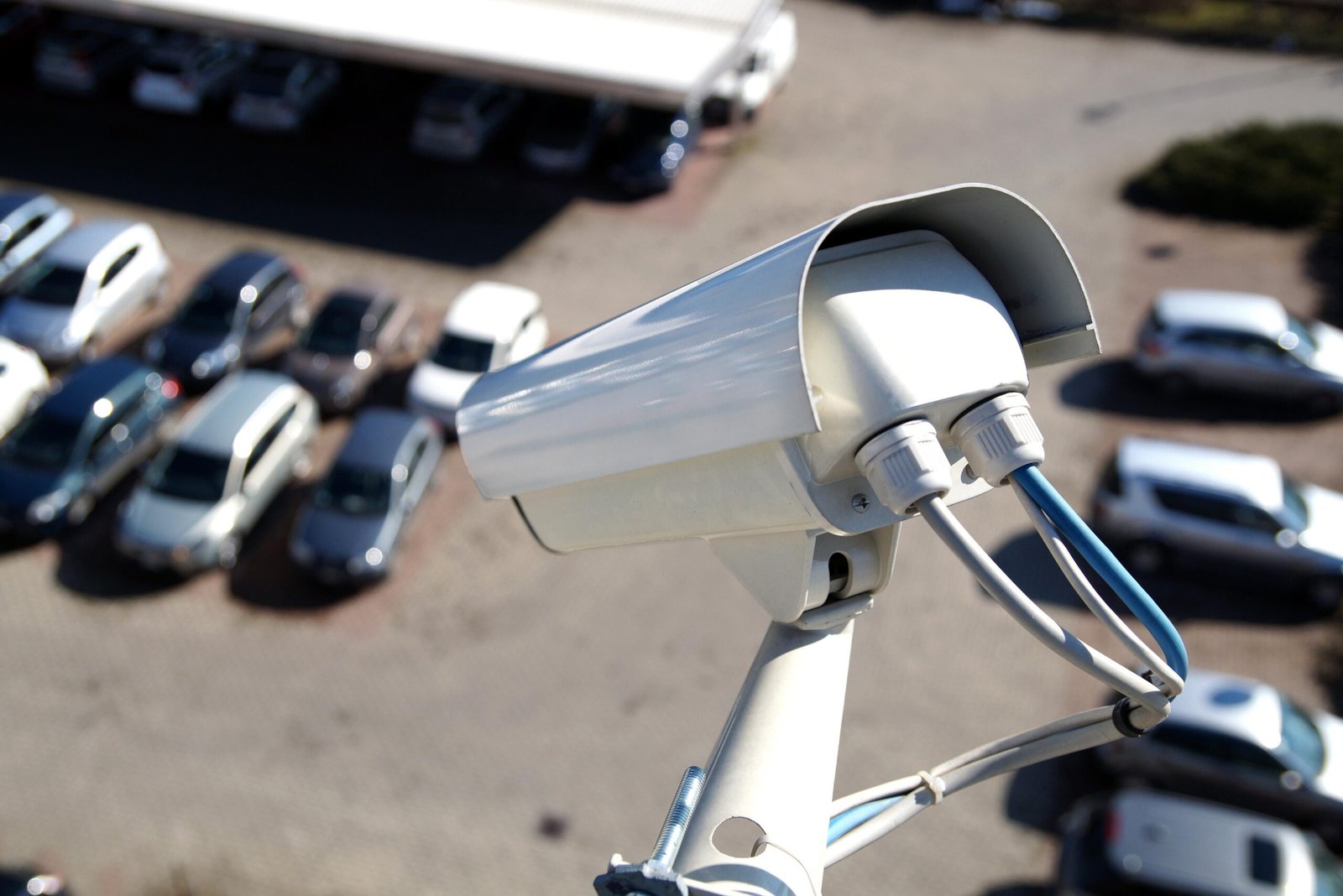
CCTV Monitoring for Auto Repair Shops: Stop Parts Theft, Customer Vehicle Disputes, and After-Hours Break-Ins
In March 2024, a Houston auto repair shop owner reviewed his camera footage after a customer claimed his transmission had been damaged during a routine oil change. The footage showed the customer’s vehicle arriving with an existing transmission fluid leak visible on the undercarriage. The claim was rejected. The shop saved $9,400 in repair costs and legal fees.
Two months later, the same shop was broken into at 3:15 AM on a Sunday. The camera recorded two men entering through the rear service bay door, loading three floor jacks, two battery jump packs, four sets of socket wrench kits, and a diagnostic scanner into a pickup truck. Total value: $14,200. The footage was handed to police. The shop reopened Monday with no equipment. No arrests were made.
Both events were on camera. The first one was resolved with footage. The second one was documented by footage but prevented by nothing. The difference between these two outcomes is the difference between recorded CCTV and live CCTV monitoring for auto repair shops.
Auto repair shops face a specific security environment that most camera systems are not configured to address. High-value portable equipment. Customer vehicles worth $15,000 to $80,000 sitting in bays overnight. Parts inventory worth tens of thousands. Cash transactions at the counter. And a building that sits empty from 6 PM to 7 AM five days a week, and all weekend for many independent shops.
GCCTVMS provides 24/7 live CCTV monitoring and camera monitoring services for auto repair shops, auto stores, and car showrooms across the USA, UK, Singapore, and Pakistan.
What Auto Shop Owners Think Cameras Do vs. What They Actually Do
Most auto repair shops have cameras. A dome above the front counter. One covering the main service bay. Maybe one at the front entrance. The footage records to a DVR in the office. The owner reviews it after an incident. By then the equipment is gone, the customer is threatening a lawsuit, or the parts inventory is short by an amount that doesn’t surface until the next monthly count.
This is the gap. CCTV monitoring for auto repair shops with live operators changes the outcome because the CCTV monitoring for auto repair operator responds during the event, not after it.
Resolute Partners’ guide on automotive dealership live security monitoring explains how remote video monitoring transforms auto industry security from reactive documentation to active prevention. The same principles that protect car dealership lots apply directly to auto repair shop service bays, parts rooms, and overnight vehicle storage.
GCCTVMS professional monitoring services and commercial surveillance add the trained live operators that auto repair shop cameras alone cannot provide.
The Four Threats Auto Repair Shops Face
After-Hours Break-Ins: Equipment and Parts Theft
Auto repair shop equipment is expensive, portable, and immediately resellable. Diagnostic scanners sell for $3,000 to $15,000. Floor jacks and lifts range from $500 to $8,000. Snap-on tool sets run $10,000 to $40,000. Battery jump packs, wheel balancers, tire changers, and alignment machines represent tens of thousands of dollars in portable or semi-portable inventory.
The FBI recorded 71% more theft of non-precious metals in 2024 compared to five years prior. Copper piping, copper wiring, and metal equipment from commercial properties are consistent targets. Auto repair shops sit at the intersection of this trend: high-value metal equipment, often stored in open service bays with roll-up doors that create accessible entry points.
CCTV monitoring for auto repair shops with live operators watching service bay cameras and exterior doors at night catches these events at the approach. The operator sees the vehicle pull up beside the service bay at 2 AM and activates two-way audio surveillance through the building exterior speaker while dispatching police. GCCTVMS night vision monitoring and remote monitoring and control covers every overnight hour at every auto repair shop entry point.
Customer Vehicle Damage Disputes
Customer vehicle damage claims are one of the most financially damaging and emotionally draining experiences auto repair shop owners face. A customer drops off a car with a pre-existing scratch on the rear quarter panel. The car is repaired, returned, and three days later the customer emails demanding the shop pay for the scratch they claim was caused during the service.
Without timestamped footage showing the vehicle’s complete exterior condition at drop-off and at pickup, the shop has no objective evidence. The dispute becomes the shop’s word against the customer’s. Insurance gets involved. Legal letters get sent. Small claims court gets filed.
OHZ Security’s guide on dealership video camera security covers how multi-angle camera coverage of vehicle intake and delivery creates the dispute resolution evidence that auto repair shops rely on. eCam’s guide on automotive dealership security after hours explains how the same camera infrastructure serves both daytime dispute documentation and overnight security monitoring.
CCTV monitoring for auto repair shops with cameras covering every service bay and the intake/delivery area produces timestamped footage that resolves customer vehicle damage claims with objective evidence. GCCTVMS real-time security monitoring and workplace incident report documentation produces the records that courts, insurers, and customers accept.
Parts Inventory Theft: Internal and External
Parts inventory theft at auto repair shops takes two forms. External: someone breaks in and takes parts from the parts room. Internal: an employee diverts parts from the inventory to their own side jobs, sells them privately, or simply takes them home.
The second type is harder to detect and rarely surfaces until a physical inventory count reveals discrepancies. By the time the numbers don’t add up, months of parts have walked out of the building. A mechanic who diverts $50 in parts per shift generates $12,000 in annual inventory loss before any discrepancy is large enough to investigate.
CCTV monitoring for auto repair shops with cameras covering the parts room entrance, the parts counter, and the rear receiving door create the accountability layer that deters internal diversion. GCCTVMS commercial video surveillance and video surveillance monitoring CCTV monitoring for auto repair shops covers parts zones with live operator awareness.
Catalytic Converter Theft from Customer Vehicles
At its peak in 2022, there were 95,318 catalytic converter theft claims in the US. At auto repair shops and dealerships, catalytic converters from customer vehicles sitting in service bays or overnight storage lots are prime targets because the vehicles are stationary, often left with keys in the office, and the thieves know exactly which makes and models carry the highest-value converters.
Hybrids, Toyota Prius, Honda CR-V, and Ford F-Series trucks top the theft target list. A catalytic converter from a Toyota Prius fetches $800 to $1,500 on the black market in under three minutes of removal time. An auto repair shop using CCTV monitoring for auto shops with 10 customer vehicles in overnight storage is holding $8,000 to $15,000 in catalytic converter theft exposure per night.
CCTV monitoring for auto repair shops with operators watching overnight vehicle storage areas catches the approach of theft crews before any vehicle is touched. GCCTVMS outdoor surveillance and parking lot monitoring CCTV monitoring for auto repair shops covers all vehicle storage areas with night vision capability.
Where Cameras Belong in an Auto Repair Shop
Vehicle Intake and Delivery Zone
The intake zone camera is the most important camera for customer vehicle damage disputes. It must capture the vehicle’s full exterior at intake, the customer’s face, the handoff of keys, and the timestamp. Exit cameras document the vehicle’s condition at delivery. Together, these cameras bracket every customer vehicle interaction with objective evidence.
Every Service Bay
CCTV monitoring for auto repair shops requires a camera at each service bay covering the full bay from two angles: the front and the side. CCTV monitoring for auto repair shops documents every tool interaction with every vehicle. When a customer claims their interior was damaged or a component was incorrectly installed, the footage shows exactly what was done, by whom, and when.
Parts Room and Inventory Storage
The parts room entrance and interior need dedicated cameras covering every shelf access and parts counter interaction. Any after-hours parts room access triggers an immediate operator alert. GCCTVMS access control integration pairs camera footage with electronic parts room entry logs.
Front Counter and Cash Handling
CCTV monitoring for auto repair shops includes front counter cameras covering both the staff side and the customer side document every transaction, every estimate discussion, and every cash or card payment. CCTV monitoring for auto repair shops protects against both employee cash theft and customer disputes over what was agreed in the estimate.
Exterior, Service Bay Doors, and Parking
CCTV monitoring for auto repair shops exterior cameras cover every roll-up service bay door, the rear receiving area, the parking lot, and the vehicle storage area. These cameras are the primary overnight security layer. GCCTVMS outdoor surveillance covers every exterior zone with night vision through every overnight hour.
How CCTV Monitoring for Auto Repair Shops Works in Real Time
Scenario 1: After-Hours Equipment Theft Interrupted. At 2:30 AM on a Saturday, the operator watching the service bay camera sees a pickup truck reverse toward the roll-up door of an auto repair shop. Two people exit with crowbars. The operator dispatches police and activates the exterior speaker: “This property is under live monitoring. Police have been dispatched. Move away from the building.” The truck pulls forward and leaves the lot. Officers arrive within 5 minutes. No entry is made. The diagnostic scanner and tool sets are intact.
Scenario 2: Customer Damage Dispute Resolved. A customer drops off a 2023 BMW 3 Series for brake pad replacement on a Tuesday morning. On Thursday, they return for pickup and immediately point to a 4-inch scratch on the driver’s door, claiming a technician caused it. The service manager pulls the intake footage. The scratch appears clearly at vehicle arrival, timestamped 9:14 AM Tuesday, before any technician touched the vehicle. The claim is dismissed in under 10 minutes. No insurance involvement. No legal fees.
Scenario 3: Catalytic Converter Theft Prevention. At 11:50 PM on a Wednesday, the operator watching the parking lot camera of an auto repair shop sees a person approach a customer’s Toyota Prius with a power tool. The operator activates the parking area speaker: “Security has been notified. This area is under live monitoring. Police are on the way.” The person runs to a waiting vehicle which leaves immediately. The Prius converter is intact. Police receive plate details from the parking camera.
EyeQ Monitoring’s guide on surveillance for asset protection in dealerships covers how live operator monitoring protects vehicle assets in automotive business environments. GCCTVMS provides live video monitoring and surveillance monitoring trained for auto repair shop-specific threat patterns.
CCTV Monitoring for Auto Repair Shops vs. On-Site Security Guards
An overnight security guard for an auto repair shop costs $2,000 to $4,000 per month. That guard patrols one area at a time. When they check the rear service bay, the front vehicle storage is unmonitored. When they handle a situation at the gate, the parts room is unwatched.
CCTV monitoring for auto repair shops costs $150 to $400 per month and covers every camera simultaneously. Operators watch every service bay, the parts room, the front counter area, the parking lot, and all exterior doors at the same time. For auto repair shops closed on weekends, CCTV monitoring for auto repair shops covers 60+ unprotected hours per week at no additional cost.
CCTV monitoring for auto repair shops through GCCTVMS remote guarding services and business surveillance deliver the full-coverage awareness that physical staff cannot provide after closing.
Multi-Location Coverage for Auto Repair Chains
Auto repair chains operating 5 to 50 locations need consistent CCTV monitoring for auto shops across the entire portfolio. A damage claim resolved at one location without proper camera coverage sets a precedent that affects the chain’s legal exposure at every other location.
CCTV monitoring for auto repair shops at scale is provided through GCCTVMS outsource CCTV monitoring services and remote CCTV monitoring services for multi-location auto repair groups from one monitoring centre. Every shop gets the same CCTV monitoring for auto repair, response time, and incident report format.
Insurance and Liability Benefits
Auto repair shop insurance includes both commercial property coverage and garage keeper liability, which covers customer vehicles while in the shop’s care. Documented live CCTV monitoring for auto repair shops with timestamped vehicle intake and delivery footage directly supports garage keeper liability defence. Insurers offer 5% to 15% premium reductions for shops with verified live monitoring and vehicle condition documentation systems.
GCCTVMS camera monitoring services produces insurance-grade documentation for every incident, vehicle intake, and delivery that satisfies both commercial property and garage keeper liability requirements.
How GCCTVMS Monitors Auto Repair Shops
GCCTVMS provides CCTV monitoring for auto repair shops using your existing camera system. Any brand. Any shop size. Single-bay independent auto repair shop or a 50-location auto store chain. We add trained operators who watch your feeds around the clock.
Our operators understand auto repair environments. They know what an after-hours equipment theft approach looks like from a service bay camera at 2 AM. They know the difference between a mechanic working late and an intruder in the parts room. They know that a person crouching beneath a customer vehicle in the parking lot at midnight is not checking tire pressure.
They alert your team, dispatch police, and document every incident and vehicle interaction with the timestamps your insurers, garage keeper liability coverage, and customers need.
GCCTVMS provides CCTV monitoring for auto repair shops and car showroom security across single locations and multi-site operations. USA, UK, Singapore, and Pakistan coverage from one monitoring centre. Sub-60-second response time. Full incident documentation.
Contact our team to discuss CCTV monitoring for your auto repair shop, or Get a Free 30-min Call to review your current camera coverage and security gaps.
About the Author
By M. Huzaifa Rizwan
Content Writer │ SEO Executive │ Ads Expert
I write about CCTV monitoring, remote surveillance, and business security at GCCTVMS. My work covers SEO content production, ad strategy, and marketing operations across the USA, UK, Singapore, and Pakistan. Outside of GCCTVMS, I write on tech and lifestyle topics for TechSurges, Medium, and Substack.
FAQ’s
What is CCTV monitoring for auto repair shops?
CCTV monitoring for auto repair shops means trained operators at a remote centre watch live camera feeds covering every service bay, vehicle intake and delivery zones, parts rooms, front counters, parking areas, and exterior doors. They detect break-in attempts, parts theft, catalytic converter theft, and customer vehicle damage events in real time and respond with audio warnings, staff alerts, and police dispatch.
How does CCTV monitoring for auto repair shops resolve customer vehicle damage disputes?
CCTV monitoring for auto repair shops with cameras covering vehicle intake and delivery zones with timestamps document the vehicle’s exact condition at drop-off and at pickup. When a customer claims damage occurred during service, the footage provides objective evidence of the vehicle’s condition at both points. This resolves most disputes immediately without insurance involvement or legal costs.
Can CCTV monitoring for auto repair shops prevent catalytic converter theft from customer vehicles?
Yes. Operators watching overnight parking and vehicle storage areas detect the approach of theft crews before any vehicle is reached. Audio warnings and police dispatch happen during the approach, not after the converter is already removed.
Does CCTV monitoring for auto shops catch internal parts theft?
Yes. Cameras covering parts room entrances and counters with live operator monitoring flag unusual after-hours access and access patterns that fall outside normal work schedules. Timestamped footage supports internal investigations when inventory counts reveal discrepancies.
How much does CCTV monitoring for auto shops and auto stores cost?
CCTV monitoring for auto repair shops costs $150 to $400 per month depending on shop size, camera count, and coverage hours. Compare that to $2,000 to $4,000 per month for one overnight security guard, or the cost of a single equipment theft event ($5,000 to $40,000) or an undefended damage claim.
Does CCTV monitoring for auto repair shops cover weekends and overnight hours?
Yes. GCCTVMS monitoring CCTV monitoring for auto repair covers every hour the shop is closed, including full weekends for shops closed Saturday and Sunday. This covers 60+ consecutive hours of unprotected exposure per week where most break-ins concentrate.
Is GCCTVMS a reliable CCTV monitoring services provider for auto repair chains?
Yes. GCCTVMS provides remote CCTV monitoring services for multi-location auto repair chains from one monitoring centre. Every location gets the same response time, operator training, and incident report format with consolidated reporting for operations management.
Does CCTV monitoring for auto repair shops and auto stores help with insurance premiums?
Yes. Commercial property and garage keeper liability insurers offer 5% to 15% premium reductions for shops with documented live security camera monitoring and timestamped vehicle condition records.
What camera positions matter most for CCTV monitoring for auto repair shops?
The vehicle intake zone, every service bay from two angles, the parts room, the front counter, all exterior roll-up service bay doors, and the overnight vehicle storage area are the critical positions for both CCTV monitoring for auto repair shops serves both security and customer dispute resolution.
Does GCCTVMS connect to existing auto shop and auto store camera systems for CCTV monitoring for auto repair?
Yes. GCCTVMS connects to any existing camera brand and infrastructure without requiring hardware replacement. CCTV monitoring for auto repair shops begins once the connection is configured, typically within days.
