


Camera Based Surveillance: Modern Security Guide
Table of Contents
ToggleMarcus Chen arrived at his electronics store on a Tuesday morning to find the back door pried open. Camera based surveillance had recorded everything—two men entering at 2:47 AM, loading merchandise into a van, and leaving by 3:12 AM. The video surveillance footage was crystal clear. Faces visible. The license plate is readable. Timestamps accurate.
Police took the recording. Investigators praised the camera quality. But here’s what the cameras didn’t do: stop the theft. Marcus lost $18,000 in inventory that night. His camera based surveillance system documented the crime perfectly while preventing anything.
This scenario repeats at businesses and homes across the country every single day. Camera surveillance that only records fails the fundamental test—prevention. The distinction between passive camera security and actively monitored professional monitoring services determines whether you watch crimes happen or stop them before losses occur.
What Camera Based Surveillance Actually Means
Camera based surveillance extends far beyond mounting cameras on walls. A complete surveillance system combines hardware, software, storage, and response protocols into unified protection.
CCTV surveillance—Closed Circuit Television—describes the traditional approach where cameras feed to local monitors. Modern video surveillance uses IP cameras, cloud storage, and remote access capabilities. But the equipment tells only part of the story.
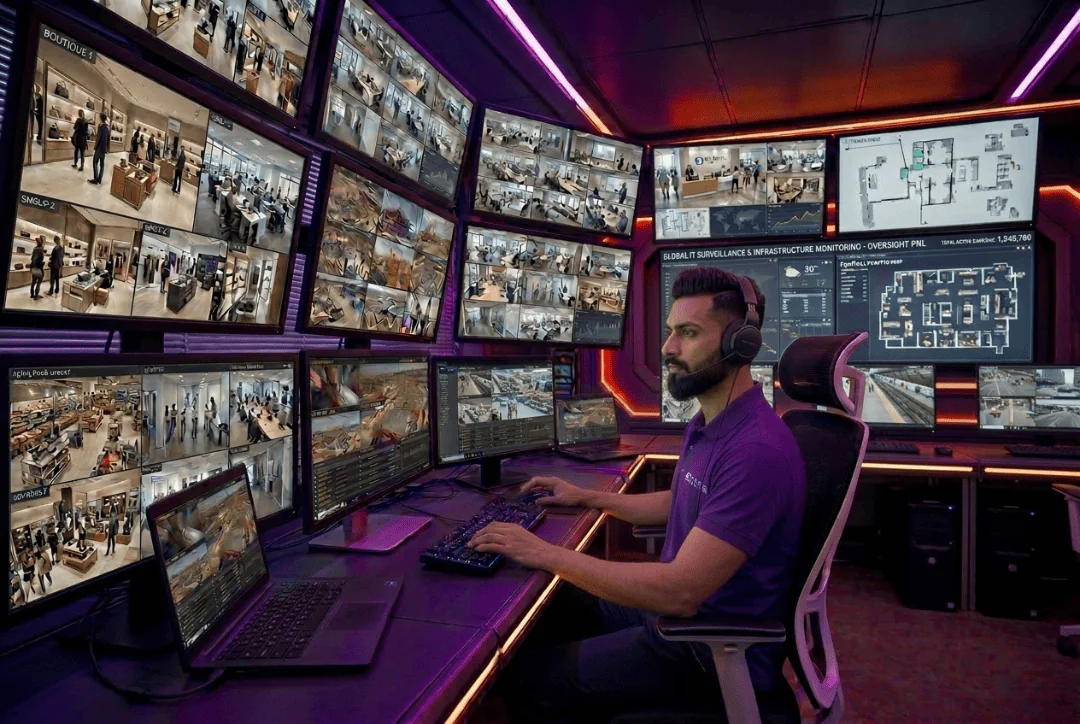
According to Castr, live video monitoring transforms passive recording into active protection through real-time observation and response. The cameras remain the same. What changes is whether anyone watches—and what happens when they see something.
Core components of camera based surveillance:
| Component | Function |
| Cameras | Capture footage—indoor, outdoor, specialized |
| Recording System | Store surveillance video locally or in cloud |
| Viewing Interface | Monitor feeds live or review recordings |
| Alert System | Notify when motion or events trigger |
| Response Protocol | Define actions when alerts activate |
Camera surveillance without monitoring creates documentation. Camera based surveillance with trained operators watching provides actual protection. The equipment costs the same either way. The outcomes differ dramatically.
The Problem with Passive Video Surveillance
Most camera security setups function as expensive recording devices. Footage gets reviewed after incidents—never during them. Criminals understand this reality and proceed despite visible cameras.
The average break-in takes eight to twelve minutes. That’s plenty of time when nobody watches the surveillance video in real-time. Your cameras capture perfect evidence for police reports while providing minimal crime prevention.
What passive cameras actually deliver:
| Capability | Reality |
| Deterrence | Limited—experienced criminals ignore visible cameras |
| Evidence | Yes—but useful only after losses occur |
| Real-time Response | None—nobody watching means nobody responding |
| Prevention | Minimal—recording doesn’t stop crimes in progress |
Business owners often assume camera based surveillance automatically lowers insurance premiums. Insurers increasingly require monitored systems for premium reductions. Unmonitored cameras provide documentation rather than risk reduction. SimpliSafe notes that professional monitoring fundamentally changes the security equation—from reactive evidence collection to proactive threat response.
Surveillance video of a completed crime helps prosecution, but does nothing for recovery. The merchandise is gone. The damage is done. Property owners who rely on passive cameras trade prevention for documentation without realizing the exchange until after a loss.
What Camera Based Surveillance Actually Delivers
Camera based surveillance provides substantial value when implemented correctly. The distinction lies between passive recording and active monitoring approaches.
Crime Prevention—Not Just Documentation
Visible cameras deter opportunistic criminals. Monitored camera based surveillance stops crimes in progress. Two-way audio surveillance allows operator intervention before intruders even enter a building.
According to Montavue, two-way audio in security systems enables real-time verbal warnings that can deter criminals before they commit offenses. Response time drops from hours to seconds when trained operators watch camera feeds continuously.
Evidence Collection
High-resolution surveillance video remains valuable for prosecution. Timestamps and metadata ensure court admissibility. Multiple camera angles allow complete incident reconstruction. Cloud backup prevents footage destruction by intruders who target recording equipment.
Operational Visibility
Camera based surveillance extends beyond security applications:
- Monitor employee performance and workplace safety
- Verify deliveries and shipment accuracy
- Document workplace incidents for liability protection
- Observe customer behavior patterns for business insights
Insurance and Liability Benefits
Many insurers offer premium discounts for professional surveillance systems. Video evidence reduces fraudulent claims against businesses. Documentation protects against liability suits. Workers’ compensation claims can be verified or disputed with footage.
Remote Access
Modern video surveillance provides viewing from anywhere through mobile applications. Property owners check on locations without physical presence. Alert notifications trigger for specific events. 24/7 live CCTV monitoring services ensure someone responds even when owners cannot.
Home Surveillance: Protecting What Matters Most
Residential surveillance addresses specific concerns for homeowners. Camera based surveillance at home covers both indoor and outdoor protection needs.
Outdoor Coverage Priorities
Entry points demand primary attention—front doors, back doors, garage entrances. Driveways and parking areas capture vehicle activity. Side gates and fence lines reveal perimeter breaches. The package delivery zones document arrivals and theft attempts.
Indoor Protection Locations
Main hallways and common areas provide movement tracking. Basement and attic access points cover secondary entry routes. Home offices containing valuables merit dedicated cameras. Areas visible from outside help verify what external cameras detect.
Home Surveillance Applications
| Application | Benefit |
| Package theft prevention | Document deliveries and theft attempts |
| Child/elderly monitoring | Check on family members remotely |
| Pet observation | Watch pets during work hours |
| Contractor verification | Confirm work completion |
| Entry point alerts | Know when someone approaches |
Monitored vs Self-Monitored
Self-monitored home surveillance requires you to watch and respond personally. That works during convenient hours when you’re available and attentive. Night hours create gaps. Vacations leave properties unprotected. Alert fatigue leads to ignored notifications over time.
Business Surveillance: Protecting Assets and Operations
Business surveillance addresses commercial needs from retail stores to corporate offices. Camera based surveillance in business environments focuses on loss prevention, liability protection, and operational oversight.
Retail Environments
Point-of-sale areas require transaction monitoring. Sales floors need coverage for customer theft prevention. Stockrooms and receiving areas document inventory movement. Emergency exits and back entrances cover secondary access points.
Everon Solutions describes how video monitoring enables businesses to verify incidents and take immediate action on what cameras capture. Shrinkage costs retailers billions annually. Employee theft accounts for a significant portion of those losses. Visible commercial surveillance reduces both customer and internal theft when combined with active monitoring.
Office Environments
Business video surveillance in office settings covers:
- Lobby and reception for visitor management
- Server rooms and sensitive areas
- Parking structures for employee safety
- After-hours monitoring for break-in prevention
Warehouse and Logistics
Warehouse operations require loading dock monitoring for shipment verification. Inventory area coverage prevents loss through theft or mishandling. Perimeter security addresses unauthorized access attempts. Process monitoring ensures safety compliance across operations.
Multi-Location Considerations
Businesses with multiple sites benefit from centralized monitoring. Consistent surveillance system standards across locations simplify management. Remote viewing and management reduce travel requirements. Shared monitoring services create cost efficiency compared to staffing each location independently.
Commercial Video Surveillance: Large-Scale Deployments
Enterprise-scale commercial video surveillance involves dozens to hundreds of cameras across facilities. Centralized monitoring and management become operational necessities at this scale. Integration with access control and alarms creates a unified security infrastructure.
Avigilon explains how commercial security cameras now serve multiple purposes—from traditional security to operational analytics and compliance documentation.
Industry-Specific Requirements
| Industry | Primary Surveillance Need |
| Retail chains | Loss prevention across multiple locations |
| Healthcare | Patient safety and HIPAA compliance |
| Education | Student and staff protection |
| Hospitality | Guest safety and liability documentation |
| Financial | Transaction monitoring and physical security |
Integration Requirements
Commercial surveillance integration connects multiple systems:
- Access control—tracking who enters where and when
- Alarm systems—verified response to triggers
- Fire and safety—evacuation documentation
- Building management—comprehensive facility visibility
Industrial surveillance environments add complexity through hazardous areas, large perimeters, and continuous operations that demand camera based surveillance designed for extreme conditions.
Monitored vs Unmonitored: The Critical Difference
The distinction between monitored and unmonitored camera based surveillance determines whether you have a recording system or an active protection service.
Unmonitored Camera Surveillance
Cameras record footage continuously. Motion detection sends alerts to your phone. You review when convenient—or ignore notifications entirely. Response depends entirely on your availability. Evidence exists after incidents conclude.
Limitations become apparent quickly:
You become the monitoring center. Alerts at 3 AM go unanswered. Vacation periods mean no coverage. Alert fatigue leads to ignored notifications within weeks. No intervention capability exists even when you see problems.
Professional Surveillance Monitoring
Trained operators watch camera based surveillance feeds continuously. Immediate assessment of every alert occurs. Real-time response includes voice warnings through speakers, authority dispatch, and on-site contact notification. Coverage continues 24/7 regardless of your schedule.
The value compounds: crimes stopped in progress, verified alerts reducing false alarm costs, professional security response protocols, and documented actions for liability protection.
Cost Comparison
| Factor | Unmonitored | Professionally Monitored |
| Equipment Cost | Same | Same |
| Monthly Cost | $0-50 (self-monitoring apps) | $100-500 |
| Response Time | Your availability | Seconds |
| 24/7 Coverage | Only when you watch | Continuous |
| Intervention Capability | None | Voice/Dispatch |
The equipment investment remains identical. The question becomes response capability—whether anyone acts when cameras detect threats.
Choosing the Right Surveillance System
Selecting camera based surveillance requires matching systems to specific property needs, coverage requirements, and monitoring preferences.
Assessment Questions
What are you protecting—assets, people, operations, or all three? How large is the coverage area? Are the requirements indoor, outdoor, or both? What lighting conditions exist throughout the day and night? How long must surveillance video be retained for compliance or liability purposes?
Camera Selection Considerations
Resolution requirements depend on identification needs—1080p suffices for general monitoring, while 4K matters for facial recognition and license plate capture. Fixed cameras cover defined areas while PTZ (pan-tilt-zoom) units provide flexible coverage. Night vision capability addresses low-light operation. Weather ratings determine outdoor durability. Audio capability enables two-way communication.
Storage Decisions
Local NVR/DVR storage keeps footage on-site. Cloud storage provides off-site backup and remote access. Hybrid approaches combine both for redundancy. Retention periods must satisfy legal, compliance, and insurance requirements.
Monitoring Options
Self-monitoring through mobile apps works for low-risk properties with engaged owners. Professional security monitoring suits businesses and homes requiring continuous protection. Hybrid models send initial alerts to owners with escalation to professional operators when needed.
Eyes On Your Property
Camera based surveillance forms the foundation of modern security—but only when implemented with active monitoring rather than passive recording. The difference between watching crimes and stopping them comes down to whether trained operators respond in real-time.
GCCTVMS provides camera monitoring services for residential, commercial, and industrial properties. Our operators watch your video surveillance continuously, responding to threats in seconds rather than reviewing footage hours or days after incidents.
Explore our services or contact our team for consultation. Schedule a free 30-minute call to discuss how camera based surveillance with professional monitoring protects your property.
Eyes On Your Property
GCCTVMS provides professional surveillance monitoring for homes, businesses, and industrial sites 24/7.
Schedule a Free 30-Min CallFAQ’s
What is camera based surveillance?
Camera based surveillance combines cameras, recording systems, viewing interfaces, and response protocols to protect properties. Complete systems include not just equipment but monitoring and response capabilities.
What’s the difference between CCTV surveillance and video surveillance?
CCTV (Closed Circuit Television) is the traditional term describing cameras feeding to local monitors. Video surveillance is the broader modern term encompassing IP cameras, cloud storage, and remote viewing. Functionally, both describe camera-based security systems.
Do I need professional surveillance monitoring or can I self-monitor?
Self-monitoring works when you’re consistently available to watch alerts and respond. Professional monitoring provides 24/7 coverage, immediate response capability, and intervention options unavailable to self-monitoring setups.
What camera’s security features matter most for home surveillance?
Night vision, weather resistance for outdoor units, motion detection with customizable zones, mobile viewing access, and sufficient resolution for identification purposes. Two-way audio adds intervention capability.
How does business surveillance reduce theft?
Visible cameras deter opportunistic theft. Monitored systems enable real-time intervention. Recorded footage supports prosecution and insurance claims. Employee awareness of surveillance reduces internal theft.
What’s included in commercial video surveillance systems?
Enterprise systems include multiple cameras, centralized recording and storage, monitoring software, integration with access control and alarms, and often professional monitoring services.
How long should surveillance video be stored?
Requirements vary by industry and jurisdiction. Retail typically retains 30-90 days. Healthcare and financial industries often require longer retention for compliance. Insurance and legal needs may dictate additional requirements.
Can my surveillance system integrate with access control?
Modern surveillance systems commonly integrate with access control, alarms, intercoms, and building management systems. Integration allows unified monitoring and coordinated response.
What’s the cost of professional surveillance monitoring?
Professional monitoring typically ranges from $100-500 monthly depending on camera count, monitoring hours, and response protocols required. This compares against equipment-only costs that provide recording without response capability.
How do I choose between local and cloud storage for surveillance video?
Local storage provides direct control and no ongoing fees but risks loss if equipment is stolen or damaged. Cloud storage offers off-site backup and remote access but requires reliable internet and ongoing subscription costs. Many businesses use hybrid approaches combining both.
