




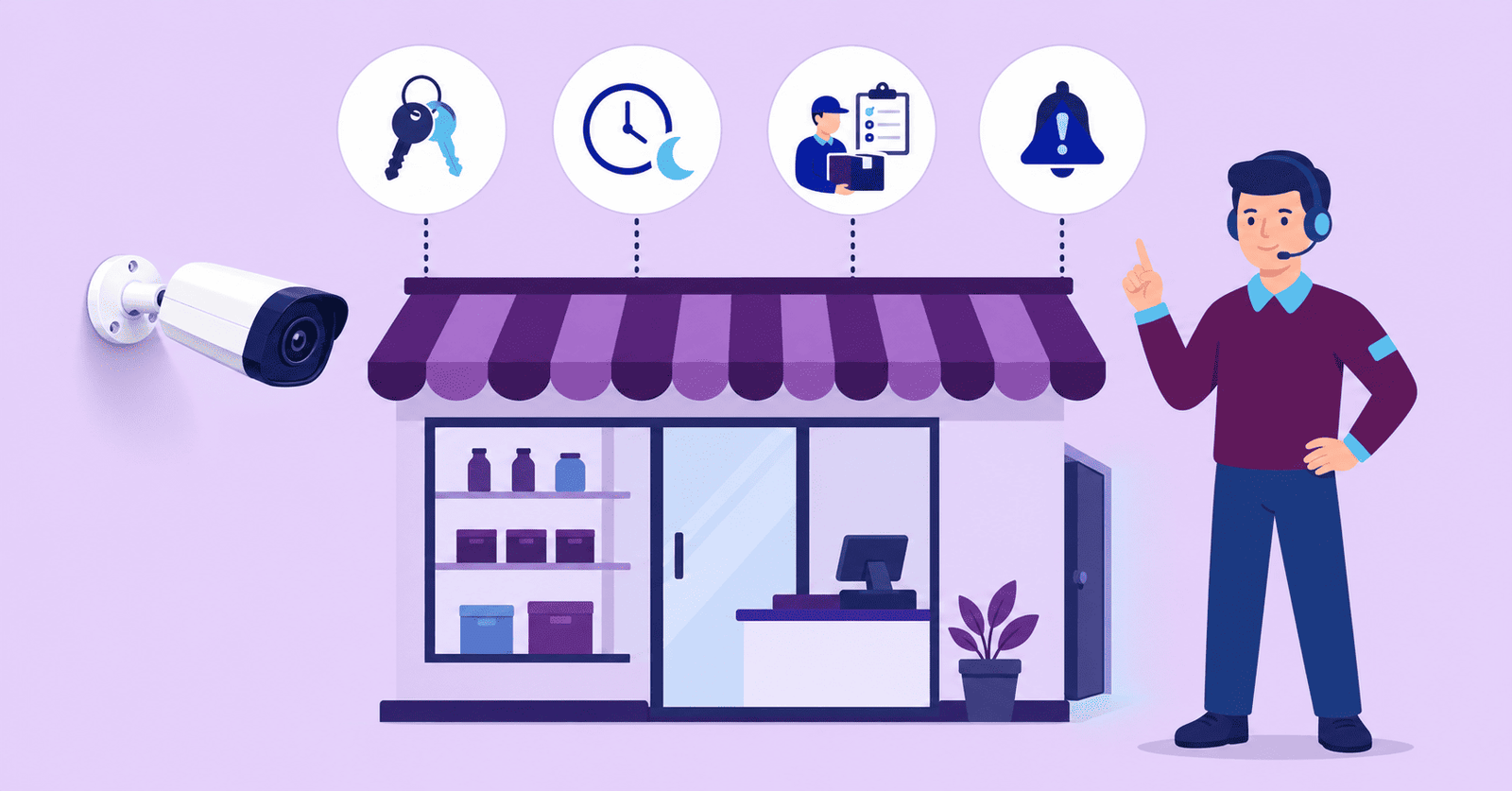
The Mistakes in Small Business Security That Cost More Than Broken Locks
A restaurant owner in Ohio changed the locks after a break-in. Three months later, it happened again through the same back door.
The second time, there was no forced entry. A former line cook still had a key from two years earlier, and nobody had ever asked for it back.
The locks were fine. The cameras were fine. What failed was the part nobody thinks of as security: keeping track of who could walk in. That is the pattern behind most of the mistakes in small business security covered below, and none of them are fixed by buying more equipment.
Quick Summary
Most break-ins at small businesses do not happen because the locks failed. They happen because nobody tracked who had keys, nobody verified the vendor at the back door, and nobody had a plan for what to do at 2 a.m. These seven mistakes in small business security are procedural, not technical, and each one leaves a gap that hardware alone will not close.
1. Nobody Tracks Who Has Keys or Access Codes
Keys get handed out and rarely come back. A manager who left last year, a contractor who did a renovation, a cleaner who stopped showing up. Each one may still hold access to the building.
Access codes have the same problem in digital form. Shared door codes get passed between staff, texted to vendors, and never changed after someone leaves. A code that six people know is not a security control.
The fix starts with a written record: who holds what, issued when, returned when. Access control systems make this easier by replacing physical keys with credentials you can revoke in seconds, and proper access control removes the guesswork about who can enter which areas.
2. There Is No After-Hours Access Policy
Most commercial burglaries happen when a business is closed, at night, on weekends, and during holidays. Those are exactly the hours most small businesses have no plan for.
The gap shows up in small ways. A manager runs in on a Sunday to grab paperwork and props the back door. An employee is authorized to open early but nobody defined what “early” means. Nobody knows who is supposed to be in the building at 11 p.m., so nothing looks unusual when someone is.
An after-hours policy answers three questions in writing: who can enter outside business hours, through which door, and who gets notified. Pairing that with real-time security monitoring means someone actually sees when the policy is broken.
3. Vendors and Delivery Staff Walk In Unverified
Deliveries, repairs, cleaning crews, and service calls all bring people into your building who do not work for you. Most businesses wave them through without checking anything.
The FBI reports that 90% of intrusions happen through doors, and an unlocked back door held open for a delivery is exactly that kind of opening. Someone who visits your business legitimately once also learns your layout, your schedule, and where you keep things.
Verification does not need to be complicated. A visitor log, a scheduled delivery window, and a rule that nobody enters unescorted covers most of it. Intercom monitoring adds a step where an operator confirms who is at the door before it opens.
4. Everything Depends on One Person Being Reachable
Ask most small business owners what happens if an alarm goes off while they are on a flight, and the answer is usually silence.
Security often runs through a single person. The owner holds the alarm codes, gets the alerts, and makes the call on what to do. When that person is asleep, traveling, or in a meeting, the response stops.
A backup plan means a second contact with the same authority, and a service that acts without waiting for you. Outsourced CCTV monitoring removes the single point of failure entirely, since the monitoring team responds whether or not anyone answers the phone.
5. Cash Handling Rules Exist But Nobody Follows Them
Most small businesses have cash procedures written down somewhere. Fewer follow them consistently once the shift gets busy.
Drawers stay open between transactions. Deposits get delayed to the next morning. One person counts, records, and deposits with nobody checking the math. Each shortcut is small, and each one creates room for loss that shows up weeks later during reconciliation.
The strongest fix connects the register to the cameras, so a manager can pull footage tied to a specific transaction instead of scrubbing hours of video. That is how POS and CCTV systems work together to catch register-level problems early.
6. There Is No Plan for What Happens Next
An alarm goes off. A camera catches someone in the parking lot at midnight. A door is found open on a Sunday morning. What happens next?
For most small businesses, the answer is improvised. Someone drives over to check. Someone calls the police and waits. Someone decides it is probably nothing and goes back to bed.
Written response steps remove that hesitation: who gets called first, what they do, when police get contacted, and who documents it. Response time matters more than most owners realize, because the window between detection and action is where a loss either gets stopped or completed.
7. Security Gets Set Up Once and Never Reviewed
A system installed three years ago was built for the business you had three years ago. Layouts change. Staff turnover. New doors get added. The alarm still works, but it protects a building that no longer exists in the same shape.
Reviewing security once a year catches this drift. Walk the property, check every camera view against the current layout, test the alarm, confirm who holds access, and update the contact list.
Systems also degrade quietly, and common monitoring problems like offline cameras and full storage often go unnoticed for months. An annual review catches what nobody reports.
What These Mistakes Cost
FBI data puts the average loss per burglary at $2,661, with victims losing an estimated $3 billion in property in a single year. For a small business, that number rarely tells the whole story.
Add the door repair, the insurance deductible, the day of lost trading, and the time spent filing reports. A $2,661 theft can easily become a $6,000 week. The real cost often runs higher than the system they skipped buying.
The mistakes in small business security covered above share one trait: each one is free to fix. Tracking keys, writing a policy, verifying vendors, and reviewing the setup annually cost nothing but attention.
Why Monitoring Closes the Gaps Procedures Leave Open
Good procedures reduce risk. They do not eliminate it, because people forget, shortcuts happen, and rules break at the worst moments.
Monitoring covers what procedure misses. When a door opens at 3 a.m., an operator sees it regardless of who holds the key or what the policy says. When a vendor arrives unscheduled, the operator asks before the door opens.
This is the difference between a system that records mistakes and one that catches them. Cameras alone document the former. Live security monitoring does the latter.
Key Takeaways
- Most small business break-ins trace back to procedural gaps, not failed hardware. Untracked keys and unverified entry cause more exposure than weak locks.
- Commercial burglaries concentrate at night, on weekends, and during holidays, which are the hours most small businesses have no defined policy for.
- FBI data puts the average burglary loss at $2,661, though repairs, downtime, and deductibles push the real cost higher.
- Depending on one person to receive and act on every alert creates a single point of failure that fails predictably.
- Each of these mistakes costs nothing to fix, but none of them get fixed without a scheduled review.
How GCCTVMS Covers What Procedures Miss
GCCTVMS provides live monitoring built around the gaps these mistakes create. Our operators watch entry points, confirm visitors through intercom before doors open, and respond to after-hours activity without waiting for an owner to answer their phone.
For businesses running lean on staff, CCTV monitoring for small business provides the second set of eyes that procedures alone cannot. Live monitoring costs $0.20 per camera per hour, and alert monitoring costs $0.10 per camera per hour.
We work with retail shops, restaurants, offices, and service businesses across the USA, UK, Singapore, and Pakistan. If you want a straight review of where your current setup leaves you exposed, get a free call and we will walk through it with you.
FAQs
What are the most common security mistakes in small business operations?
The most common mistakes are untracked keys and access codes, no after-hours access policy, unverified vendor entry, no backup when the owner is unreachable, loose cash handling, no incident response plan, and treating security as a one-time setup.
Why do small businesses get targeted for break-ins?
Most commercial burglaries happen at night, on weekends, and during holidays when nobody is on-site. Smaller operations often have fewer staff, looser access control, and no monitoring, which makes them easier targets than larger businesses.
How much does a business break-in cost on average?
FBI data puts the average loss per burglary at $2,661. For a small business, that figure often understates the real cost once downtime, repairs, and insurance deductibles are added.
Do I need to track who has keys to my business?
Yes. Keys handed out to former employees, contractors, and cleaners rarely get returned or logged. Without a record of who holds access, you cannot know who can enter your building outside business hours.
Can monitoring fix these mistakes?
Monitoring cannot replace good procedures, but it catches the gaps those procedures leave open. A live operator watching entry points sees unauthorized access as it happens, regardless of who holds a key.
