




POS and CCTV Systems: Why Running Them Separately Costs Convenience Stores Money
A convenience store cashier in Georgia opened the register on a no-sale 40 times over three weeks. Each time, the drawer opened, and a little cash was left with it. The POS system logged every no-sale. The cameras recorded every one.
Nobody connected the two records. The owner only noticed when the inventory count came up $2,300 short, and by then it meant scrubbing three weeks of footage against the register log by hand.
That gap is the problem this article is about. Most convenience stores run a POS system and CCTV cameras as two separate tools that never talk to each other. The register knows what was rung up. The camera knows what was recorded. Neither one connects the dots on its own.
Quick Summary
A POS system and a CCTV system running separately create two records nobody checks against each other in real time. A cashier voids a sale and pockets the cash, and the two systems never connect. Integrated POS and CCTV monitoring ties every flagged transaction to the exact footage from that second, which closes the gap that costs convenience stores thousands each year.
What POS and CCTV Systems Mean When They Work Together
Most stores treat the POS system and the CCTV system as unrelated. One rings up sales. One records video. They sit in the same building and never share a single piece of information.
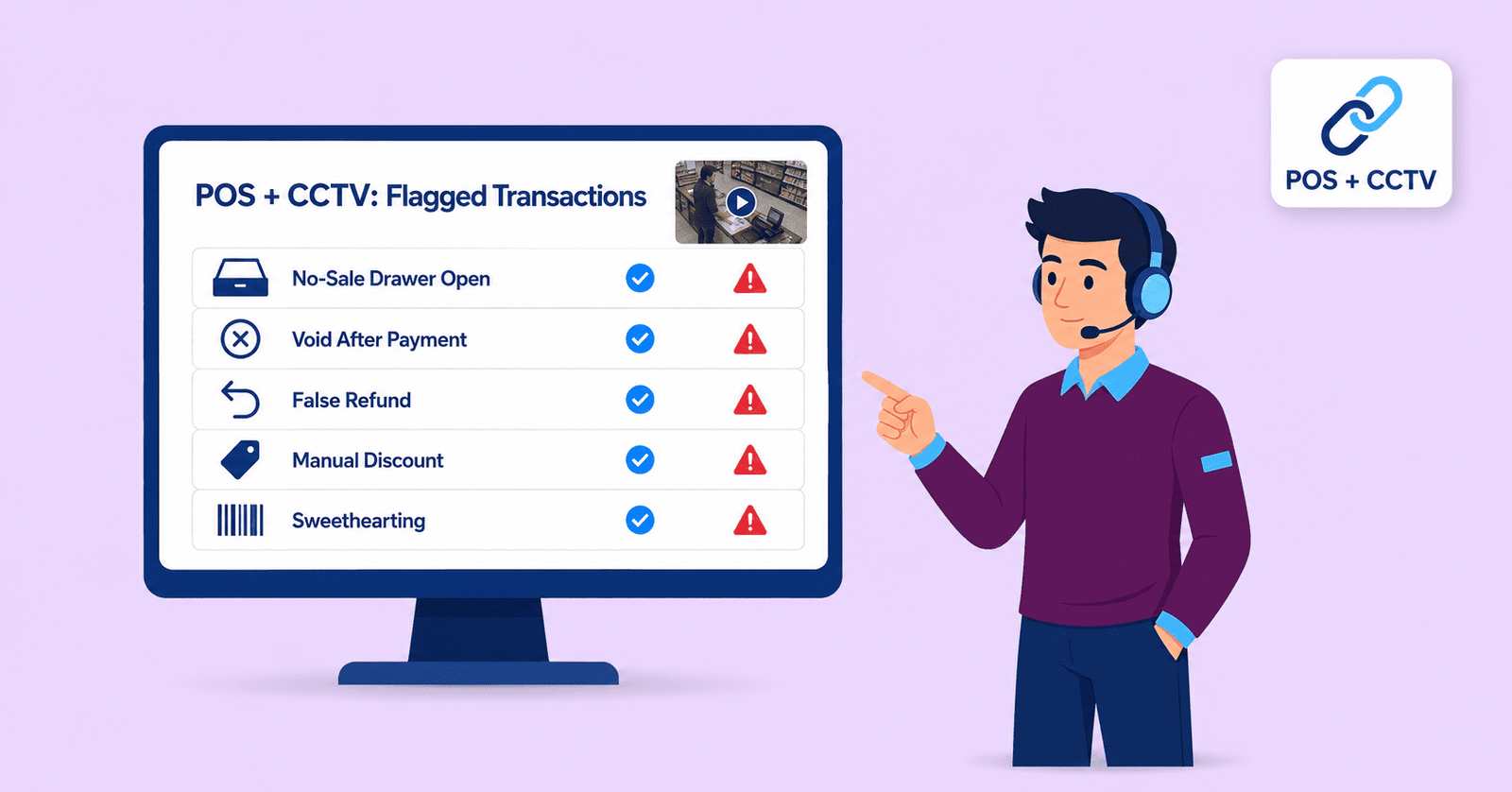
Integration changes that. Every transaction event, such as a void, a no-sale, a refund, or a manual discount, triggers a timestamped flag. That flag pulls the matching camera clip automatically, so the register data and the video live in one place.
The result is simple to use. Instead of watching hours of footage hoping to spot something wrong, a manager sees a short list of flagged transactions, each linked to the exact clip. You can see what a full CCTV service includes when it is built around this kind of transaction-level detail.
How CCTV Works: The Recording Layer Most Stores Never Watch
For anyone new to the setup, it helps to understand how CCTV works on its own first. A camera captures video. A recorder, either a DVR or an NVR, stores that video. The footage then sits on a drive until someone has a reason to review it.
That is the passive layer. It documents what happened, but it does nothing while it happens. A useful breakdown of what CCTV is and how it works covers the hardware side in plain terms.
The problem is that most stores stop here. The cameras record, the drive fills up, and nobody watches the footage until after a loss. Adding real-time CCTV monitoring turns that passive recording into something a person actually watches and acts on.
The Convenience Store Theft Problem POS Alone Cannot Solve
Convenience stores face a specific set of crimes that POS data alone cannot catch. The register log shows the numbers. It does not show the person or the intent behind them.
Common register-level theft includes:
- Sweethearting, where a cashier scans items at a discount or skips them entirely for friends
- No-sale drawer opens, used to make personal change or pocket cash
- False refunds, processed for items that were never returned
- Voids after payment, where the sale is rung, cash is taken, then the sale is cancelled
Each of these looks ordinary in the POS log. A refund is just a refund until you see the footage showing no customer and no returned item. Broader patterns of convenience store crime show how often these small, repeated losses add up to serious money. This is the same register-level exposure that affects any small business relying on CCTV monitoring without transaction context.
How POS and CCTV Integration Closes the Gap
Integration works on a simple idea: flag the exception, not the whole day. Instead of recording everything and reviewing nothing, the system marks only the transactions worth a second look.
Three features do most of the work:
- Transaction-triggered tagging links each void, refund, or no-sale to its video clip
- Exception-based reporting surfaces only the flagged events, so managers skip the normal sales
- Searchable footage lets you find a clip by transaction type, register, or cashier instead of scrubbing by time
A practical look at CCTV and POS integration shows how this cuts review time from hours to minutes. Paired with ongoing camera monitoring services, the flagged clips get watched instead of just stored.
What CVS and Major Chains Are Already Doing
Large retail and pharmacy chains have already moved on this problem. Faced with organized retail crime, they have added locked cabinets, app-based product access, and tighter loss prevention systems across stores.
Reporting on the shift toward locked cabinets and app-based access at CVS shows how seriously chains now treat shrinkage. The tools differ, but the goal is the same: connect what happens at the shelf and the register to a record someone can act on.
Smaller stores and forecourts face the same pressure with fewer resources. The same thinking applies to gas station CCTV monitoring, where high-turnover items and cash handling create constant exposure.
Why Live Monitoring Is the Missing Third Layer
Integration solves the record-keeping problem. It does not solve the response problem.
The POS flags the transaction. The CCTV records the footage. Neither one calls anyone or steps in while the theft is happening. That is the gap a live operator fills.
A live security monitoring team watching flagged transactions in real time can act in the moment, not during a monthly audit. With real-time security monitoring, a suspicious pattern gets attention while the shift is still running, which is when it can actually be stopped.
How GCCTVMS Connects What Your POS and Cameras Cannot
GCCTVMS gives convenience stores the third layer: trained operators watching register-level activity alongside the camera feeds. When a flagged transaction pattern appears, our team sees it as it happens, not weeks later.
The service works for single stores and multi-location operators. Our retail store CCTV monitoring covers the register, the floor, and the entrances together, so a suspicious void is tied to the person who rang it.
For owners who do not want to staff their own control room, outsourced CCTV monitoring puts that watching in the hands of a dedicated team. Live monitoring runs at $0.20 per camera per hour, and alert monitoring runs at $0.10 per camera per hour.
Key Takeaways
- A POS system and a CCTV system running separately create two records that nobody checks against each other in real time.
- Register-level theft, such as sweethearting, no-sale opens, and false refunds, looks normal in the POS log and only shows its true nature in the footage.
- Integration flags exceptions and links each one to its exact clip, cutting review from hours to minutes.
- Live monitoring adds the response layer, letting an operator act while the theft is happening instead of during a later audit.
- Most stores can connect their existing POS and cameras without replacing the hardware.
The First Step for Your Store
The store in the opening story lost $2,300 before anyone looked at the footage. A connected POS and CCTV setup, watched by a live operator, would have flagged the pattern in the first week.
If your register and your cameras are not talking to each other, that gap is where the losses hide.
Get a Free Call and we will review how your POS and cameras can work together and what live monitoring adds on top.
FAQs
What are POS and CCTV systems?
A POS system records sales transactions at the register. A CCTV system records video of the store. On their own they create two separate records. Integrated, they tie each transaction to the exact video clip from that moment.
How do POS and CCTV systems prevent theft together?
Integration links every transaction to its matching footage. A void, refund, or no-sale automatically pulls up the video of that register at that second. This turns hours of manual review into a few flagged clips.
What is the most common convenience store theft POS alone misses?
Register-level fraud is the hardest to catch with POS data alone. Sweethearting, no-sale drawer opens, and false refunds all show up in the log as normal-looking entries. Only the matching footage reveals what actually happened.
Does CCTV work without someone watching it?
A camera records footage, but it does not stop a crime on its own. Without live monitoring, footage is reviewed after the loss has already happened. A live operator watching flagged transactions can act while the theft is in progress.
Can I connect my existing POS and cameras?
In most cases, yes. POS and CCTV integration works with common register systems and existing cameras. The upgrade is the software layer that links the two records and the monitoring that watches them together.
