



It’s 3 AM on Sunday, and a warehouse owner sits at his desk scrolling through 48 hours of security footage, frame by frame. He knows the thief who took $30,000 worth of equipment is somewhere in these recordings. The cameras captured everything perfectly—they always do. The problem isn’t that he doesn’t have footage. The problem is finding the relevant five minutes buried in hundreds of hours showing absolutely nothing happening.
This scene plays out constantly in businesses across America. Traditional surveillance creates mountains of video data that’s practically useless when you need it most. Cameras record everything but tell you nothing. By the time you discover the incident and start searching footage, the damage is done, and the perpetrator is long gone.
Artificial intelligence changes this fundamental problem. Instead of recording everything and hoping you’ll find something useful later, AI-enhanced CCTV monitoring watches constantly, identifies genuine threats in real-time, and alerts you to problems while you can still respond. That’s the promise anyway. The reality is more nuanced, and separating genuine AI capabilities from marketing hype matters tremendously when you’re investing thousands in security systems.
Why Traditional Surveillance Fails Modern Businesses
The average retail store with eight cameras generates over 200 hours of video footage every single week. That’s more video than any person could realistically review, even if they had nothing else to do. Warehouses with dozens of cameras monitoring loading docks, perimeters, and storage areas create thousands of hours weekly. The security director at a mid-sized distribution center told me they’d need three full-time employees just to review footage from the previous week—and by then it wouldn’t matter anyway.
Traditional motion detection doesn’t solve this problem; it creates a different one. Those systems trigger on everything that moves: trees swaying, shadows changing, cats crossing parking lots, and headlights from passing cars. A typical business receives 150-200 motion alerts weekly, with 95% being completely irrelevant. Security teams learn to ignore alerts, which defeats the entire purpose. When a genuine threat occurs, it’s just another notification in an endless stream of false alarms.
Finding specific incidents after they happen requires knowing exactly when something occurred. Without that timestamp, you’re searching blindly through hours of mundane footage. Even with timestamps, reviewing footage is painfully slow. You can’t skip through at high speed without missing important details, so you’re stuck watching at 2-4x speed, which still takes hours for a single camera’s daily recording.
What AI Actually Does in Video Surveillance
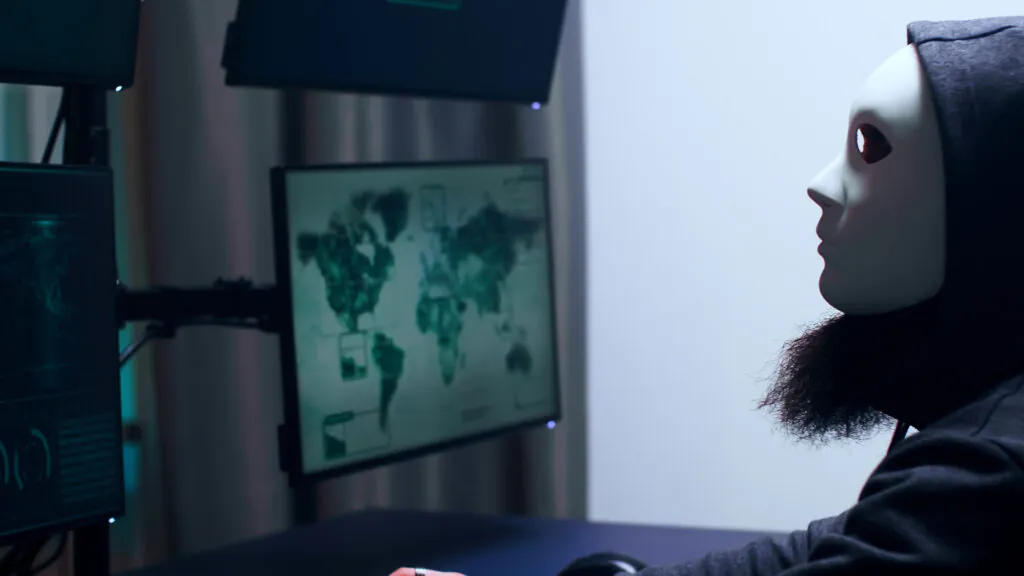
Artificial intelligence transforms cameras from passive recorders into active monitoring systems that understand what they’re seeing. Instead of just detecting motion, AI recognizes objects and analyzes behavior. Here’s what that means in practical terms.
Smart Recognition That Understands Context
Modern AI distinguishes between humans, vehicles, and animals automatically. A person walking through your parking lot at 2 AM generates an alert. A raccoon investigating your dumpster doesn’t. More sophisticated systems recognize specific behaviors: someone loitering near your back entrance, people moving against normal traffic flow, vehicles entering restricted areas, or individuals carrying large items toward exits.
Retail-focused AI identifies shoplifting patterns—the way someone handles merchandise, glances around nervously, or positions their body to conceal items. Warehouse systems track unusual movement near high-value equipment or detect when someone enters restricted zones without authorization. According to retail-specific AI surveillance research, stores implementing AI-powered theft detection see an average 35-45% reduction in shrinkage within the first six months, with the technology paying for itself through loss prevention alone.
Alerts That Actually Matter
Remote monitoring technology combined with AI filtering allows security teams to focus on genuine threats rather than sorting through hundreds of false positives generated by traditional motion detection systems. Instead of 200 meaningless weekly alerts, you receive 8-12 notifications that genuinely require attention. Each alert includes context: what triggered it, where it happened, and why the system classified it as important.
These AI capabilities—object recognition, behavioral analytics, intelligent alerts, and predictive analysis—work together to transform passive cameras into active security systems. The combination of these technologies creates surveillance that thinks, not just records. Learn more about how AI CCTV monitoring enhances security through real-world applications and measurable improvements in threat detection, response times, and overall safety.
AI Applications Across Different Industries
The power of AI in CCTV monitoring becomes clear when you see industry-specific applications. Generic security systems treat every business the same. AI-enhanced surveillance adapts to your specific threats and operational patterns.
Retail Operations
Retail AI monitors theft at registers and stockrooms, analyzes customer behavior patterns for better layouts, manages queue lengths, and provides after-hours intrusion detection. One grocery chain increased deli department revenue 18% through AI traffic analysis that optimized lunch-hour staffing.
Warehouses and Distribution
Research on warehouse monitoring with vision AI demonstrates that facilities implementing AI-enhanced surveillance achieve 50% faster incident investigation times and 40% reduction in equipment theft. Large facilities need perimeter breach detection, vehicle tracking, loading dock monitoring, and forklift safety compliance.
Healthcare and Construction
Hospitals require patient safety monitoring, controlled substance protection, and HIPAA-compliant privacy masking. One medical facility eliminated unauthorized medication storage access entirely. Construction sites face equipment theft of high-value machinery and safety compliance needs. A Texas company reduced equipment theft 60% within three months using AI that learned normal patterns.
The Technology Behind AI Surveillance
Understanding how AI actually works helps you evaluate competing claims and make informed decisions. Two fundamental approaches dominate the market: edge computing and cloud processing.
Edge AI processes video directly on the camera itself. This delivers faster response times, uses less bandwidth, and keeps video data private. The trade-off is limited processing power and harder updates. Cloud AI streams video to powerful servers for analysis, enabling more sophisticated analytics and easier updates, but requiring reliable internet and creating ongoing costs. Most professional CCTV monitoring services use hybrid approaches, with basic detection at the edge and complex analysis in the cloud.
Academic research on AI surveillance systems shows that machine learning algorithms require diverse, representative training data to achieve reliable accuracy across different environments, lighting conditions, and use cases—emphasizing the importance of proper system calibration and testing.
AI accuracy depends entirely on training data quality. Systems trained on generic datasets struggle with your specific environment. Good providers offer site-specific calibration periods of 2-4 weeks, where the AI learns your normal patterns. False positive rates separate quality systems (under 5%) from poor implementations (20% or higher). The transformation happens when AI technology meets professional implementation and proper system design. Explore how AI is transforming CCTV monitoring beyond marketing hype into measurable security improvements and business intelligence.
What AI Surveillance Actually Costs
Pricing varies dramatically based on business size. Small businesses and homes typically invest $4,000-8,000 in year one, covering 4-8 AI-capable cameras, installation, AI software licensing ($20-60 per camera monthly), and optional cloud storage.
Medium businesses spend $15,000-35,000 in the first year for 12-30 cameras with AI, professional installation, an AI analytics platform ($200-800 monthly), and an optional monitoring service ($400-1,500 monthly). Large enterprises invest $60,000-200,000+ for comprehensive systems with 50-200+ cameras, complex integration, enterprise platforms, and professional monitoring.
Hidden costs catch businesses off-guard: per-camera licensing fees, growing cloud storage costs, bandwidth upgrades, and training fees. When evaluating providers, transparency matters. Learn about GCCTVMS’s experience implementing AI-enhanced CCTV monitoring across retail, healthcare, logistics, and construction industries with proven results and transparent methodology.
Choosing AI Surveillance Providers
Every provider claims their AI is superior. Separating genuine capabilities from marketing requires asking specific questions and demanding demonstrations. Request live demonstrations using your actual security concerns, not canned demos. Ask for documented false alarm rates from existing customers in your industry. Verify claims independently through references you contact directly.
Provider credentials reveal more than marketing materials. Ask how long AI has been in their product, who developed the AI (in-house, licensed, or open-source), and what training data was used. Generic datasets versus industry-specific training produce different results.
Critical questions before buying: “Show me your AI detecting threats in my environment,” “What’s your false alarm rate for businesses like mine?” “Can I export data if I change providers?” “What happens during internet outages?” “How do you handle privacy compliance?”, and “What’s included in monthly fees versus additional charges?”
Ready to see AI monitoring in action for your specific needs? Contact GCCTVMS to schedule a live demonstration showing how AI detects threats relevant to your business. Not sure which providers offer genuine AI capabilities? Our detailed comparison of the top CCTV monitoring services companies evaluates which providers deliver real AI performance and transparent pricing.
Beyond Security: AI as Business Intelligence
AI-enhanced surveillance transcends traditional security into business intelligence. Retail learns customer flow patterns and optimizes store layouts. Warehouses identify operational bottlenecks causing delays. Healthcare improves patient experience through better space management. These insights emerge from the same cameras protecting your assets, delivering value beyond loss prevention.
The competitive reality is stark: businesses relying on traditional surveillance operate at a disadvantage. They review footage after losses occur, while AI-equipped competitors prevent incidents before they happen. The gap widens as AI capabilities improve quarterly. The technology exists. Professional AI monitoring services are accessible across all business sizes and budgets.
The question isn’t whether AI surveillance makes sense—evidence overwhelmingly supports its value. The question is whether you’ll implement it before or after your next preventable loss. Request demonstrations from 3-4 providers using your actual security concerns. Compare not just price, but proven accuracy and support quality. Choose based on your specific needs, not generic features. Schedule your AI surveillance consultation with GCCTVMS to see real-time demonstrations, discuss your industry-specific requirements, and receive a transparent proposal showing exactly what AI capabilities you’ll get and what they’ll cost. Artificial intelligence hasn’t just changed video surveillance—it’s changed what’s possible for businesses that want to protect assets, optimize operations, and gain competitive advantages through intelligence instead of hoping cameras capture something useful.
