





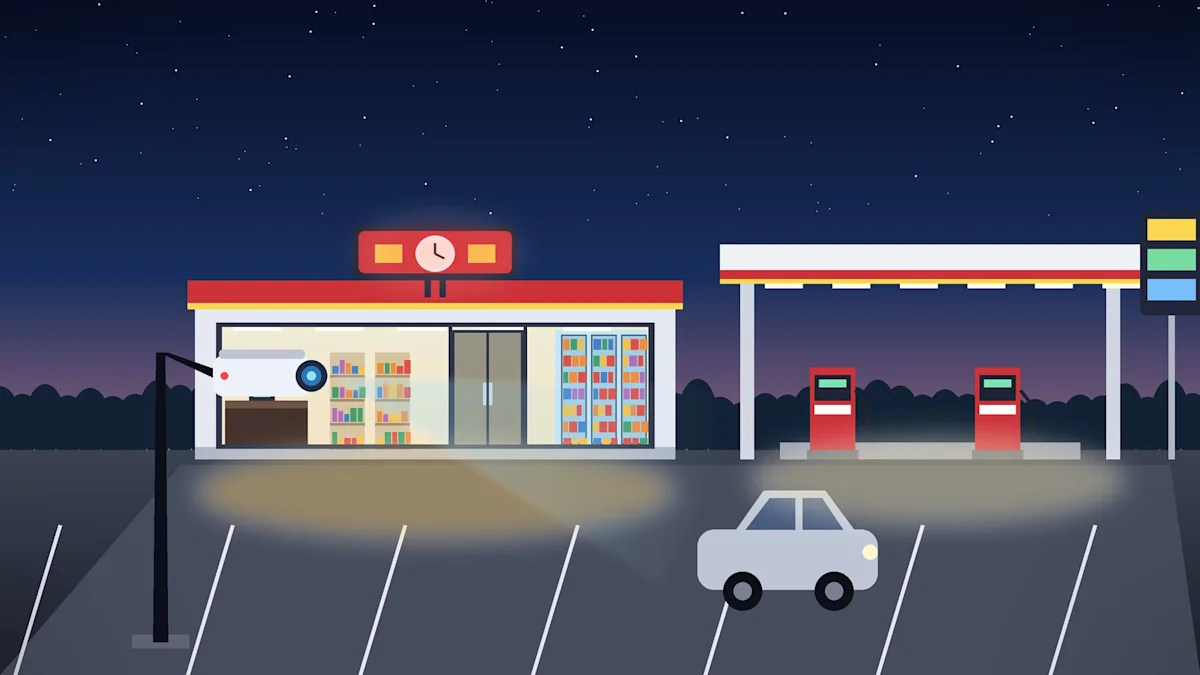
Direct answer: CCTV monitoring for convenience stores means trained operators at a remote center watch live camera feeds of the register, alcohol and tobacco sections, entrance, forecourt and back room. They spot pre-robbery behavior, concealment and employee theft as it happens, alert the clerk, trigger audio warnings and dispatch police. It typically costs $150 to $400 per month and covers every camera at once.
CCTV Monitoring for Convenience Stores: Stop Robbery, Shoplifting, and Employee Theft Before They Close Your Store
A convenience store owner in London named Ben Selvaratnam has had at least 20 stitches from being hit with bottles during theft incidents at his store. He has spent thousands on security measures. His shop still loses hundreds of pounds a week to shoplifting.
In Albany, New York, Stewart's Shops closed a store after a surge in theft, robberies, and physical assaults made the location an unsafe and unsustainable business environment.
The Association of Convenience Stores in the UK reported 5.6 million theft incidents in 2023, a 400% increase from the prior year. Violence against staff rose from 41,000 to 76,000 incidents in the same period. In the US, c-stores and gas stations combined were the site of 13.8% of all robberies in 2022. The FBI recorded that 4.5% of all violent crime in 2022 occurred at a gas station or convenience store. When the industry shrink rate is applied to NACS data showing $906.1 billion in annual c-store sales, the c-store industry loses more than $40 million every single day to theft and shrinkage.
Convenience stores are one of the highest-risk retail environments in the world. Small staff. Public access. Late hours. High cash turnover. High-theft products on open shelves. CCTV monitoring for convenience stores replaces cameras that record these losses with operators who stop them.
GCCTVMS provides 24/7 live CCTV monitoring and camera monitoring services for convenience stores across the USA, UK, Singapore, and Pakistan.
What Convenience Store Owners Think CCTV Does vs. What It Actually Does
Most convenience stores have cameras. A dome camera above the register. One at the entrance. One pointing at the alcohol section. The footage records to a DVR under the counter or in the back office.
When the robbery happens, the footage captures everything. The assailant's face. The weapon. The cash being taken. The footage goes to the police. The store owner files the report. In most cases, no arrest follows. The next day, the store opens again with the same camera in the same position recording to the same unwatched server.
That is recorded CCTV. That is not CCTV monitoring for convenience stores.
EEN's cloud video surveillance guide for convenience stores explains the shift from passive recording to active monitoring that transforms the security outcome. Real CCTV monitoring for convenience stores means trained operators at a remote centre watching your live camera feeds across the register, alcohol section, entrance, parking lot, and back office simultaneously. They see the group of four entering together and spreading across the store at 11 PM. They see the person hiding merchandise under a coat at the cold drink fridge. They see the vehicle pulling up with the engine running at 1 AM.
They respond while it is still happening.
GCCTVMS professional monitoring services and commercial surveillance add the live operator layer that turns your existing camera infrastructure from evidence collection into crime prevention.
The Four Threats Convenience Stores Face Every Day
Armed Robbery: The Threat That Injures and Kills Staff
C-stores and gas stations combined account for 13.8% of all US robberies. The average commercial robbery loss is $1,589. But the financial loss is the secondary problem. Ben Selvaratnam has 20 stitches. Staff at convenience stores across the US, UK, Singapore, and Pakistan face armed robbery as a near-daily risk in high-crime locations.
Armed robberies at c-stores follow predictable patterns. One or two individuals enter close to shift change. One covers the entrance. One approaches the register with a weapon. The demand is simple: cash and lottery tickets. The event lasts 45 to 90 seconds. The cash is taken. The assailants leave.
Spot.ai's guide on convenience store security cameras covers how camera placement combined with live monitoring changes the risk calculation for robbery at c-stores. CCTV monitoring for convenience stores with operators watching the entrance camera in real time catches the pre-robbery assessment. A person who enters, scans the store layout, checks where the clerk is standing, and exits without buying anything before re-entering is a recognisable pattern. The operator alerts the clerk and dispatches police before the robbery attempt begins.
GCCTVMS threat detection and real-time security monitoring covers convenience stores with sub-60-second response to confirmed threat patterns.
Shoplifting and Organised Retail Crime
The c-store industry loses more than $40 million every day. Shoplifting at convenience stores targets alcohol, tobacco, energy drinks, confectionery, and health and beauty products — all high-value, compact, and easily concealed. Organised retail crime crews target c-stores specifically because most have minimal floor staff and no live monitoring.
March Networks' guide on the benefits of video surveillance for convenience stores explains how live monitoring covers the high-theft zones that a single clerk cannot watch simultaneously while serving customers at the register. An operator watching the alcohol section at 9 PM sees the person palming bottles while the clerk is occupied. The operator activates two-way audio surveillance through the store speaker. The person replaces the items and leaves.
GCCTVMS live video monitoring and live security camera monitoring covers every aisle, every cooler door, and every high-theft product zone simultaneously.
Employee Theft and Cash Register Fraud
A clerk voids a transaction after taking cash. A night-shift employee walks stock out through the back door at end of shift. A supervisor processes fake refunds. Employee theft is responsible for approximately 28-35% of retail losses across the c-store sector. In small-staff environments where one person runs the entire store for an 8-hour shift, the exposure is significant and the detection rate without monitoring is extremely low.
CCTV monitoring for convenience stores with cameras covering the register, the back door, and the stock room creates the accountability that deters employee theft. When staff know an operator is watching the register feed in real time, the void-after-cash pattern stops. Not because every incident gets caught immediately, but because the probability of detection changes from near-zero to near-certain.
GCCTVMS commercial video surveillance and video surveillance monitoring covers all internal cash handling and inventory movement zones.
After-Hours Break-Ins
Convenience stores that close at midnight or operate with reduced overnight hours leave tobacco walls, lottery ticket cases, alcohol shelving, and cash offices accessible through a predictable vulnerability window. After-hours break-ins at c-stores use the same methods documented at pharmacies and vape shops: glass entry, lock bypass, and rapid inventory grab before police respond.
Coram AI's guide on gas station and convenience store security cameras covers the overlap between gas station and c-store security requirements for after-hours coverage. GCCTVMS night vision monitoring and remote monitoring and control watches store perimeters through every overnight hour with operators who dispatch police at the first sign of approach, not after the door is breached.
Where Cameras Belong in a Convenience Store
The Register and Transaction Zone
The register is the highest-risk and highest-value zone in a convenience store. Cameras need to cover both the staff side (for employee theft and robbery response) and the customer side (for transaction fraud and robbery documentation). A single overhead camera is insufficient. Two angles create complete transaction documentation.
The Tobacco Wall and Alcohol Section
These are the two most stolen product categories in c-stores. Dome cameras at the ceiling corners of these sections cover wide angles. Close-angle cameras covering specific shelf sections catch the conceal-and-walk pattern that standard wide-angle cameras miss.
The Entrance, Exit, and Forecourt
Face-height entrance cameras document every person entering and exiting. These are the primary identification cameras for robbery suspects. Forecourt cameras covering the parking area and fuel pumps give operators the earliest possible warning of pre-robbery assessment behaviour. GCCTVMS outdoor surveillance and parking lot monitoring covers all exterior zones.
Back Room, Stock Area, and Delivery Access
Back room cameras cover inventory movement between delivery and the shop floor, and document every person who accesses the store through the delivery entrance. These cameras are where employee theft documentation concentrates.
The Safe and Cash Office
A dedicated camera covering the safe and cash counting area documents every cash handling event. This is the zone that matters most for both employee theft investigations and robbery incident documentation.
How CCTV Monitoring for Convenience Stores Works in Real Time
Scenario 1: Pre-Robbery Behaviour Detection. At 10:50 PM, the operator watching the entrance camera sees a person enter, survey the store layout, make eye contact with the clerk, and exit without purchasing anything. The person waits outside for 90 seconds, then re-enters and approaches the register. The operator alerts the clerk through the monitoring system earpiece and dispatches police. The clerk activates the panic button visible below the counter. Police arrive within 3 minutes. The robbery does not complete.
Scenario 2: Alcohol Section Concealment. At 8:30 PM, the operator watching the alcohol section camera sees a person in a large jacket systematically moving bottles from the shelf into the jacket's interior. The operator activates the store speaker: "Attention. All areas of this store are monitored by live security. Staff have been alerted." The person replaces the bottles and approaches the register to buy a single low-cost item before leaving. No theft completes.
Scenario 3: After-Hours Break-In. At 2:15 AM, the operator watching the rear exterior camera sees a person approach the back door with a pry bar. The operator immediately dispatches police with the store address and description, and activates the exterior speaker: "This property is under live monitoring. Police have been dispatched." The person drops the pry bar and runs. Officers arrive within 4 minutes. No entry is made.
GCCTVMS provides surveillance monitoring and remote CCTV monitoring trained for convenience store-specific threat patterns across all four markets.
CCTV Monitoring for Convenience Stores vs. Hiring Security Guards
A part-time security guard for evening shifts costs $1,500 to $3,500 per month. That guard watches one zone at a time. When they stand at the entrance, the alcohol section is unmonitored. When they handle a shoplifting incident, the register is unwatched.
CCTV monitoring for convenience stores costs $150 to $400 per month and covers every camera simultaneously. Operators watch the register, the alcohol section, the entrance, the forecourt, and the back room at the same time. For multi-location c-store operators, one monitoring contract covers every site without multiplying guard costs by store count.
GCCTVMS remote guarding services and business surveillance delivers broader coverage than a physical guard at a fraction of the cost, with the same sub-60-second police dispatch capability.
Multi-Store Coverage for C-Store Chains
Convenience store chains operating 10 to 5,000 locations need consistent security standards across every store. Separate systems at each location create reporting inconsistencies. One theft at a poorly monitored location becomes a repeat pattern. GCCTVMS outsource CCTV monitoring services and remote monitoring and control covers multi-site c-store groups from one monitoring centre. Every store gets the same operator training, response time, and incident report format.
Insurance Benefits and Regulatory Documentation
Commercial property and liability insurance for convenience stores is expensive and heavily influenced by theft claim history. Documented live CCTV monitoring with verified dispatch records directly supports premium negotiations. Most commercial insurers offer 5% to 15% premium reductions for properties with verified live monitoring.
GCCTVMS camera monitoring services produces insurance-grade documentation for every incident, dispatch, and resolution.
How GCCTVMS Monitors Convenience Stores
GCCTVMS connects to your existing camera system. Any brand. Any store size. A single independent c-store or a national chain with 5,000 locations. We add trained operators who watch your feeds around the clock.
Our operators understand convenience store environments. They know what pre-robbery assessment behaviour looks like at a store entrance. They know what coordinated shoplifting looks like across the alcohol and tobacco sections simultaneously. They know that a vehicle parked at the back door at 2 AM with the engine running is not a late delivery. They alert your staff, dispatch police, and document every incident with timestamps that insurers and law enforcement need.
GCCTVMS provides CCTV monitoring for convenience stores across single locations and multi-site chains. USA, UK, Singapore, and Pakistan coverage from one monitoring centre. Sub-60-second response time. Full incident documentation.
Contact our team to discuss monitoring for your convenience store, or get a free 30-min call to review your current camera coverage and security gaps.
Frequently Asked Questions
What is CCTV monitoring for convenience stores?
CCTV monitoring for convenience stores means trained operators at a remote centre watch live camera feeds covering the register, alcohol and tobacco sections, entrance, forecourt, back room, and safe area. They detect pre-robbery behaviour, shoplifting, employee theft, and after-hours break-ins in real time and respond with staff alerts, audio warnings, and police dispatch.
How much do convenience stores lose to theft annually?
The c-store industry loses more than $40 million every day to theft and shrinkage, based on NACS data applied to the 2022 industry shrink rate. C-stores and gas stations combined were the site of 13.8% of all US robberies in 2022. The UK recorded 5.6 million theft incidents at convenience stores in 2023 alone.
Does CCTV monitoring stop armed robbery at convenience stores?
Yes. Operators watching entrance cameras detect pre-robbery assessment behaviour before the robbery attempt begins. They alert the clerk and dispatch police during the assessment phase. Most robbery attempts abort when police are already responding before the assailant has demanded anything.
How does CCTV monitoring for convenience stores cover shoplifting?
Operators watching the alcohol section, tobacco wall, and other high-theft aisles in real time detect concealment behaviour. Audio warnings through store speakers stop most shoplifting attempts before the merchandise leaves the store. No confrontation between the clerk and the shoplifter is required.
How much does CCTV monitoring for convenience stores cost?
CCTV monitoring services for convenience stores cost $150 to $400 per month. Compare that to $1,500 to $3,500 per month for a part-time security guard who watches one zone at a time. The monitoring cost is recovered by preventing a single robbery incident.
Can CCTV monitoring catch employee theft at c-stores?
Yes. Cameras covering the register, back room, and delivery access with live operators watching in real time change the risk calculation for employees considering theft. When staff know the register feed is actively monitored, void-after-cash and inventory walk-out patterns stop.
Does CCTV monitoring cover convenience stores after hours?
Yes. GCCTVMS monitoring covers overnight hours at the same response time as business hours. Operators watch perimeters and back entrances through every overnight window. Break-in attempts trigger police dispatch before entry is made.
Can one CCTV monitoring service cover a c-store chain?
Yes. GCCTVMS provides remote CCTV monitoring services for multi-location c-store chains from one monitoring centre. Every location gets the same operator training, response time, and incident report format.
Does CCTV monitoring reduce convenience store insurance premiums?
Yes. Commercial property insurers offer 5% to 15% premium reductions for stores with documented live security camera monitoring. Incident reports from a verified monitoring service satisfy insurer documentation requirements for active deterrence.
Does GCCTVMS connect to existing convenience store camera systems?
Yes. GCCTVMS connects to any existing camera brand and infrastructure without requiring hardware replacement. Operators begin monitoring your convenience store feeds once the connection is configured.
Get a Monitoring Plan for Your Property
Tell us about your site, your cameras and your risk hours. We'll send you a coverage plan and a monthly quote for your site.
Get a Free QuoteCall +1 (501) 621-0002