




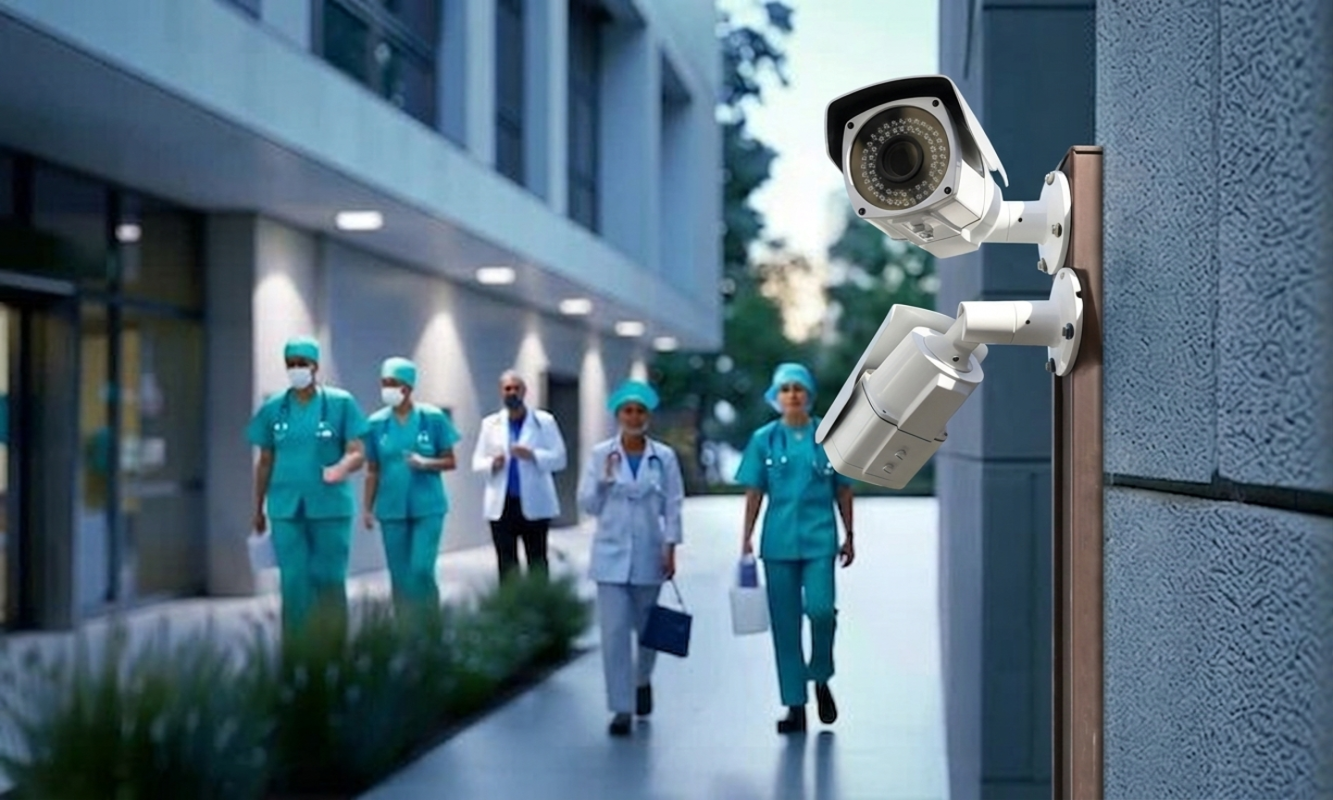
CCTV Monitoring for Healthcare Clinics: Protect Patients, Staff, and Controlled Substances from Threats Nobody Talks About
A nurse in West Haven, Connecticut, was sentenced in December 2024 for diverting narcotics from dying VA Medical Center patients. A UW Medicine resident physician at Seattle Children’s Hospital was charged in July 2025 for diverting fentanyl. A Stamford nurse stole and tampered with hydromorphone and fentanyl vials and was sentenced to prison in August 2025. A nurse in Ross County was caught stealing fentanyl from patients — for the second time.
These are not rare, isolated events. The International Health Facility Diversion Association estimates that at any given time there are 37,000 drug diverters operating across US healthcare facilities. The VA alone saw drug diversion incidents jump from 272 in 2009 to 2,926 in 2015 across 1,200 facilities. Wolters Kluwer’s 2025 State of Drug Diversion Report found that almost all survey participants believe diversion occurs across US hospitals, but that most incidents go unreported.
Unreported. The patient loses their pain medication. A recovering addict in scrubs pockets the fentanyl. A camera records it. Nobody is watching.
Healthcare clinics face a security problem that is fundamentally different from retail stores or warehouses. The threat is not a stranger breaking in. It is a trusted professional with legitimate access, operating quietly, over months, in the space between one supervision moment and the next. CCTV monitoring for healthcare clinics addresses this by replacing passive recording with active, trained observation.
GCCTVMS provides 24/7 live CCTV monitoring and camera monitoring services for healthcare clinics across the USA, UK, Singapore, and Pakistan.
What Healthcare Clinic Administrators Assume vs. What Actually Happens
Most clinic administrators believe cameras provide protection. A camera above the medication room means staff know they are being watched. The footage is there if something goes wrong. That assumption feels like security.
Here is what the data shows. A nurse steals fentanyl 40 times over six months before anyone notices a discrepancy. The camera records every incident. The footage sits on a server. Nobody reviews it until a patient complains about inadequate pain management. Then the investigation begins. Six months of harm, documented in perfect video, discovered after the fact.
This is recorded surveillance. It is not CCTV monitoring for healthcare clinics.
Goodman Allen’s guide on cameras for clinic security makes the distinction clearly: cameras in healthcare environments create accountability, but only when someone is actively watching the feeds. The deterrence effect of a camera that nobody monitors is limited. Staff who know the footage is never reviewed in real time behave differently from staff who know an operator is watching right now.
Real CCTV monitoring for healthcare clinics means trained operators at a remote centre watch live feeds covering medication storage, reception, treatment areas, waiting rooms, and building access simultaneously. They flag anomalies. They alert clinic management. They document every incident with timestamps that satisfy HIPAA-compatible reporting requirements.
GCCTVMS professional monitoring services and healthcare surveillance add that live operator layer to your existing camera infrastructure.
The Four Threats Healthcare Clinics Face That Standard Security Misses
Drug Diversion: The Threat Inside the Building
37,000 estimated drug diverters operating in US healthcare at any given time. Asante Health System faces over $488 million in damages from a drug diversion lawsuit filed in 2025. Fentanyl stolen from Cleveland Clinic Hillcrest was found in an employee’s apartment in December 2024.
Drug diversion in clinics happens in specific, predictable patterns. A staff member accesses the medication room more frequently than patient volumes justify. A nurse documents medication administration but the patient’s pain is uncontrolled. A controlled substance count comes up short at the end of a shift.
Camera monitoring services covering medication rooms, dispensing areas, and medication preparation zones create the video documentation trail that supports detection and investigation. Rhombus’ guide on hospital security cameras and HIPAA explains how properly positioned cameras in non-patient-care zones satisfy both security and privacy compliance requirements.
GCCTVMS commercial surveillance and access control integration pairs camera footage with electronic medication access logs, creating a dual-layer documentation system that detects pattern anomalies.
Workplace Violence: A Healthcare-Specific Crisis
The rate of violent crimes in healthcare facilities rose from 1.4 per 100 beds in 2019 to an 8-year high of 2.5 per 100 beds in 2021. Healthcare workers are five times more likely to experience workplace violence than employees in any other sector. Clinics face this disproportionately because they treat patients in acute distress, under the influence of substances, or in psychiatric crisis, often with minimal security staff and no physical separation between staff and the public.
A patient in the waiting room becomes agitated. The receptionist has no way to alert clinical staff without escalating the situation. A person who has been refused a prescription becomes threatening at the counter. An after-hours intruder enters through an unlocked side door.
CCTV monitoring for healthcare clinics with live operators watching waiting rooms, reception counters, and parking areas detects the early stages of escalating situations. The operator activates two-way audio surveillance or alerts clinical staff before confrontation occurs. GCCTVMS threat detection and real-time security monitoring cover these zones with sub-60-second operator response.
After-Hours Break-Ins Targeting Medication Storage
Healthcare clinics are broken into for the same reason pharmacies are: controlled substances. A small clinic that stocks opioid-based medications, benzodiazepines, or injectable anesthetics is a target. The after-hours window between 10 PM and 6 AM is when most break-ins occur. Alarm systems slow police response but do not stop the break-in. By the time officers arrive, the medication cabinet is open and the intruder is gone.
Live video monitoring with trained operators watching exterior cameras catches break-in attempts at the door, not 15 minutes later through an alarm company phone tree. The operator sees the person at the back entrance and dispatches police with a verified live incident report while the intruder is still outside. GCCTVMS night vision monitoring and remote monitoring and control cover clinic perimeters through every overnight hour.
Patient Safety Incidents and Liability Claims
A patient falls in the waiting room. A clinical procedure results in a complaint about staff conduct. A patient alleges they were treated roughly during a physical exam. Without timestamped video documentation, the clinic has a complaint and no objective evidence.
With CCTV monitoring for healthcare clinics covering waiting areas, corridors, and treatment room entrances, every incident has a timestamped record. The video shows when the patient entered the room, what their condition appeared to be, and what the observable circumstances were at the time of the alleged incident.
GCCTVMS workplace incident report documentation and video monitoring services produce HIPAA-compatible incident records that protect clinics from fraudulent claims and support legitimate resolution.
Where Cameras Belong in a Healthcare Clinic and Where They Cannot Go
Healthcare clinics operate under strict privacy requirements. HIPAA defines where cameras can and cannot be placed. Getting this right is not optional.
Where Cameras Can Be Placed
Reception and Waiting Room: Cameras covering the reception counter, the waiting area, and the main entrance document patient arrivals, staff interactions, and any incidents involving patients or visitors. These cameras do not capture medical information.
Medication Room Entrance and Dispensing Area: Cameras covering the door to the medication room and the medication dispensing counter document every access event and every dispensing interaction without recording patient-identifiable clinical information inside treatment rooms.
Corridors and Common Areas: Hallway cameras document staff and patient movement between clinical areas. These cameras support both security monitoring and incident investigation.
Building Perimeter, Entrances, and Parking: Exterior cameras cover every building entrance, exit, and the clinic parking area. These cameras are where break-in prevention begins and where patient safety concerns in parking areas are documented.
Staff-Only Areas and Storage Rooms: Cameras covering staff break rooms, supply storage, and restricted access zones create the accountability layer that deters internal theft and documents after-hours access.
Where Cameras Cannot Be Placed
Treatment rooms where patients undress or receive examinations. Restrooms and private changing areas. Any space where patients have a reasonable expectation of privacy under HIPAA. These boundaries are firm and non-negotiable.
Rhombus’ HIPAA compliance guide for hospital security cameras covers the specific placement requirements that keep security systems within regulatory boundaries. GCCTVMS configures monitoring coverage within these requirements as a standard part of clinic onboarding.
How CCTV Monitoring for Healthcare Clinics Works in Real Time
Scenario 1: Drug Diversion Pattern Detection. Over a two-week period, the operator reviewing access patterns notices that a specific staff member accesses the medication room 40% more frequently than patient volume during their shift justifies. The operator flags the pattern and generates a timestamped access report. The clinic director reviews the footage alongside the medication log discrepancies. An internal investigation begins. The staff member is placed on administrative leave before the next shift.
Scenario 2: Waiting Room Violence Prevention. At 3:45 PM, a patient who has been waiting 90 minutes becomes visibly agitated. The operator watching the waiting room camera sees the patient stand, raise their voice, and approach the reception counter with clenched fists. The operator immediately alerts the clinical supervisor through the monitoring system and activates the waiting room speaker. The supervisor exits the clinical area and addresses the patient before the confrontation escalates. No staff member is harmed. No patient is harmed.
Scenario 3: After-Hours Break-In Attempt. At 1:20 AM, the operator watching the rear exterior camera sees a person in dark clothing test the back entrance door. The operator dispatches local police with the clinic address and description and activates two-way audio surveillance through the building exterior: “This property is under live monitoring. Police have been dispatched.” The person runs. Officers arrive within 5 minutes. No entry was made.
Visiconnex’s complete guide to live CCTV monitoring explains how trained operators integrate with on-site staff for coordinated response in exactly these scenarios. Resolute Partners’ remote video surveillance monitoring guide covers the operational framework that makes remote operator response effective in commercial healthcare environments.
GCCTVMS provides live video monitoring and surveillance monitoring trained for healthcare-specific threat patterns.
HIPAA, Privacy, and Compliance Considerations
HIPAA does not prohibit security cameras in healthcare facilities. It requires that cameras not capture protected health information (PHI) — which means cameras cannot record clinical encounters, identifiable patient records, or treatment interactions where medical information is visible.
Properly placed security cameras in corridors, waiting rooms, medication room entrances, and building perimeters do not violate HIPAA. The footage itself is not PHI unless it contains identifiable medical information about a patient.
GCCTVMS monitoring produces incident reports that document security events without capturing clinical information. Our operators watch security zones, not treatment zones. The configuration is reviewed during onboarding to confirm compliance with HIPAA and equivalent frameworks in the UK (CQC), Singapore (MOH), and Pakistan (DRAP).
GCCTVMS commercial video surveillance and video surveillance monitoring operates within these regulatory boundaries as a standard requirement for all healthcare clinic clients.
Insurance and Liability Protection
Healthcare malpractice and liability insurance premiums are among the highest in commercial insurance. Documented CCTV monitoring with timestamped incident reports directly supports insurer negotiations. Most commercial healthcare property insurers offer 5% to 15% premium reductions for facilities with verified live security camera monitoring.
Drug diversion lawsuits expose clinics to nine-figure liability. Asante Health System’s $488 million exposure in 2025 is the scale of consequence that inadequate diversion monitoring creates. Documented CCTV monitoring for healthcare clinics that includes medication room access footage creates the evidence trail that satisfies both regulatory investigators and civil litigation discovery.
GCCTVMS camera monitoring services produces insurance-grade documentation for every incident and regulatory-compatible records for every access event.
How GCCTVMS Monitors Healthcare Clinics
GCCTVMS connects to your existing camera system. Any brand. Any clinic size. A single-practitioner GP practice or a 20-room multi-specialty clinic. We add trained operators who watch the live feeds and respond in real time.
Our operators understand healthcare environments. They know the difference between a staff member making a routine medication room visit and an access pattern that falls outside normal clinical workflow. They know what a developing waiting room confrontation looks like before it becomes a physical incident. They know that a person at the rear entrance at 1 AM is not a late-arriving patient.
They alert clinic management, dispatch police, preserve footage, and produce timestamped incident reports that satisfy HIPAA-compatible documentation requirements.
GCCTVMS provides CCTV monitoring for healthcare clinics across single locations and multi-clinic groups. USA, UK, Singapore, and Pakistan coverage from one monitoring centre. Sub-60-second response time. HIPAA-compatible documentation.
Contact our team to discuss monitoring for your clinic, or Get a 30-min Free Call to review your current camera coverage and compliance gaps.
About the Author
By M. Huzaifa Rizwan
Content Writer │ SEO Executive │ Ads Expert
I write about CCTV monitoring, remote surveillance, and business security at GCCTVMS. My work covers SEO content production, ad strategy, and marketing operations across the USA, UK, Singapore, and Pakistan. Outside of GCCTVMS, I write on tech and lifestyle topics for TechSurges, Medium, and Substack.
FAQ’s
What is CCTV monitoring for healthcare clinics?
CCTV monitoring for healthcare clinics means trained operators at a remote centre watch live camera feeds covering reception, waiting rooms, medication room entrances, corridors, building perimeters, and staff areas. They detect drug diversion patterns, developing violence incidents, after-hours break-ins, and patient safety events in real time and respond with staff alerts, audio warnings, and police dispatch.
Is CCTV monitoring in healthcare clinics HIPAA compliant?
Yes, when cameras are correctly placed. HIPAA does not prohibit security cameras. It requires that cameras not capture protected health information (PHI). Cameras in corridors, waiting rooms, medication room entrances, and building perimeters do not record PHI. GCCTVMS configures all healthcare clinic monitoring within HIPAA compliance requirements.
Where should cameras be placed in a healthcare clinic?
Cameras belong in reception and waiting areas, at medication room entrances and dispensing counters, in corridors and common areas, at all building entrances and exits, in the parking area, and in staff-only areas and storage rooms. Cameras cannot be placed inside treatment rooms where patients undress or receive examinations, or in restrooms.
Can CCTV monitoring detect drug diversion in healthcare clinics?
Yes. Cameras covering medication room entrances and dispensing areas, combined with access control integration, create a dual-layer documentation system. Operators monitor access frequency patterns and flag anomalies that fall outside normal clinical workflow. This creates the evidence trail that supports internal investigation and DEA reporting.
How does CCTV monitoring protect clinic staff from patient violence?
Operators watching waiting rooms and reception areas in real time detect the early signs of escalating patient behaviour before confrontation occurs. They alert clinical staff through the monitoring system and can activate audio warnings through facility speakers. Response happens before the physical incident, not after.
Does CCTV monitoring for healthcare clinics help with insurance premiums?
Yes. Commercial healthcare property insurers offer 5% to 15% premium reductions for facilities with documented live security camera monitoring. Incident reports from a verified monitoring service satisfy insurer requirements for active security documentation.
What happens after hours at healthcare clinics?
GCCTVMS operators watch clinic perimeters, entrances, and parking areas through every overnight hour. Break-in attempts trigger immediate police dispatch with a verified live incident report. The response starts at the door, not 15 minutes later through an alarm company call chain.
How much does CCTV monitoring for healthcare clinics cost?
CCTV monitoring services for healthcare clinics cost $200 to $600 per month depending on clinic size, camera count, and coverage hours. Compare that to the cost of a single drug diversion incident, a workplace violence claim, or a failed regulatory inspection.
Can one CCTV monitoring service cover multiple clinic locations?
Yes. GCCTVMS provides remote CCTV monitoring services for multi-location clinic groups from one monitoring centre. Every location gets the same operator training, response time, and HIPAA-compatible incident report format.
Does GCCTVMS connect to existing healthcare clinic camera systems?
Yes. GCCTVMS connects to any existing camera brand and infrastructure without requiring hardware replacement. Operators begin monitoring your clinic feeds once the connection is configured and compliance placement is confirmed.
